Setting the standards for Passivhaus schools
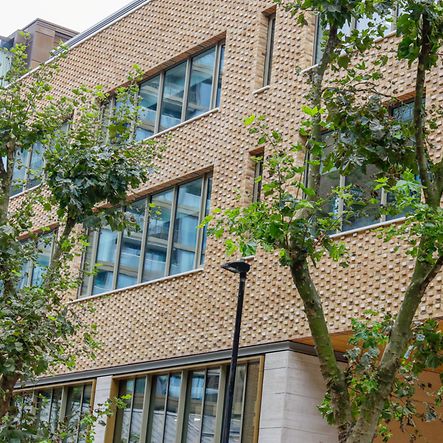
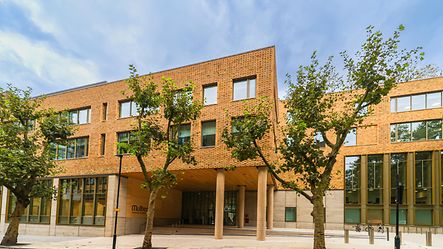
Mulberry Academy London Dock School is an exemplary model of Passivhaus design in dense urban landscapes.
Architect: Architype
Specialist Contractor: EAG Limited
Main Contractor: Kier Construction
Photo credits: Tim Pestridge
Products: FWS 50.SI curtain wall, AW 75.SI windows, ADS 65 NI doors, ADS 75 HD.HI doors, ADS 80 FR30 doors, ADS 80 FR60 doors, AD UP 90 doors
An exemplary model of Passivhaus design
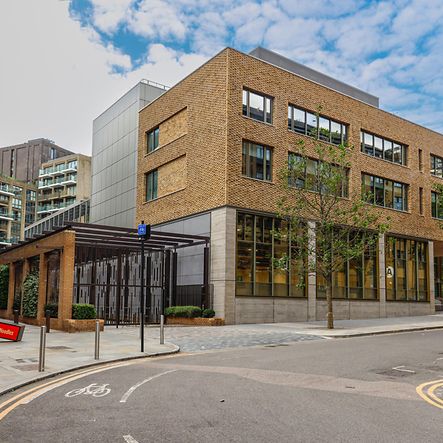
When thinking about Passivhaus it is often houses that spring to mind, but the standard is also transforming the world of educational architecture. Mulberry Academy London Dock School is an exemplary model of Passivhaus design in dense urban landscapes. Nestled in the thriving East London district of Wapping, next to a busy four-lane highway, this once neglected brownfield site is now a prominent landmark that merges innovative architectural design with environmental sensitivity.
The client, Mulberry Schools Trust, appointed architects Architype to design a school that not only improved the comfort and wellness of its students, but also met rigorous sustainability standards.
Working with specialist contractor EAG, Architype embodied Passivhaus principles to deliver exceptional comfort, energy efficiency, and air quality. This was achieved through biophilic design, optimising spaces and incorporating high-performance Schüco systems. The project meets excellent acoustic, thermal and airtightness standards and highlights how careful planning can overcome complex urban challenges.
Rising above the challenges
Noise pollution and poor air quality from the adjacent highway were key challenges. Implementing Passivhaus principles was vital in addressing these issues.
A combination of enhanced airtightness and fresh air drawn in by the building’s mechanical ventilation with heat recovery (MVHR) system from the upper storeys, maintains a constant supply of filtered air while providing thermal comfort.
Triple-glazed Schüco window, door and façade systems were installed, not just for their thermal and airtightness performance, but also to tackle noise pollution and improve acoustics within the building. The systems ensure that traffic noise is barely audible inside.
Being creative with space
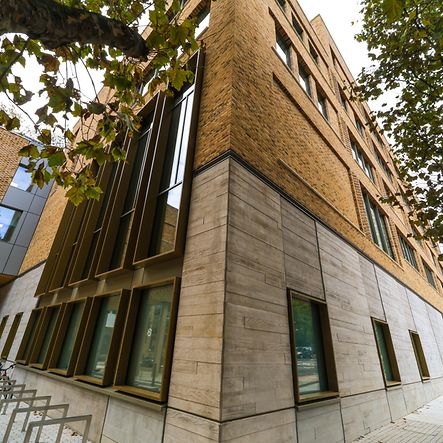
Due to the compact nature of the site, Architype was inspired to focus on the vertical arrangement of the building.
The basement and ground level feature double-height rooms to create a sense of space. Internal and external glazing was installed to provide the halls and sports areas occupying these spaces with an abundance of natural light and strong visual connections. Generous glazing surrounds the teaching spaces above, reinforcing the connection to the outdoor landscapes.
To balance the amount of daylight access in the building and prevent overheating, solar shading was utilised on the south elevation, helping to ensure year-round comfort and to reduce reliance on air conditioning systems.Windows can also be opened for additional natural ventilation.
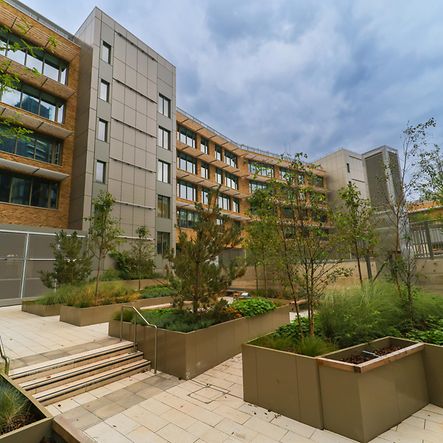
Biophilic design dominates much of the exterior. Lush planting on the building façades and numerous trees and trellises on multi-level terraces encourage biodiversity in the area, while improving air quality and boosting mental wellbeing. Nesting boxes were also integrated into the façades for birds and bats to enhance the surrounding ecology.
Achieving Passivhaus standards and technical excellence
The fully electric building achieved an airtightness score of 0.2 air changes per hour (ACH) at 50Pa: an outstanding achievement for a school of this complexity. Schüco AWS 75.SI triple-glazed windows, FWS 50.SI curtain walling, and AD UP 90.SI doors were integrated into the façade and achieved Class 4 and AE air permeability ratings. These systems are among a range of Schüco products that have been certified by the Passivhaus Institute, facilitating high levels of energy efficiency in the finished building.
The school far exceeds standard benchmarks in overall energy performance. Mulberry Academy achieved an Energy Use Intensity (EUI) of just 42 kWh/m²a, which is significantly lower than the London average of 128 kWh/m²a.
Additionally, careful consideration was given to the materials used in the building’s structure to align with sustainability goals. Post-tension floor slabs were installed to reduce concrete volume – this cut structural emissions by 108 kgCO₂e/m².
The school is a prime example of how the principles of Passivhaus and high performing Schüco systems can elevate the standard of educational buildings. Mulberry Academy sets the bar for schools that aspire to provide the best for their students, their community and the planet.
The Mulberry Academy project was shortlisted in the Sustainability category at the Schüco Excellence Awards 2025.