
Restoring character in the heart of Westminster
10 Greycoat Place was originally constructed in 1899 as a warehouse for the Army & Navy Co-operative Store, but in 1959 a huge refurbishment project had decimated much of its character.
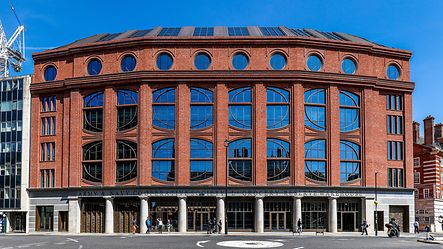
Architect: SPPARC
Specialist façade contractor: Anglian Architectural Limited
Main Contractor: Blenheim House Construction
Photo credits: Schüco Excellence Awards 2025
Products: FWS 50 Curtain Walling, FWS 60 SG Curtain Walling, ADS UP 70 Side Hung Door Units, AWS 70 WF HI, Windows, ASS 80 FD HI Sliding Folding Doors
Undoing past mistakes
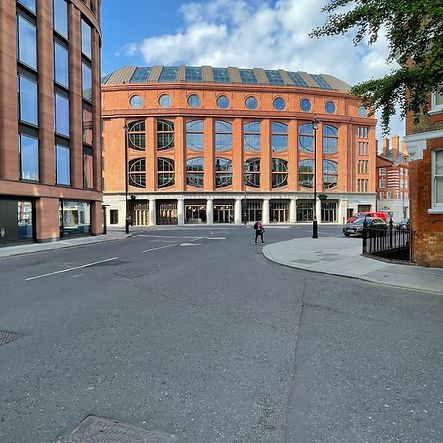
Fast forward to 2025, and client Victoria Spaces Ltd tasked London architect SPPARC to reinstate the building’s architectural identity while making it as energy efficient as possible.
Working with SPPARC and fabricator Anglian Architectural, Schüco helped to make the client’s vision a reality.
The structure originally featured intricate details including bullseye and curved windows, However, the disastrous 1959 renovation rendered over the Victorian brickwork and removed ornate details.
SPPARC’s task was to restore the building’s identity, while introducing modern elements such as high-performance façades. The redevelopment resulted in a contemporary eight-storey, high-end office block, with ground-floor retail space and a basement gym, that reconnected to its late-Victorian heritage.
Bringing it all to life with Schüco
Underpinning the project’s success was the utilisation of a wide range of Schüco systems. The project brief required solutions that not only provide the flexibility and performance needed to replicate the historical elements but could also help achieve ambitious sustainability targets.
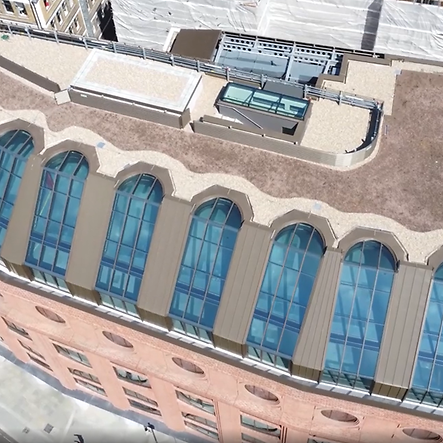
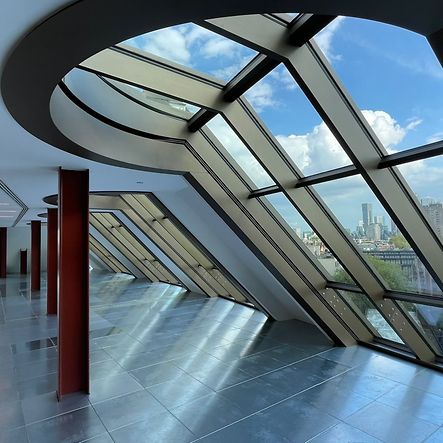
FWS 50 capped curtain walling was specified alongside FWS 60 SG structurally glazed curtain walling for their contemporary design aesthetic and thermal efficiency. AWS 70 WF HI windows also contributed, providing high levels of insulation with U-values of 1.3 W/m²K, while also maximising natural light. Additionally, ADS UP 70 side-hung doors and ASS 80 FD HI sliding folding doors provided robust, efficient access solutions.
All Schüco elements were finished in anodised bronze, creating a beautiful façade that blended the historic with the modern.
“By using Schüco’s technical expertise and design software we were able to tailor the systems to meet the project’s specific requirements,” continued Sills. “The aluminium profiles lent themselves to replicating the Victorian-style features and creating expansive windows that are such a feature of the refurbished façade. They also contribute to the project’s BREEAM Excellent and EPC A-ratings.”
The Passivhaus voluntary building performance standard for low energy buildings is an increasingly popular method for UK buildings, focusing on a 'fabric first' principle of constructing a building with a highly insulated and airtight envelope in order to reduce space heating demand to a very low level.
Putting sustainability first
Although Passivhaus standards exceed those of the Building Regulations, it is down to the designer to decide how best to meet the criteria, which means Passivhaus buildings can be built using almost any construction method.
The redevelopment achieved a 50% carbon reduction compared with a rebuild, saving 494 kgCO₂/m².
Schüco Cradle-to-Cradle Silver-certified FWS systems support both embodied and operational carbon goals. Additionally, high-performance glazing contributed to a 54.8% reduction in operational carbon.
Materials were also reused on the project, minimising waste and operational energy demand was reduced thanks to an all-electric design and the installation of hybrid VRF systems.
Overall, the project secured BREEAM Excellent, EPC A, WiredScore Platinum, and WELL Pre-Certification. The project was also shortlisted in the Schüco Excellence Awards 2025.
10 Greycoat Place is the perfect example of how redevelopment can respect a building’s heritage while setting a benchmark for sustainability and performance. Its reinvention claimed back its landmark presence in Westminster.
