A contemporary façade unites Drogheda’s Protected Structures
Drogheda Civic Offices, Ireland, demonstrates how, with imagination and a flexible façade system, historic structures can be preserved and adapted to serve contemporary uses.
Architect: BDP
Façade contractor: Williaam Cox
Main contractor: Townlink
Photo credits: Williaam Cox
Products: AWS 75; FWS 50; FW50+ FR60; ADS 80 FR 60
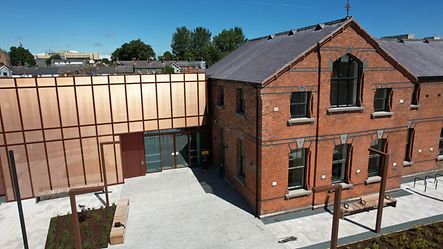
BDP's innovative design for Drogheda Civic Offices in the Fair Street conservation area involved the complete refurbishment of two existing, unoccupied Protected Structures. The addition of a new link structure sensitively connects the two historic structures to create a single contemporary office complex.
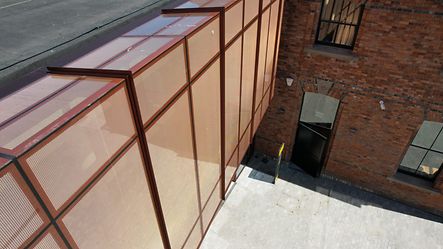
The two-storey link building is fundamental to the scheme's success; this modern extension successfully combines the two historically significant structures while also adding useful office space. Its contemporary façade with a bronze anodised finish helps differentiate the new addition from the heritage buildings while ensuring it blends seamlessly with the orange-red brick of their historic envelopes. The façade’s design ensures the link provides a welcoming and accessible public entrance.
BDP selected the Schüco FWS 50 façade system for the slim, 50mm width of its mullions and transoms. These slender elements enable large expanses of glazing to be supported without the new structure appearing to overwhelm the restrained character of the existing buildings. The façade system’s flexibility in accommodating different insert units and the availability of bespoke caps added an extra layer of refinement to the system’s aesthetic appeal.
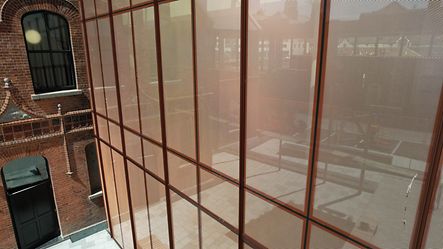
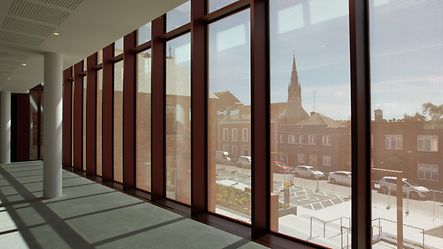
Façade specialist Williaam Cox, designed, fabricated, supplied and installed the Schüco FWS 50 façade system. This included the use of custom elements to ensure the modern system integrated seamlessly with the inherent irregularities of the heritage fabric.
The façade's aluminium extrusions support Guardian SN70/35 solar control coated double-glazed units. These incorporate an Okatech expanded copper mesh interlayer, which adds a metallic hue to the glazing. The glazing's interlayer and solar coatings are important in helping minimise cooling loads in spaces adjacent to the south-facing façade, including the public foyer, while ensuring that aesthetically it sits comfortably alongside the brick Protected Structures.
In addition to the Schüco FWS 50 façade system, Williaam Cox was also responsible for the fabrication and installation of the fire-rated link screens to separate the existing and new building elements. The screens are formed using the Schüco FW50+ FR60 system to ensure compliance with fire safety regulations while maintaining architectural cohesion.
Schüco ADS 80 FR 60 fire resistant door systems provide access and were selected for both durability and security.
As part of an ambitious sustainability strategy, the building has been designed to be naturally ventilated. Double-height glazed louvred-ventilation units are installed at both ends of the main façade. These incorporate openable louvres to allow fresh air to enter. To ensure the spaces can be ventilated without compromising the clean, modern lines of the Schüco façade, these louvres have been cleverly concealed behind fixed aluminium louvres, colour matched to the façade.
Natural ventilation is further enhanced through the inclusion of clearstory glazing on the link-building's rear elevation. This façade incorporates the Schüco AWS 75 top-hung window system, with the high-level windows opening and closing under actuator control.
Other sustainability features include roof-mounted photovoltaic panels, electric heat pumps to provide heating and cooling, and energy efficient LED lighting throughout. In addition, the link building's sedum roof helps control rainwater run-off while supporting urban biodiversity.
Collaboration is key
The most sustainable element of the scheme by far, however, is its reuse of two existing Protected Structures. This eliminated the additional carbon emissions that would have resulted from their demolition and subsequent reconstruction.
The completed facility now stands as a testament to the power of design in preserving heritage while meeting modern civic and environmental criteria; an achievement made possible by the successful integration of a Schüco modern façade and glazing system with the façades of the historic buildings.
The completed complex now houses Louth County Council's administrative offices, a council chamber, a public services counter, meeting rooms and a large multi-purpose exhibition space. Joan Martin, Chief Executive, Lough County Council said: "This project has not only revitalised two protected structures but also created modern, sustainable facilities for the community".