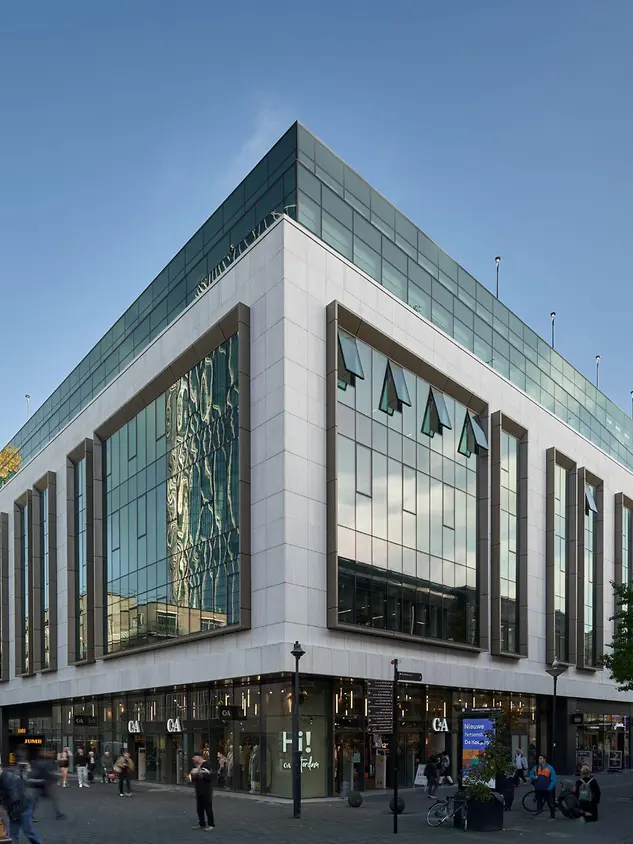
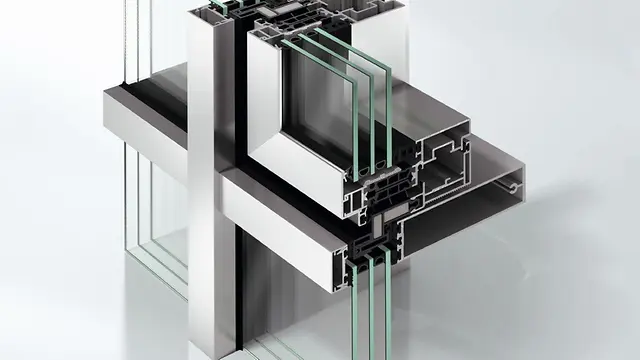
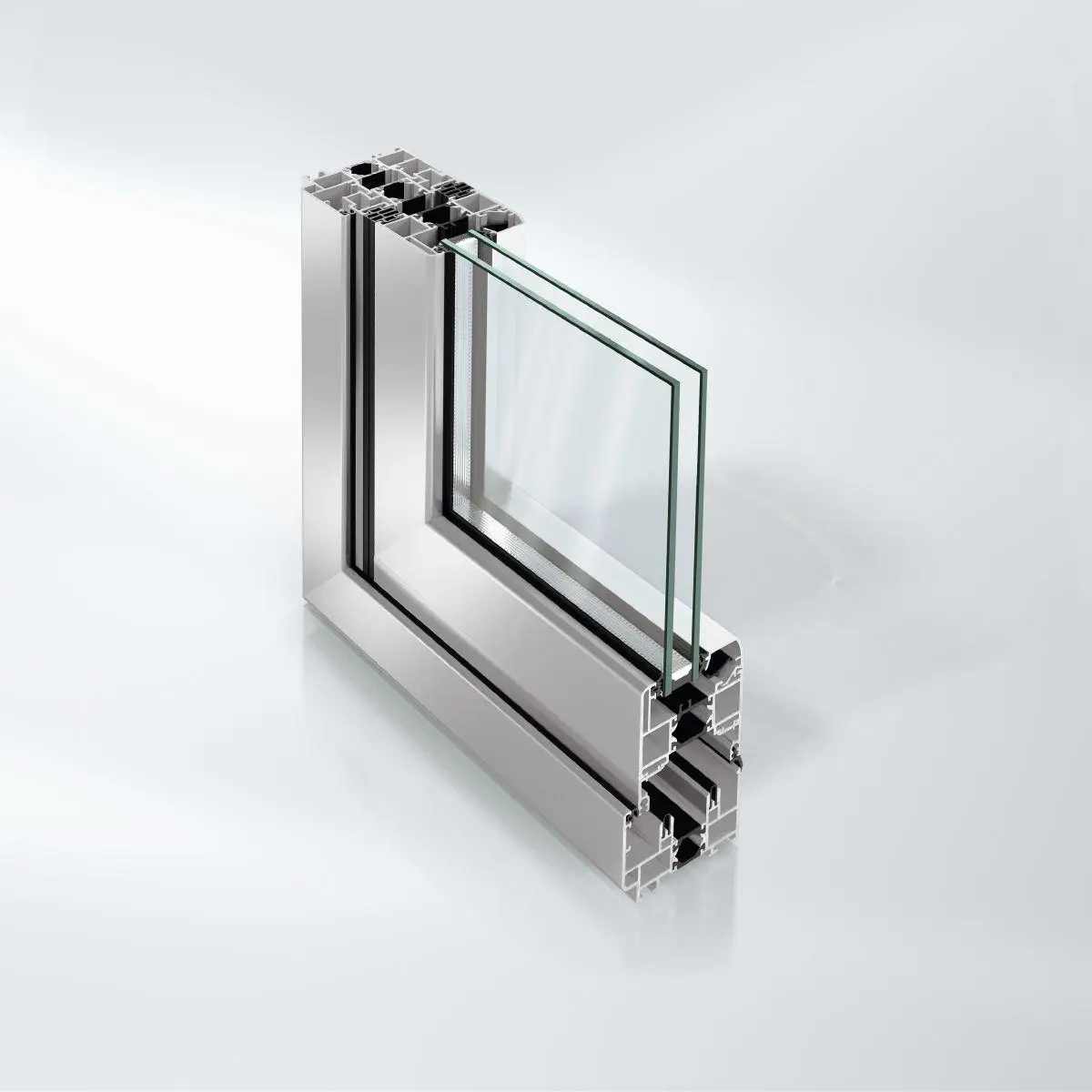
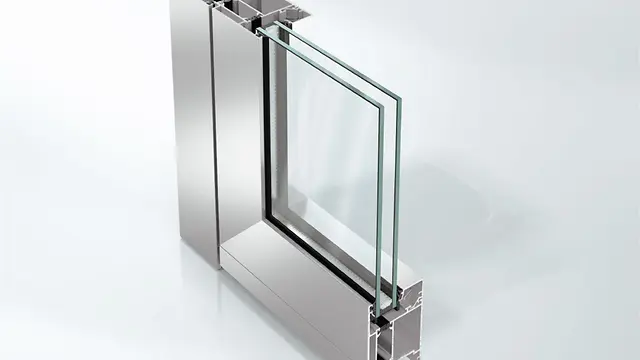
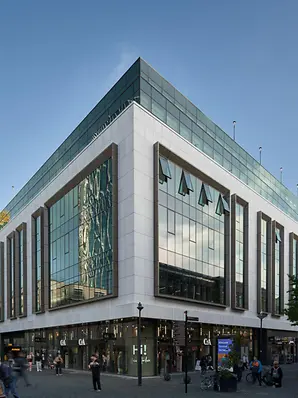
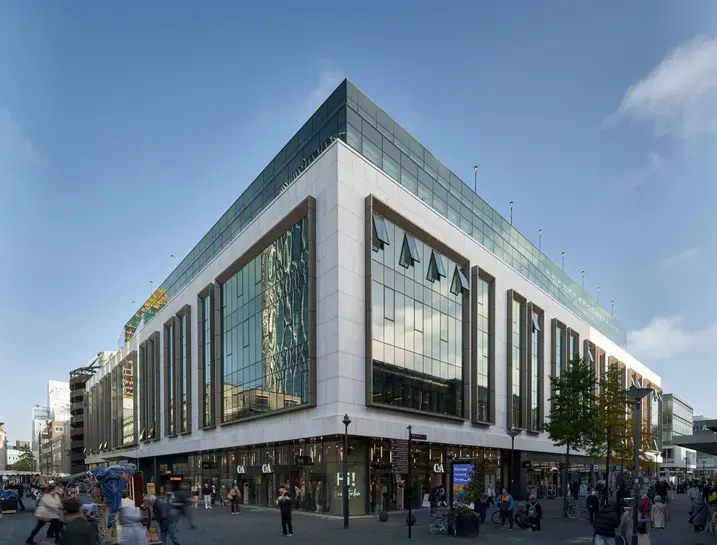
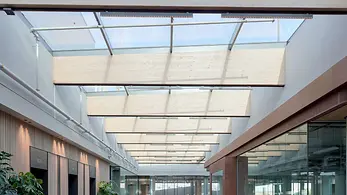
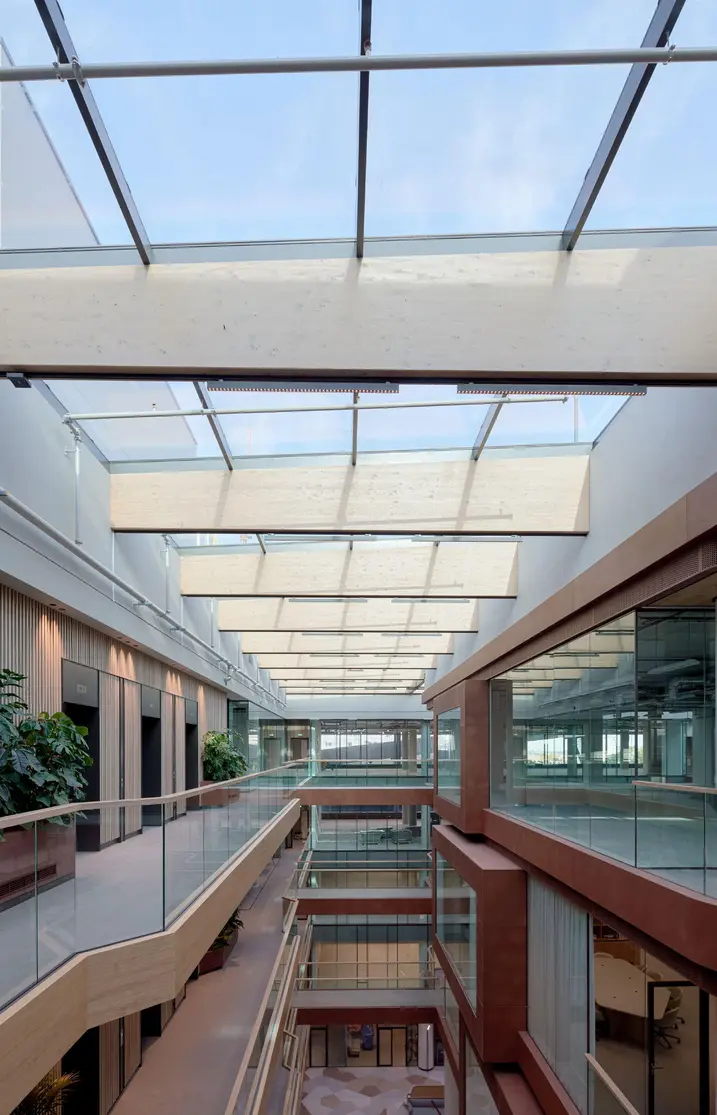
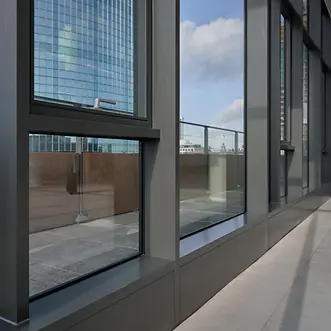
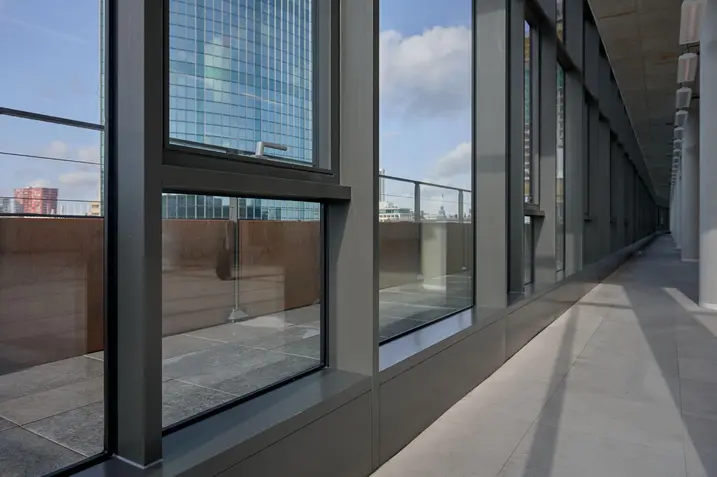
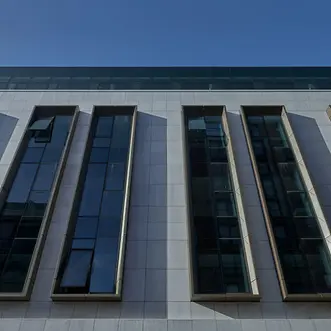
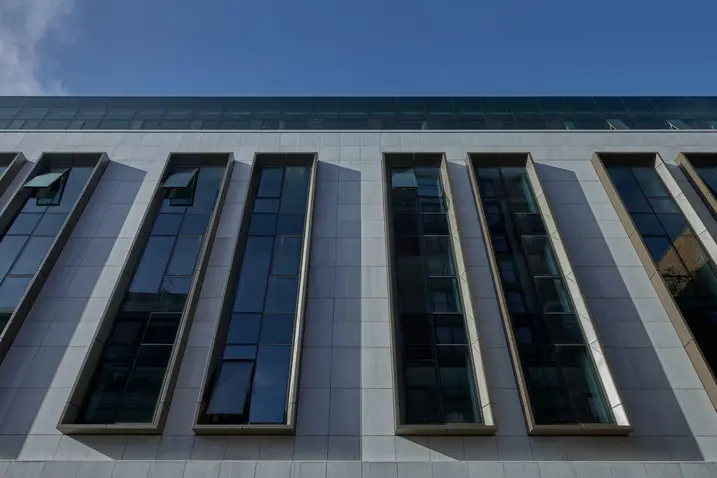
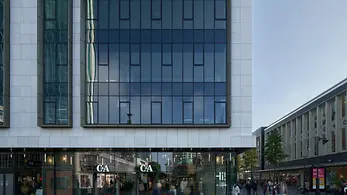
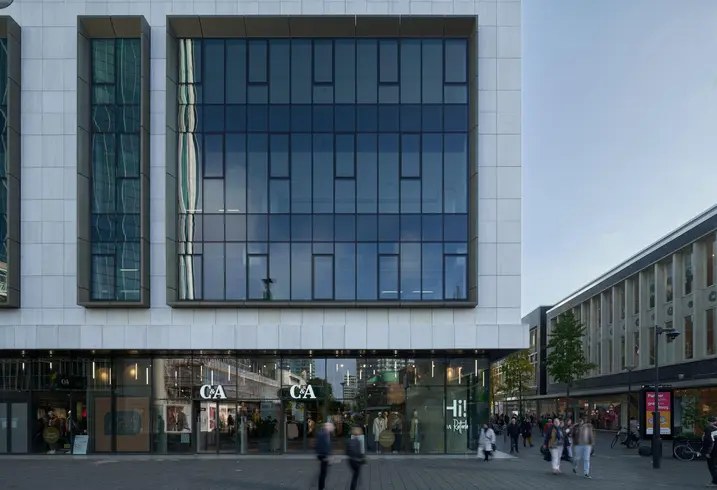
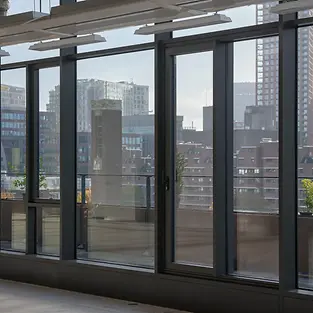
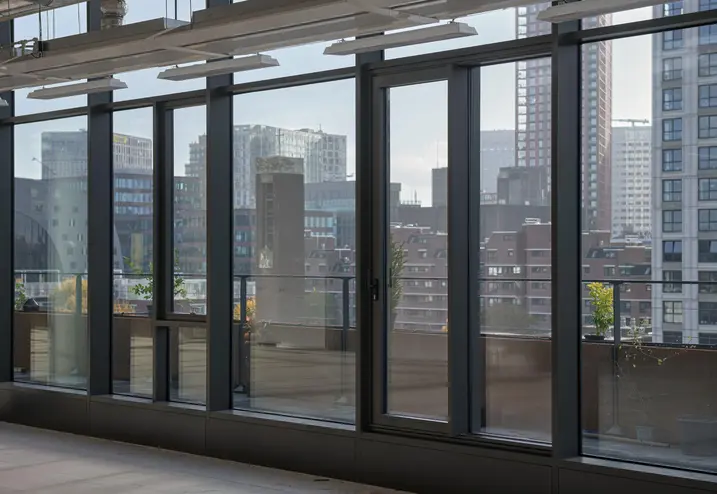
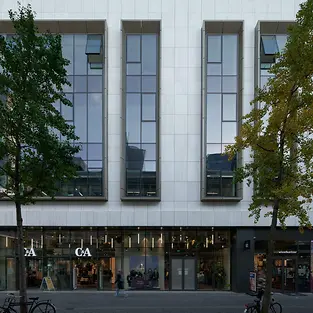
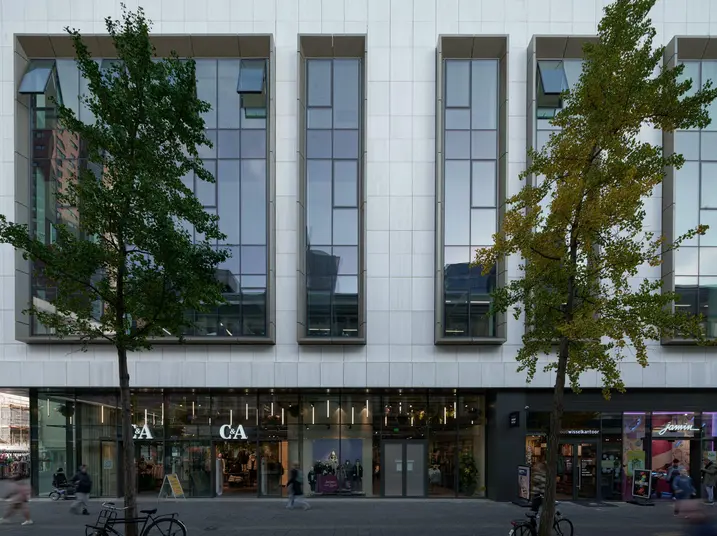
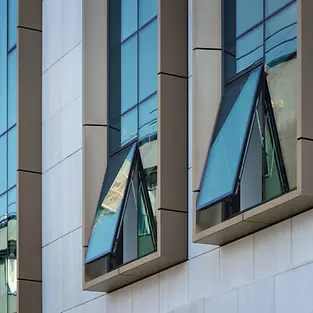
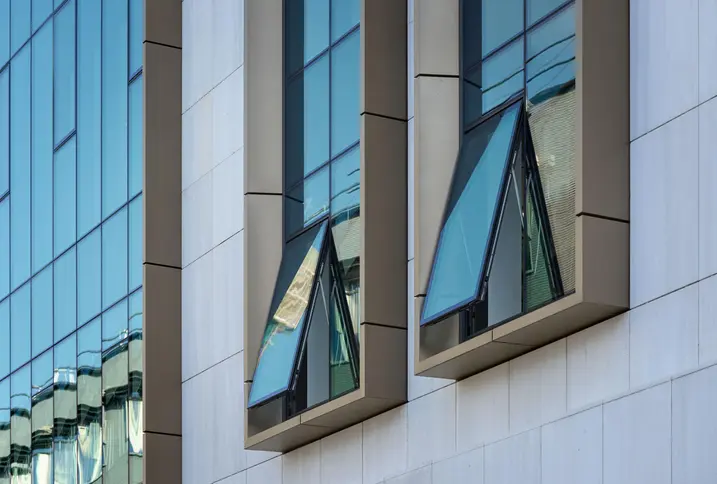
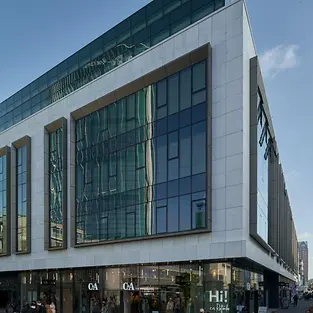
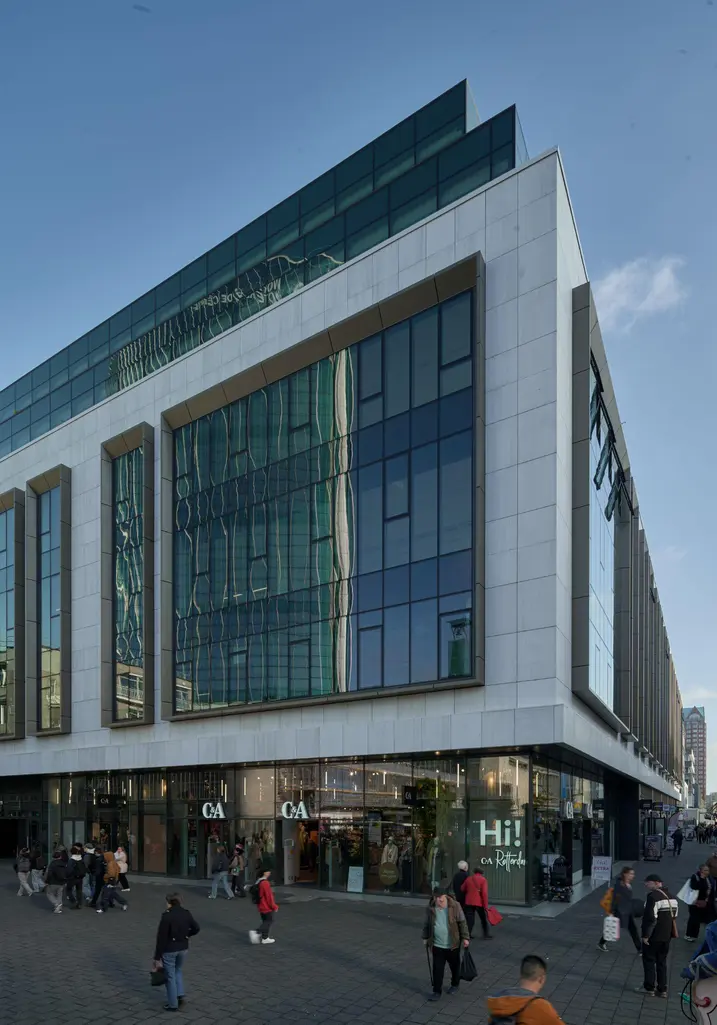
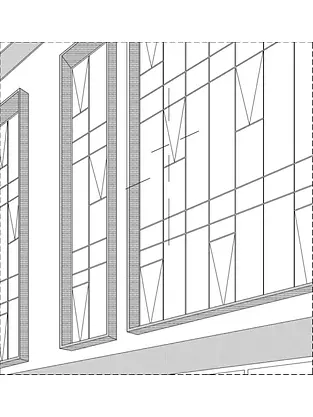
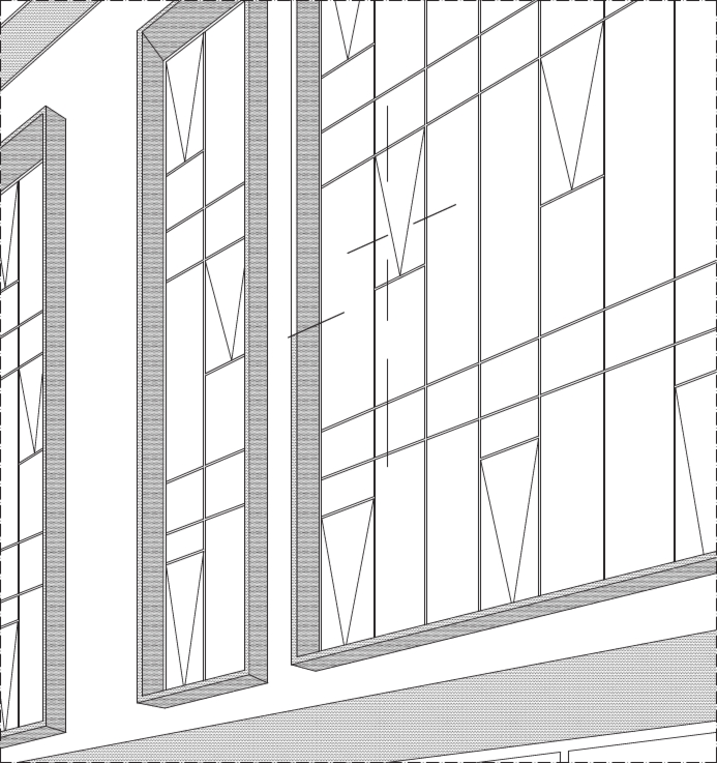
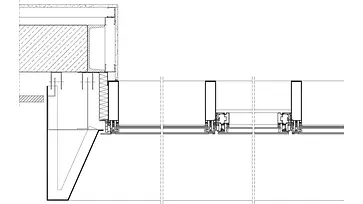
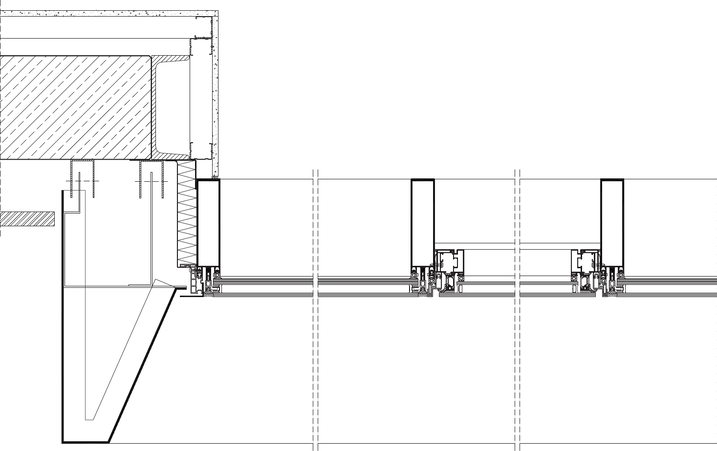
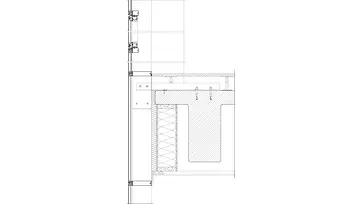
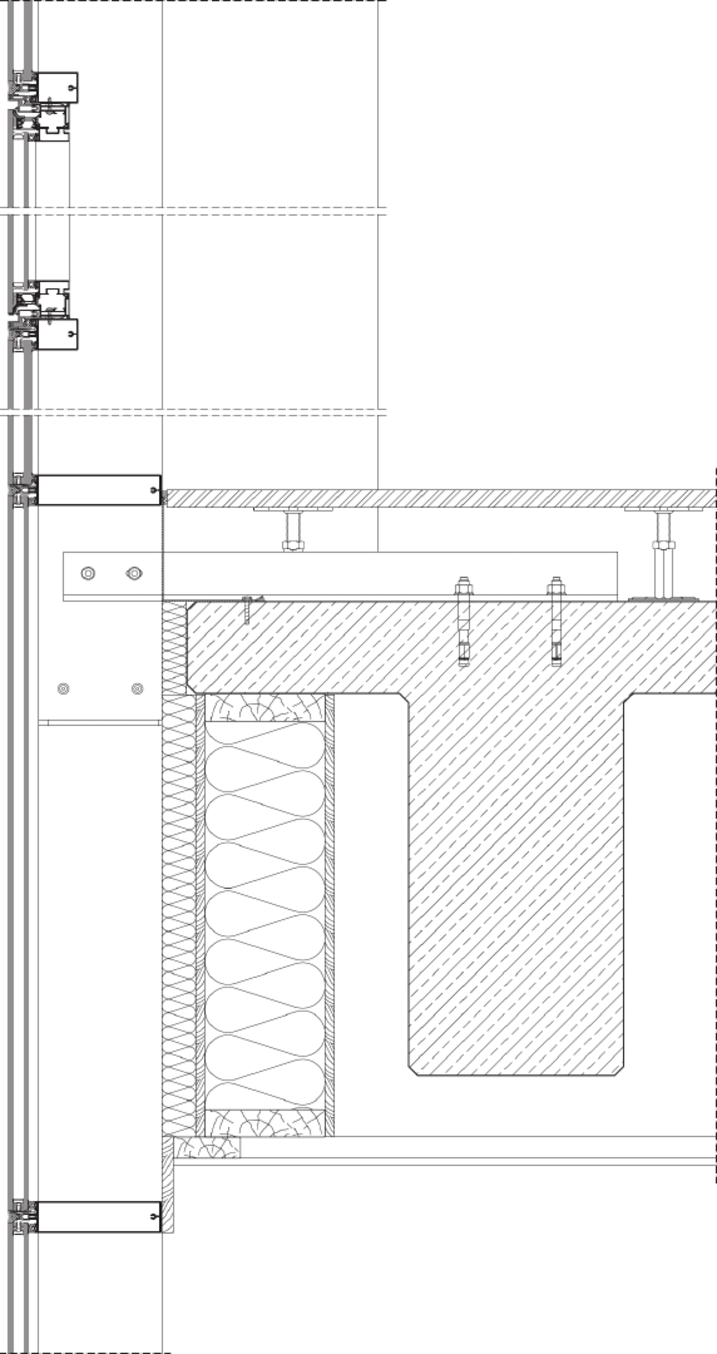
The project is considered a prime example for adaptive reuse, combining sensitivity to heritage with contemporary architecture and the highest standards in sustainability. The original concrete structure and the striking natural stone façade have been preserved and complemented by two newly added floors, which accentuate the Rotterdam skyline. Large, floor-to-ceiling windows in recycled aluminium frames echo the design language of Kraaijvanger architecture (which, in Rotterdam, stands for the optimistic and modern reconstruction style of the 1950s and 1960s) and bridges the gap between past and present.