Meet increasing CO₂ requirements and secure long-term competitiveness

The European Green Deal has stipulated that Europe must be climate neutral by 2050, while in Germany the aim is to achieve this objective by 2045. As a result, fabricators are seeing rising demand from investors and architects for low-emission, future-proof buildings. Carbon footprints are increasingly becoming a deciding factor in the award of contracts, as CO₂ becomes a new currency and an optimum carbon footprint becomes the key to meeting specification requirements in full. Fabricators can control the carbon footprint of the planned building during construction and adhere to regulations at an early stage in order to ensure the building's sustainability and give it a competitive edge in calls for tender.

Benefits of implementing projects with Schüco Carbon Control​

Material

By selecting the right materials, stakeholders in the construction process can actively influence embodied emissions. For example, Schüco Ultra Low Carbon+ Aluminium (ULC+) has a GWP of 0.89 kg CO₂e per kg of profile. This represents an 87% reduction compared with the Schüco standard aluminium profile, as documented in the EPD. Schüco supplies ULC+, ULC and LC aluminium in accordance with its Allotment process.​​

Transparent CO₂ data​

Our 3D calculation software, SchüCal, provides profile-specific EPDs and helps determine project-specific CO₂ indicators, enabling transparent carbon accounting and documentation.​

Hybrid constructions

In hybrid systems, we combine the best properties of different materials into a complete solution.​

Machinery for modern production​

Schüco's 5-axis CNC machines combine sawing and CNC machining in a single production process. Optimised cutting reduces material waste.​

Consider CO₂-relevant factors throughout the building life cycle​

Fabricators can address embodied emissions in the building envelope by using CO₂-reduced material grades* and smart solutions. Schüco systems and services support this throughout the building life cycle. The aim is to safeguard each property's sustainability and profitability as CO₂ requirements become more stringent. The Carbon Control range is structured around four phases of a building's life cycle: planning, construction, operation and demolition. It combines products and services from the Schüco portfolio into tailored solutions for each phase. These solutions can be used across all phases, work seamlessly together and enable CO₂-relevant factors to be considered throughout the building life cycle.​

Design to Decarb

From the earliest project phases, Schüco supports fabricators with services and system solutions for new-build and renovation projects. These include CO₂-reduced material grades*, selected Cradle to Cradle Certified systems at Bronze and Silver levels, and building-integrated photovoltaic (BIPV) solutions. This enables CO₂-relevant factors and circularity to be considered from the planning and material-selection stages onwards.​

Build to Decarb

Implementation options include aluminium grades* with a 46–87% lower CO₂ footprint than Schüco standard aluminium, as well as plastic and hybrid solutions. Profile-specific EPDs and project-specific CO₂ indicators also support transparent carbon accounting and documentation. This can make it easier to meet certification and reporting requirements.​​

Operate to Decarb

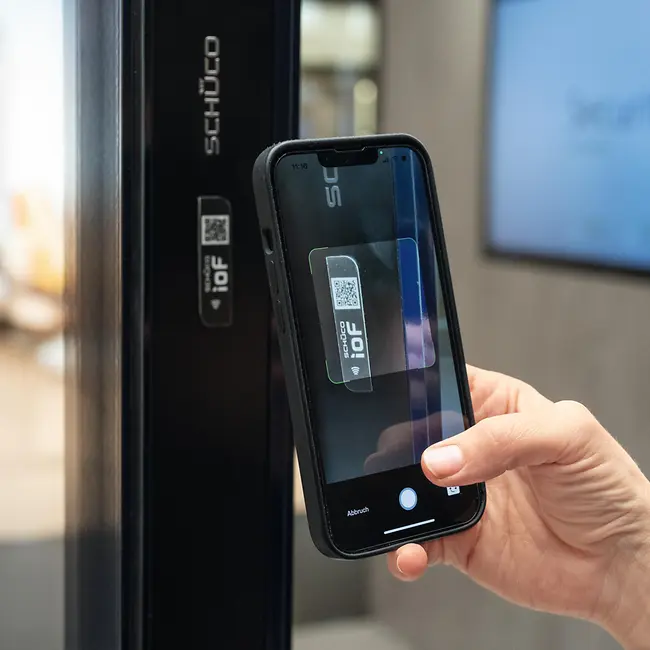
Digital solutions such as the Schüco IoF ID make product- and building-related information available throughout the entire life cycle. This can support data-driven operating strategies, predictive maintenance, and modernisation and refurbishment measures. Schüco Global Service also provides maintenance, servicing, repair and modernisation services for building envelopes.​

Recycle to Decarb

Through RE:CORE, Schüco works with partners to return materials to the materials cycle. The Schüco IoF ID can also provide information about installed components, thereby supporting dismantling and recycling processes. This can provide a basis for recyclable material flows and urban-mining approaches.​

Contact us

Our team advises fabricators on implementing measures to reduce project-related CO₂ emissions.​

*The stated reference values for the Schüco standard aluminium profile, as well as the values for Schüco Low Carbon (LC), Ultra Low Carbon (ULC) and Ultra Low Carbon+ (ULC+) aluminium and the corresponding profiles, are taken from the respective Environmental Product Declarations (EPDs).​

Low Carbon Aluminium, Ultra Low Carbon Aluminium and Ultra Low Carbon+ Aluminium are supplied in accordance with the Schüco quota procedure. This means that no distinction is made between the material grades at delivery. Regardless of the grade ordered, the profiles supplied may be made of standard, low carbon, ultra low carbon or ultra low carbon+ aluminium. The environmental characteristics shown refer to the quantity of material allocated under the quota procedure.​

FAQs

What does EPD stand for?

The abbreviation EPD stands for Environmental Product Declaration. For fabricators, the EPD is an important document containing data that lists the environmental properties of a construction material. It considers the entire lifecycle of the material – from raw material extraction and production through to disposal. This information is based on the Global Warming Potential (GWP) of the material and construction and enables a clear assessment of the environmental impact. 

EPDs are essential for fabricators, allowing them to choose environmentally friendly materials and thereby minimise the carbon footprint of construction projects. EPDs offer a sound basis for ensuring that the materials used meet sustainability requirements.At Schüco, EPDs are a core part of Carbon Control, which helps fabricators to actively achieve the climate objectives while producing high-quality, sustainable construction projects.

What is the Global Warming Potential (GWP)?

The Global Warming Potential (GWP) describes the extent to which a certain greenhouse gas contributes to global warming in comparison to CO₂. The GWP is important for fabricators to understand the potential impact a building will have on the environment over its entire lifecycle. Two main sources of CO₂ emissions are considered here: embodied carbon, which is the emissions embedded in the construction materials used, and operational carbon, which is produced through operation of the building, for example through energy consumption. The GWP value is given as a CO₂ equivalent (CO₂e) and helps to assess the environmental impact of a project. 

Fabricators play a key role as they can help to significantly reduce the carbon footprint of a building by selecting materials with a low GWP and running an efficient construction process. Schüco Carbon Control offers fabricators targeted support for minimising both the embodied and operational carbon over the entire lifecycle of a building and thereby actively contributing to achieving the climate objectives.

What do LC and ULC mean and how do they differ?

LC stands for Low Carbon aluminium and ULC for Ultra Low Carbon aluminium. Both terms describe aluminium grades offered by Schüco in addition to standard aluminium. The difference between the aluminium grades lies in the extent of CO₂ reduction during production. This is largely determined by the proportion of recycled aluminium used.

During the production of Low Carbon aluminium, only green energy is used in order to ensure fewer emissions are produced. Schüco Low Carbon aluminium therefore achieves a GWP value of  3.84 kg CO₂e/kg aluminium profile. Schüco Ultra Low Carbon (ULC) goes one step further and contains at least 75% post-consumer recycled material, with a GWP value of 1.99 kg CO₂e/kg aluminium profile. 

These aluminium grades play a central role at Schüco Carbon Control and help fabricators to minimise the carbon footprint of their construction projects. Schüco Ultra Low Carbon and Low Carbon aluminium is supplied in accordance with the allotment process. This means that no differentiation is made between the different material grades for delivery. The profiles supplied may therefore consist of standard, ULC or LC aluminium, irrespective of what has been ordered.

What is the allotment process?

The distribution of Schüco Low Carbon (LC) and Ultra Low Carbon (ULC) profiles is organised in accordance with the allotment process. The priority here is for the ordered profiles to reach their destination in the most efficient way possible with the shortest transport routes. In order to ensure this, we do not differentiate between the different material grades of standard aluminium, Low Carbon aluminium and Ultra Low Carbon aluminium for storage and delivery. This also isn't necessary, as the material grades are identical in chemical, mechanical and geometric terms. The relevant carbon saving is made beforehand, during the production stage. Low Carbon and Ultra Low Carbon aluminium have a considerably smaller carbon footprint and therefore a lower Global Warming Potential (GWP) than standard aluminium.The profiles supplied may therefore consist of standard, LC or ULC aluminium, irrespective of what has been ordered. 

In order to ensure and prove that carbon is saved with your building project, or recycled material is used during the production of new profiles, Schüco is commissioning DEKRA to certify the balance between inbound and outbound recycled aluminium. This enables us to ensure that we are purchasing at least as much LC or ULC aluminium as is actually being ordered from us and delivered by us. When you order LC or ULC aluminium, you can therefore be sure that CO₂ has been saved accordingly during production by Schüco.

What do BALANCED PVC, RECYCLED PVC and BIO-ATTRIBUTED PVC mean?

BALANCED PVC, RECYCLED PVC and BIO-ATTRIBUTED PVC are the material classes for Schüco profile systems. Profiles with the BALANCED PVC material standard are produced in a more sustainable* way. In addition to this, choosing the RECYCLED PVC material class supports the circular economy even more proactively and, BIO-ATTRIBUTED PVC promotes a non-fossil raw material basis. All material classes support the decarbonisation of the building envelope over the long term. 


*This is achieved through the use of either recycled material or a formulation that makes optimum use of resources in the inner core.