Building-integrated photovoltaics (BIPV)
Future-proof buildings are sustainable buildings
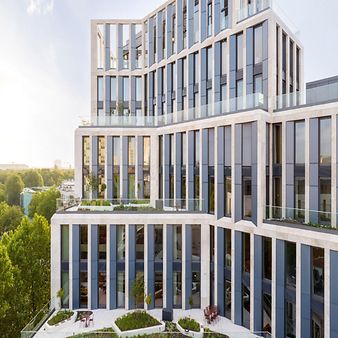
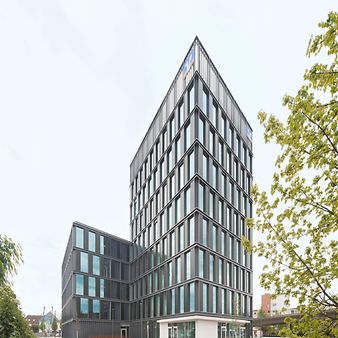
The EU Buildings Directive 2010/31/EU, which came into effect in 2021, requires all new buildings to be nearly zero-energy. With a combination of highly thermally insulated building envelopes and building-integrated photovoltaics (BIPV), Schüco offers the perfect solutions for this. These are solutions that contribute to achieving German and European climate targets, to develop a climate-neutral building stock by 2050.
BIPV pays off right from the start
CO₂ emissions have been taxed since 2021 and will be used in the assessment of buildings through their energy certificates in the future. This tightening of regulations for operators means that the cost-effectiveness of a building is now directly tied to the amount of carbon emitted during its operation. Photovoltaics integrated into the building are an efficient solution for future-proofed properties that pays off for investors, owners and the environment. A building that produces its own energy positively contributes towards its carbon balance during operation. Looking at the energy certificate within the context of the German Energy Saving Ordinance (EnEV), the solar energy generated can be subtracted from the calculated power requirements, which results in primary energy requirements that are as low as possible
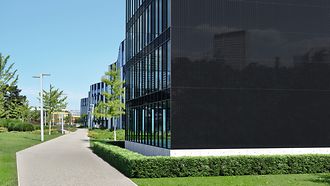
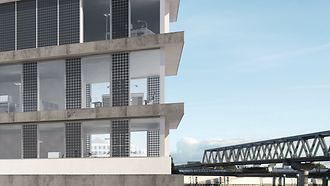
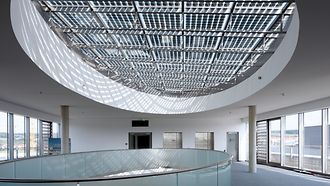
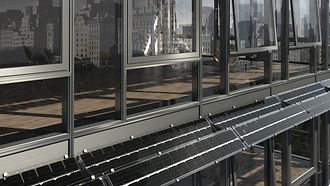
A wide variety of options for architectural freedom
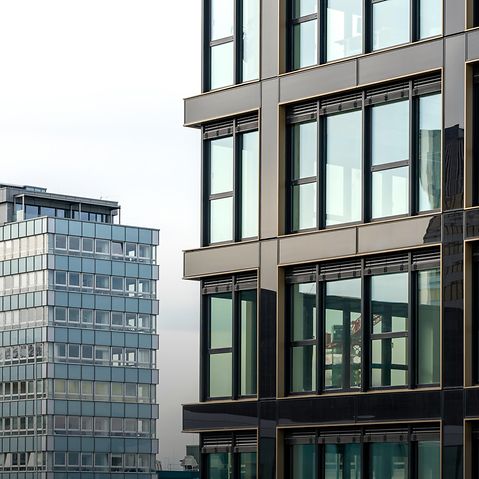
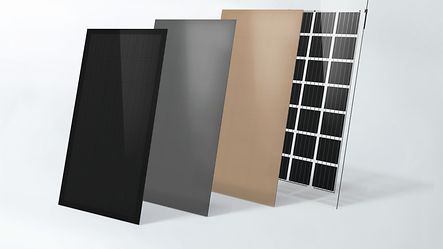
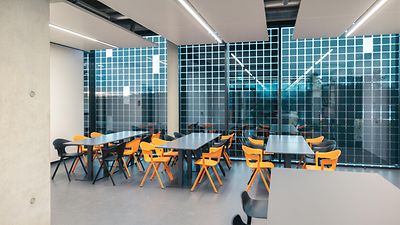
First and foremost, a PV module consists of interconnected solar cells that lie between a front and rear glass panel. A wide variety of cell and glass options provides a high degree of architectural freedom for a suitably unique building design. The maintenance-free modules fulfil all of the functional and aesthetic properties of conventional glazing. The choice of colour coating for the front glass and cover glass determines the look of the PV infill unit: the pattern, size, format and colour can all be combined in many different variations.
In the right light
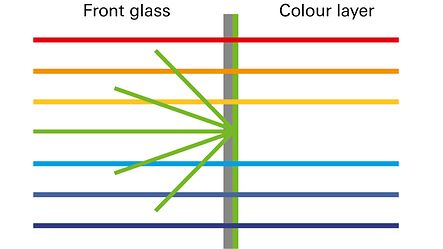
To help make life shine brightly, our PV modules make use of the physical principle of interference. Only the desired colour tones in the light are reflected and this provides the effect of a visible colour for the façade. The colour units are then attached to the rear glass of the front panel and this provides protection against wind and weather. The result is unique colours with maximum efficiency.



Efficient facing in any direction
![Himmelsrichtungen_Broschuere_Photovoltaik_BIPV[93]](/resource/responsive-image/4898736/m11-text-media-1-2/xs/3/himmelsrichtungen-broschuere-photovoltaik-bipv-93-.jpg)
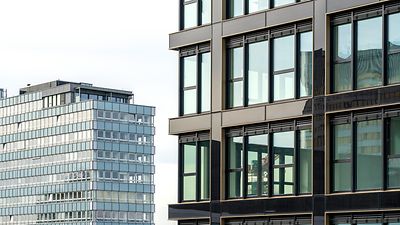
Thanks to the different systems, using BIPV solutions from Schüco can be especially efficient. Contrary to what is often assumed, PV modules can efficiently generate power and produce high electricity yields when facing in any direction. Companies in particular can benefit from this 360° solution.
The northern and eastern sides of a building naturally produce less electricity overall than the southern and western sides. However, with dynamic electricity tariffs, they return an above-average yield during the expensive times of the day. A 360° BIPV system can therefore save costs thanks to the associated anti-cyclical input and, at the same time, have a positive impact on the energy balance.
Smart energy opens up further potential
Around one third of solar power can usually be consumed directly. This is beneficial if the solar output corresponds to the electricity demand in terms of time.
The potential of the PV system can be utilised much better by adding a power storage unit. Approximately another third of self-generated solar power can be used by this means for internal consumption. Electricity-based heating or climate systems, such as heat pumps and electromobility for example, open up additional potential uses for this self-generated power.
Nowadays, the remainder of the solar power is generally fed into the mains power supply for remuneration. In the near future, networking and dynamic electricity tariffs in particular will provide further opportunities to help increase economic efficiency. The PV system and self-generated electricity are a common prerequisite for these models with especially high levels of self-sufficiency and low ancillary costs.
Contact us
Are you planning a building project with Schüco systems or would you like to in future? Get in contact with the appropriate Schüco consultant.