Belnine

Reduced material consumption thanks to vacuum façade

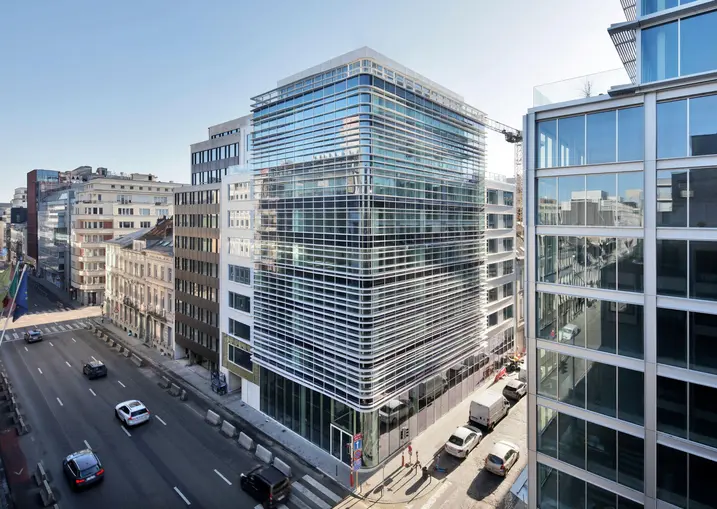
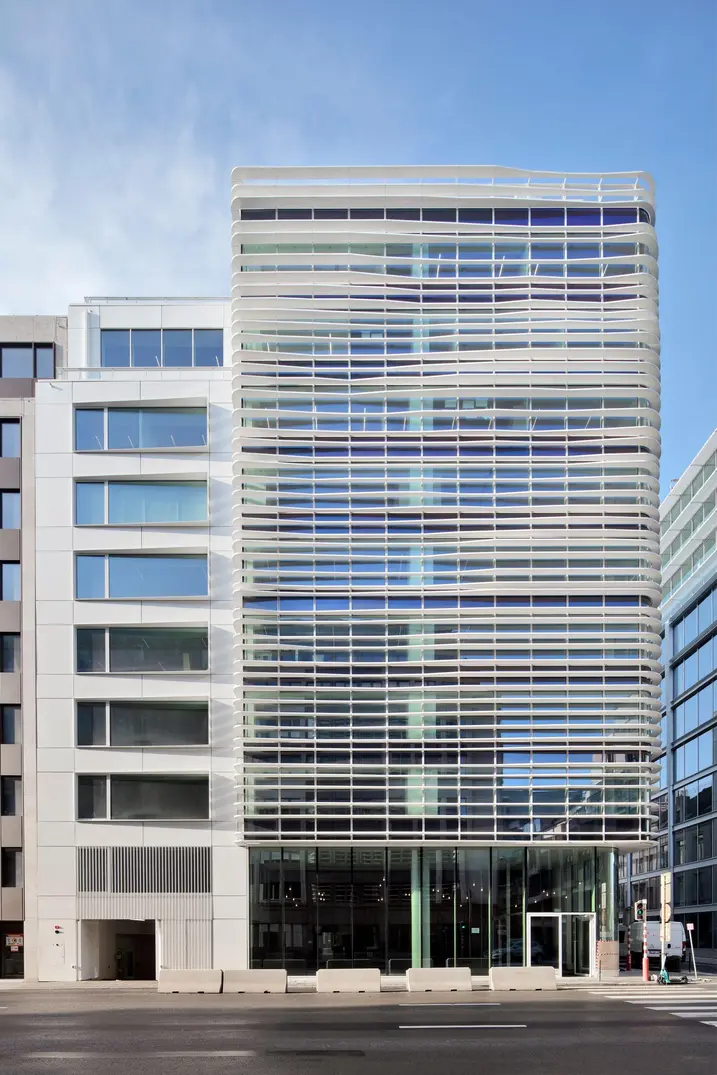
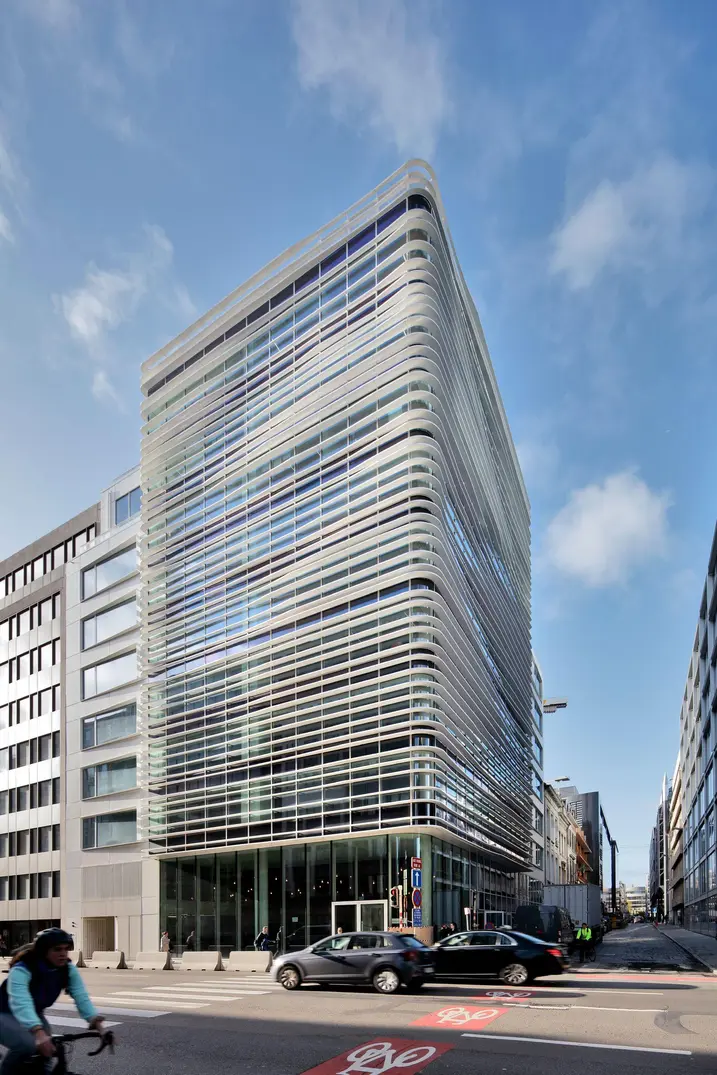
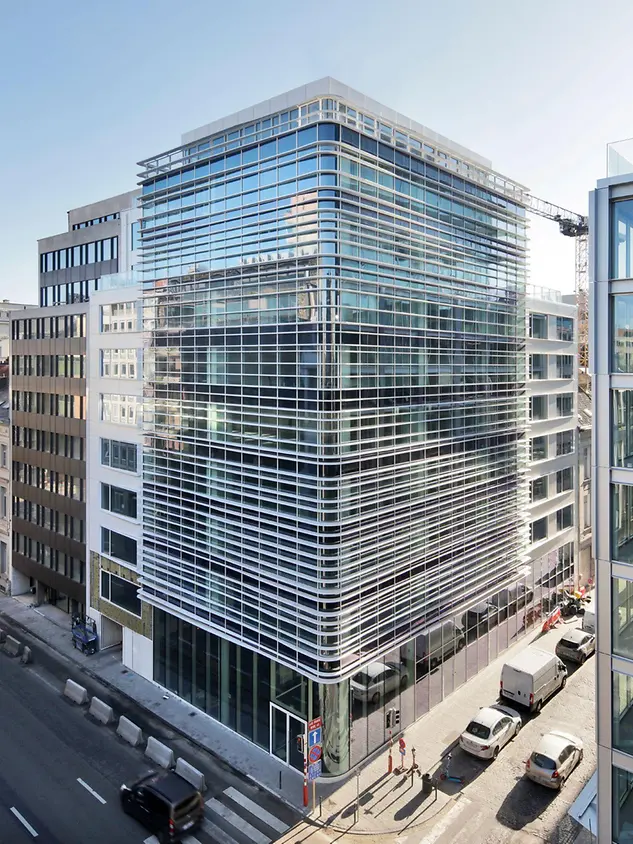
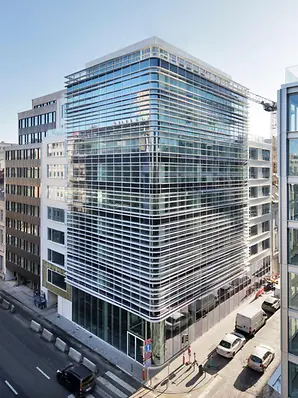
In the heart of Brussels, the Belnine office building is truly eye-catching. However, the newbuild is not only visually impressive, it demonstrates how stunning architecture can go hand in hand with CO2-reducing construction. Excellent thermal insulation, unobtrusive sun screening systems integrated into the architecture and innovative constructions have helped to reduce CO2 consumption and promote an energy revolution within the construction industry.
Reference details

Type of Building Office and administration
Product areas Facades
Schüco Systems USC 65
Features New build Decarbonization Circularity
Location Brüssel, Belgium
Completion 2021
Architects Art & Build Architects
Specialist company Groven + NV
Picture credits © Georges De Kinder
Großes Fenster in einer Holzfassade

Use of FINEO vacuum glass

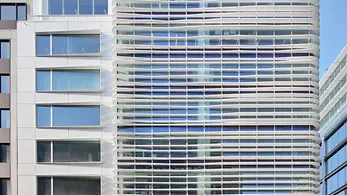
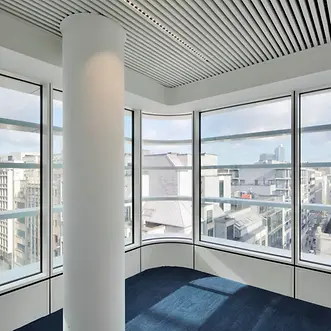
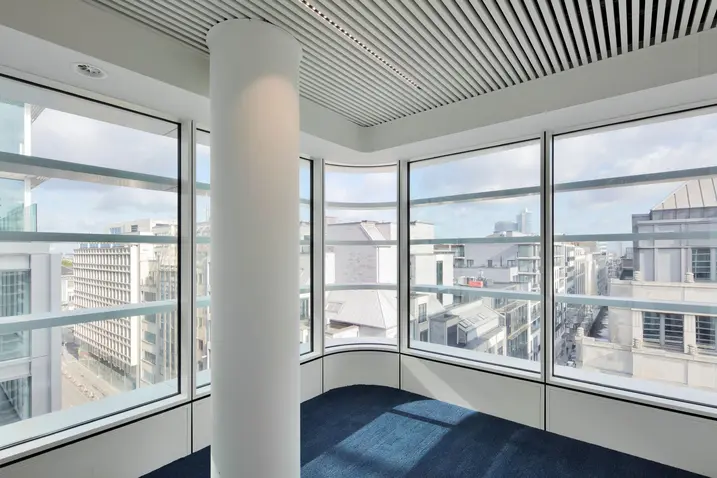
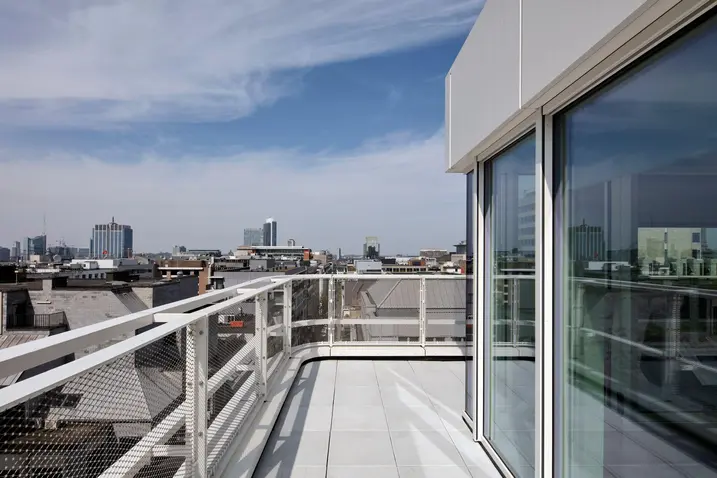
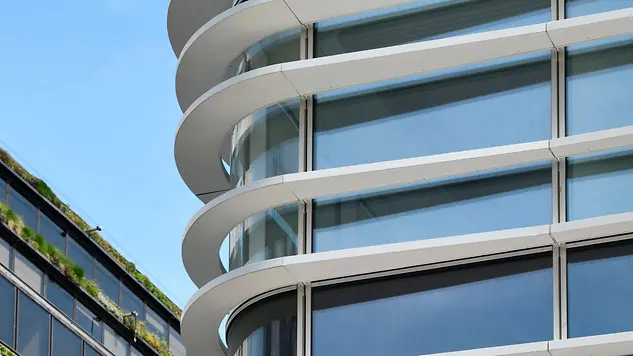
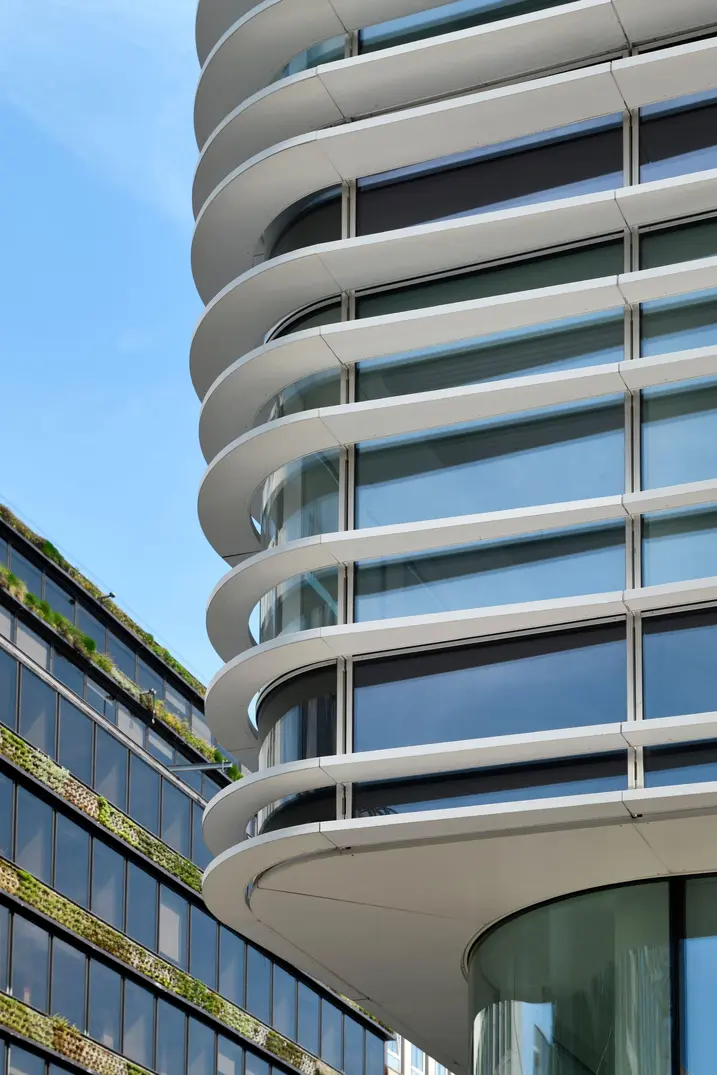
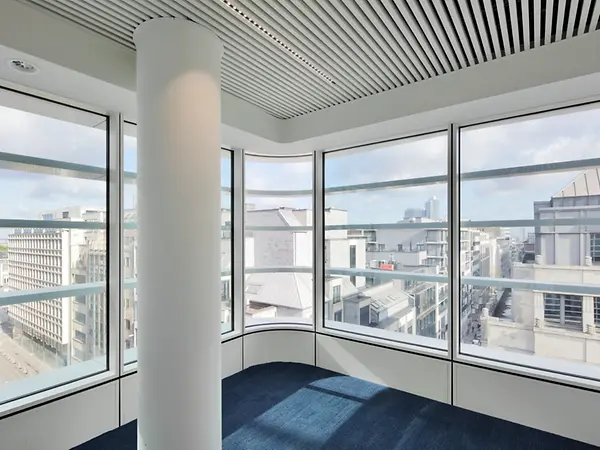
The visually striking Belnine corner building creates contrasting depths and heights in the exterior view thanks to the curved louvre blades on the façade. Inside, the louvre blades provide shading to the office space that is otherwise flooded with light. A closer look reveals the narrow face widths and the thin glazing of the façade. The Belliard 9 site is a real innovation from a technical point of view through its use of hybrid glazing with vacuum glass. Installing FINEO vacuum glass in the Schüco units enables a reduced usage of materials and also delivers outstanding insulation values.

Minimal glass thickness

The slimline overall construction of the FINEO vacuum glass consists of two glass panes which are separated by one thin vacuum space between the panes measuring 0.1 millimetres. Minimal total glass thicknesses starting from 6 millimetres can be achieved, depending on the glass dimensions and climatic conditions. In comparison to conventional triple glazing, the FINEO glass is around one-third lighter and does not need an evacuation port – a benefit in terms of appearance, visibility and durability. At Belliard 9, hybrid glazing made of vacuum insulating glass, a spacer with gas and standard float glass were used to achieve even lower U values. The Schüco USC 65 and FWS systems, which were customised for the Belliard 9 façade, support particularly narrow face widths.

Saving CO2 with every unit

Overall, the façade with hybrid glazing has an insulation value of 0.4 W/(m²K) and with triple glazing a maximum value of 0.6 W/(m²K) could be achieved. The improved insulation contributes positively to the building's carbon balance by reducing consumption for internal heating or cooling. In addition, the FINEO glass was fitted with a low-e coating from Energy Solar for sun shading, resulting in a g value of 0.42. The louvre blades also contribute to further limiting the solar heating and improving the carbon balance of the building. The same applies for the overall lower usage of materials. For the Belnine building, approximately 75 kg of weight was saved per unit, i.e. a reduction in resources used per unit of 75 kg, and therefore less CO₂ was consumed during production.

Product information

USC 65

Schüco Façade System USC 65

Unitised curtain walling

As a unitised façade, the Schüco USC 65 (Unitized System Construction) façade system offers maximum design freedom for highly sophisticated architecture.

Learn more