Responsible governance

The Executive Management Board of Schüco values expertise and clear responsibilities, in order to drive forwards ecological, social and economical sustainability. A newly established ESG Board supports the leadership team in incorporating sustainable developments into decisions and company processes in a targeted way.

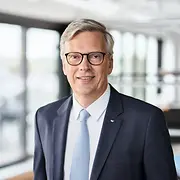
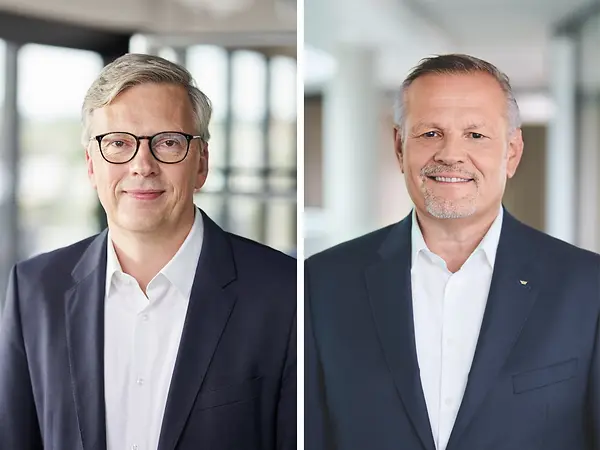
Since January 2025, the Executive Management Board of Schüco International KG has consisted of two people: Andreas Engelhardt, Managing Partner and CEO since 2014, and Philipp Neuhaus, who has been Chief Financial Officer (CFO) of the company since 2015.  

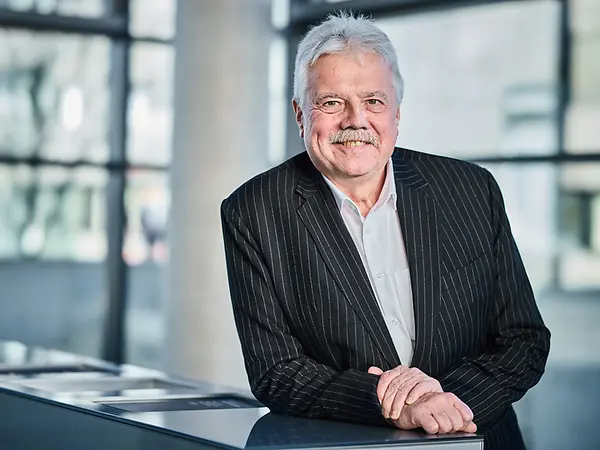
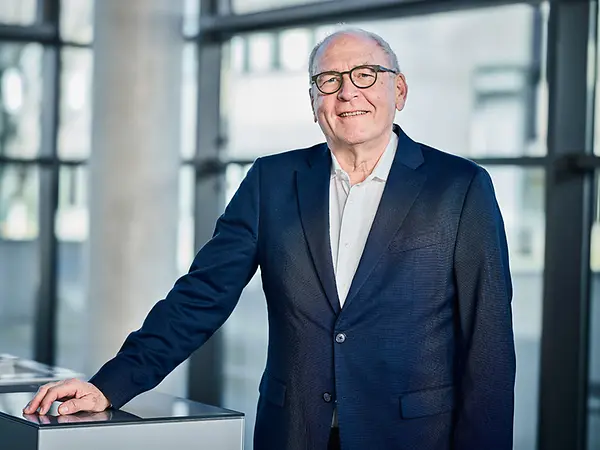
Dr Walter Stadlbauer, previously Chief Technical and Chief Operating Officer of the Schüco Group, moved over to OTTO Fuchs KG and took on the role of Chair of the Executive Management as well as responsibility for global business operations. Back in April 2024, Andreas Engelhardt and Dr Walter Stadlbauer took over operational responsibility for the sister company of Schüco at the request of the shareholders and the Advisory Board (for details of the ownership structure, see: Business model and value chain). Dr Walter Stadlbauer, a Doctor of Engineering and Economic Engineering, will devote himself fully to this role in future, but will remain with Schüco as an advisor and sparring partner, providing support particularly in the areas of Technology and Operations, Sustainability, and Recycling. 
blank-profile-picture-973460_640

Andreas Engelhardt has been with Schüco International KG since 2012 and was appointed Managing Partner in September 2014. In 2020, Andreas Engelhardt was also appointed Managing Partner of OTTO FUCHS Beteiligungen KG. Andreas Engelhardt also took on the role of Managing Partner of OTTO FUCHS KG in April 2024. His area of responsibility includes the strategic direction of the company as well as overall responsibility for Digitalisation & Sustainability, Legal & IP (Intellectual Property) Management, HR, and Sales & Marketing. Andreas Engelhardt is a businessman and has many years of experience, including over 30 years in managerial positions for different companies. He has seats on a variety of supervisory and advisory boards as well as being Vice Chairman of the Steering Committee of the Stiftung KlimaWirtschaft foundation, Member of the Board of the ZIA, Zentraler Immobilien Ausschuss e.V. (German Property Federation), Member of the Steering Committee of the BDI (Federation of German Industries) and he is on the Board of Trustees of the “Lebendige Stadt” Foundation. 

Andreas Engelhardt

20250516_1448_Fußball-T-Shirt im Stadion_remix_01jvcj3tqvetssbtt978a4t0ma Kopie

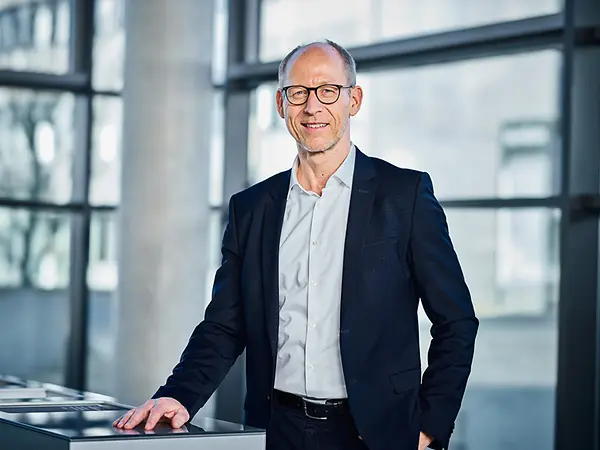
As Chief Financial Officer (CFO), Philipp Neuhaus has been a Member of the Executive Management Board since 2015. He is also CFO of OTTO FUCHS Beteiligungen KG. Within the Schüco Group, Philipp Neuhaus is responsible for Finance, Tax, Controlling, Mergers & Acquisitions and Purchasing of Ancillary Supplies. Philipp Neuhaus studied Business Administration and graduated from the London Business School. His initial experience was in strategy and organisation consulting, before he moved into the building materials industry and took on various managerial positions.

Philipp Neuhaus

20250516_1448_Fußball-T-Shirt im Stadion_remix_01jvcj3tqvetssbtt978a4t0ma Kopie

Tasks of the governing bodies

The Executive Management Board is selected on the basis of expertise, autonomy and their alignment with the interests of our key stakeholders. The Managing Partner is appointed by the Advisory Board (see below for more information) and the four shareholders of Schüco International KG. These boards must also vote on the appointment of other members of the Executive Management.  

The Advisory Board of the Schüco Group exercises a monitoring and advisory function over the Executive Management Board. It must also approve personnel decisions at the top of the Schüco Group. The board is made up of seven people with different business expertise. 

Organisational structure

At the start of 2024, Schüco introduced a new organisational structure with the aim of enabling the company to respond faster and more flexibly to new requirements.  

The following overview briefly introduces the areas within our new organisational structure. 

Group Strategic Functions

“Group Strategic Functions” brings together the Strategy, Marketing, HR, Controlling and Sustainability departments. This ensures that we are able to resolve our strategic challenges in a uniform way and can continue to further develop the Schüco Group while maintaining a broad perspective.  

Group Service Functions

“Group Service Functions” comprises internal services that are utilised by the entire Schüco Group. This includes, for example, services in HR, Accounting and Controlling. By bringing these departments together under one overarching area, the aim is to help optimise processes and increase the efficiency of administrative tasks. 

Operational activities

The operational activities of the Group are organised independently and are divided into the three divisions “Metal Business”, “Polymer Business” and “Service Business”, each responsible for their own profit and loss. The Metal Fabrication division covers the German and international metal markets and sales areas. The Polymer division adds a comprehensive range of PVC-U products to the metal fabrication portfolio, allowing us to serve other customer groups. The newest area, the Service division, serves the growing market of long-term service and maintenance contracts. This division is geared towards global growth.

Acquisitions and shareholdings

Schüco brings together its acquisitions and shareholdings under another area. By doing this, we want to create space to expand our core business by adding new business models throughout the entire life cycle of a building.  

Tackling issues across all divisions

The areas within our organisational structure do not work separately from one another. On the contrary, the strategic interlinking of the divisions should make it easier for us in future to work on the best solution for each individual case using expertise from all areas of our company.

In the area of sustainability in particular, there are many issues that we tackle and further develop in this cross-function way. This includes topics for the future such as modular construction, recycling and cross-material pre-sales.  

ESG-Board

In 2024, Schüco also set up a committee with the ESG Board to further strengthen the company's focus on holistic sustainability. The aim is for the members to assess the activities of Schüco with regard to their ecological, social and economical impacts, to generate impetus for the further development of the sustainability strategy. The committee is made up of five people: 

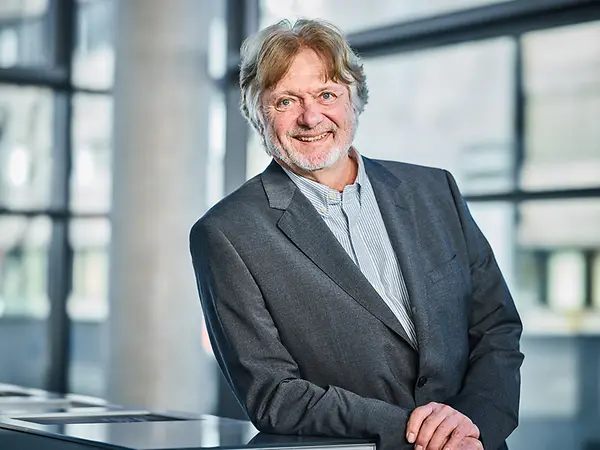
Dr Andreas Mattner (Chairman)
20250516_1448_Fußball-T-Shirt im Stadion_remix_01jvcj3tqvetssbtt978a4t0ma Kopie

Since 2000, Dr Andreas Mattner has been Chairman of the Board of the Lebendige Stadt Foundation, which has a focus on climate protection and social integration. He has been a member of the ESG Board of the ECE Group (most recently as Chairman) since 2011 and is now also a member of the Supervisory Board of ECE. Since 2013, Dr Andreas Mattner has been a member of the ESG Board of the ZIA (German Property Federation). From 2013 to 2023, he sat on the Supervisory Board and later became Deputy Chairman of the Supervisory Board of EUREF AG for developing energy and environmentally optimised real estate. From 2016 to 2020, Dr Andreas Mattner was the Germany representative for the R20 Regions of Climate Action founded by Governor Arnold Schwarzenegger and, since 2017, he has also been Board Director of the six-person global leadership of the R20 Foundation. Since 2017, he has also been a member of the innovation partnership of the German Federal Ministry of Construction and Economic Affairs for implementing the 2050 climate protection plan and for achieving a climate-neutral building stock in Europe. Since 2022, Dr Mattner has been Chairman of the Supervisory Board and Chairman of the ESG Committee of Hamborner Reit AG.

Maria Hill
20250516_1448_Fußball-T-Shirt im Stadion_remix_01jvcj3tqvetssbtt978a4t0ma Kopie

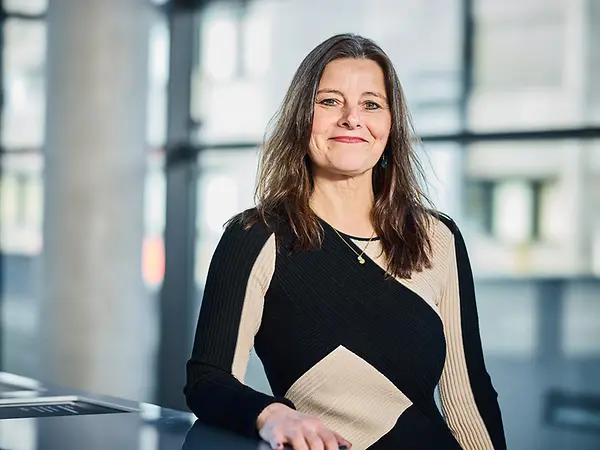
Since 2007, Maria Hill has been responsible for sustainability in the ECE Group. In 2017, she became Chair of the committee for “Energy and Building Technology” of the ZIA with a focus on the EPBD (Energy Performance of Buildings Directive) and GEG (German Buildings Energy Act). Since 2019, Maria Hill has acted as an expert on the German Building Energy Act for the German parliament and, since 2022, she has been Chair of the Sustainability committee for the Europe Council of Shopping Places. Maria Hill also lends her expertise as an advisor to DENA (German Energy Agency) and the DGNB (German Sustainable Building Council).

Arved Fuchs
20250516_1448_Fußball-T-Shirt im Stadion_remix_01jvcj3tqvetssbtt978a4t0ma Kopie

For more than 40 years, Arved Fuchs has been undertaking expeditions into the remote polar regions of the globe. He was the first person to reach both the North Pole and the South Pole on foot in the same year. Through his series of expeditions entitled “Ocean Change”, he aims to record scientifically relevant data and increase public awareness regarding the protection of the oceans and the world's climate. The expedition leader has been honoured many times for his commitment, including with the Order of Merit of the Federal Republic of Germany in 2017. Arved Fuchs is an ambassador of the German committee for the United Nations Decade of Ocean Science which runs until 2030. Since 2011, he has been a member of the ESG Board of the ECE Group.

Dr Michael Vesper
20250516_1448_Fußball-T-Shirt im Stadion_remix_01jvcj3tqvetssbtt978a4t0ma Kopie

Dr Michael Vesper is a German sports official and politician (Alliance 90/The Greens). He was one of the founding members of the German Green Party (“Die Grünen”) in 1979 and, from 1990 to 2005, he was a member of the state parliament of North Rhine-Westphalia, as well as the Chief Whip. From 1995, Dr Vesper was initially Minister for Building and Housing and then, from 2000, Minister for Urban Development and Housing, Culture and Sport. He was also Deputy Prime Minister. In the period from 21 October to 6 November 2022, Dr Michael Vesper was Prime Minister of North Rhine-Westphalia and therefore the first Green politician to govern a German federal state. Since 2019, he has been a member of the ESG Board of the ECE Group.

Dr Michael Six
20250516_1448_Fußball-T-Shirt im Stadion_remix_01jvcj3tqvetssbtt978a4t0ma Kopie

Dr Michael Six is the Managing Director of Goldbeck Deutschland GmbH, a member of the management board and the first Chief Sustainability Officer for the pan-European construction and real estate company. Having studied Civil Engineering, he then obtained a doctorate specialising in concrete constructions from the Technical University of Darmstadt in 2002. Following positions as a team leader in structural engineering for bridge building at Bilfinger Berger and as a manager at Haag Ingenieur GmbH, he joined Goldbeck in 2004 as a sales engineer. As Chief Sustainability Officer, he is now responsible for the strategic direction of ESG activities at Goldbeck and is also involved in various initiatives for a sustainable transformation of the construction and real estate sector, as well as the overall economy. 

20250516_1448_Fußball-T-Shirt im Stadion_remix_01jvcj3tqvetssbtt978a4t0ma Kopie

Organisation of sustainability

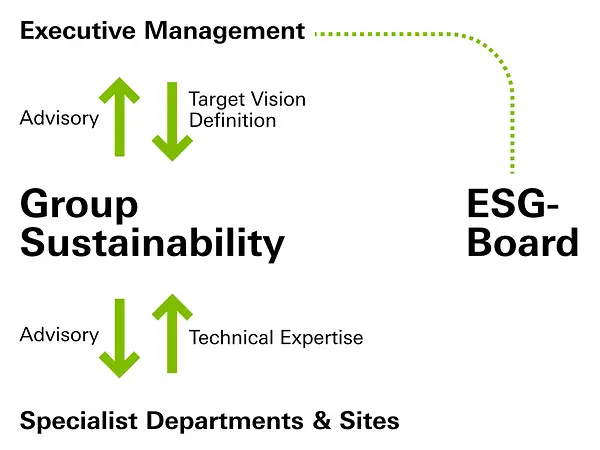
Schüco has a Group-wide sustainability department (Group Sustainability), which is assigned to the “Group Strategic Functions”. Its role is to keep sight of the sustainability issues that are relevant for the company and work out the resulting course of action on a regular basis. During the reporting period, the Sustainability department consisted of eleven people. 

The Executive Management Board has overall responsibility for implementing the strategic sustainability objectives and the compliance guidelines. Meetings with the ESG Board at least every six months, quarterly Advisory Board meetings and regular meetings with the shareholders ensure that the Executive Management Board is committed to the sustainable development of the Schüco Group when it comes to key stakeholders. Furthermore, particularly critical issues and impending missed targets are brought directly to the Executive Management Board. Communication is via direct reports, through Internal Auditing or by means of various compliance, crisis and risk committees. 

20250516_1448_Fußball-T-Shirt im Stadion_remix_01jvcj3tqvetssbtt978a4t0ma Kopie

In addition, the Executive Management Board holds regular discussions on sustainability with economists, politicians and scientists. One example of this is the role Andreas Engelhardt holds as Vice Chairman of the Steering Committee of the public interest Stiftung KlimaWirtschaft foundation.  

Schüco considers sustainability to be an integral, interdisciplinary function which needs to be firmly anchored in all aspects of the business. That is why the Sustainability department holds regular discussions with individual departments and with the sites of the Schüco Group both within and outside Germany. Defining mutually effective concepts and measures that have been approved by the Executive Management Board and implemented in the departments is established practice. Achieving sustainability-related goals, such as the path to climate neutrality that Schüco has defined, is not yet part of remuneration-related target agreements.