Information about the reference project
Type of building: |
Living |
Products: |
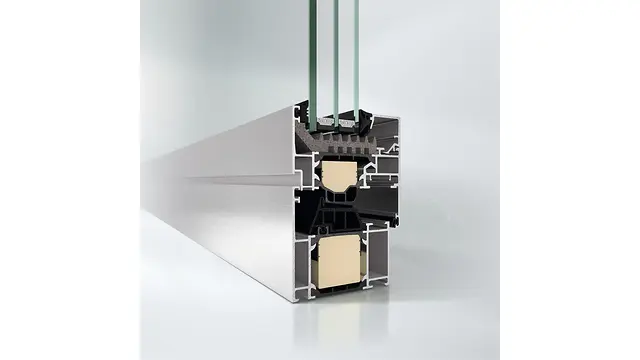
Windows, Entrances, Façades |
Series: |
FWS 50, AWS 75.SI+, AD UP 75 |
Location: |
Hamburg, Hamburg |
Completion: |
2022 |
Architects: |
phase 10 |
Specialist company: |
Alusysteme - Metallbau |
Picture credits: |
© Matthias Plander |
High-rise bunker becomes a green highlight
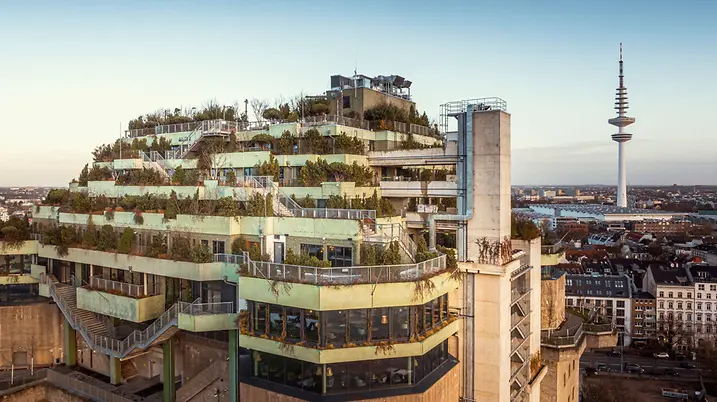
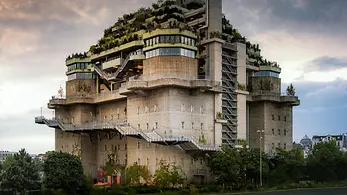
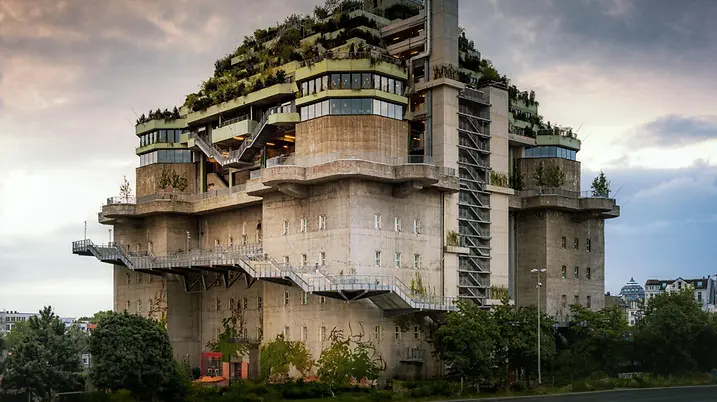
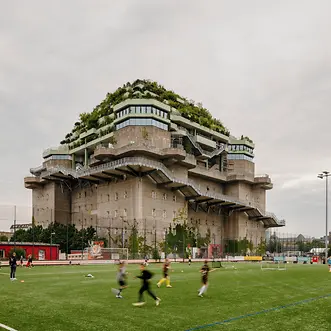
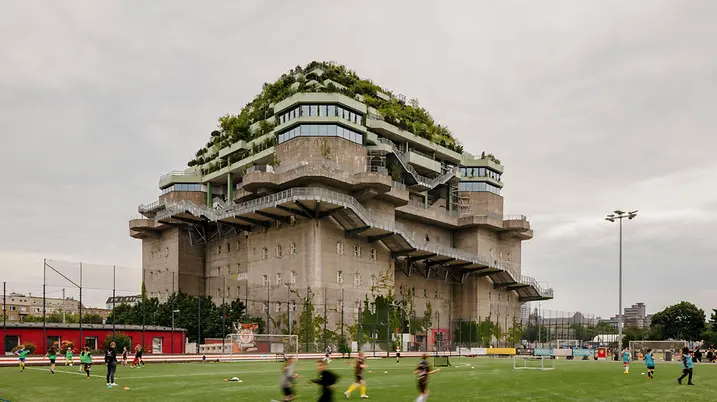
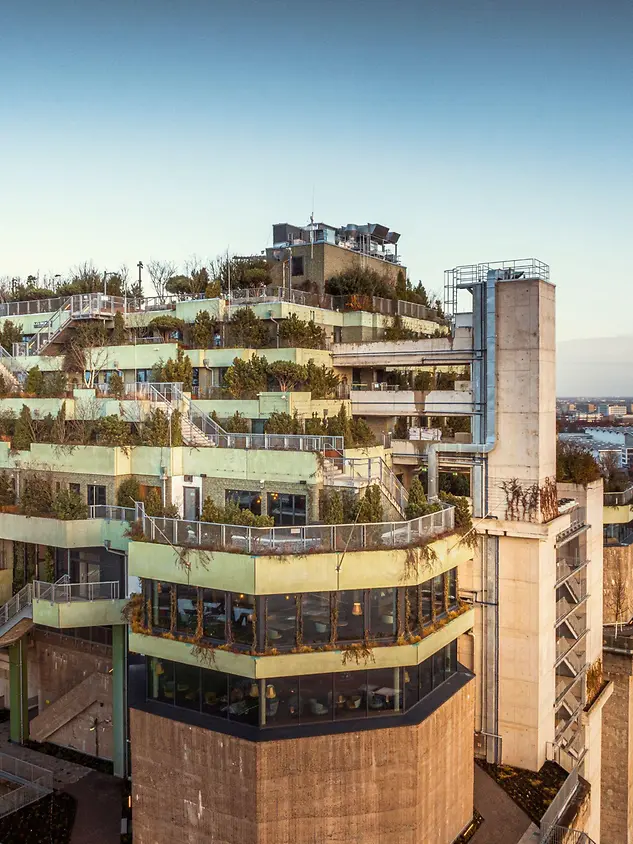
Impossible to miss, the bunker at Heiligengeistfeld has been an integral part of Hamburg's St. Pauli district since 1942. Once a place of refuge during the Second World War, the bunker has been extended and lavishly planted with greenery, making it a symbol for the sustainable conversion of historic buildings. Today it is home to over 20,000 plants, accommodates hotel spaces, restaurants and recreational facilities and offers a new concept for use for residents and visitors.
Successful conversion
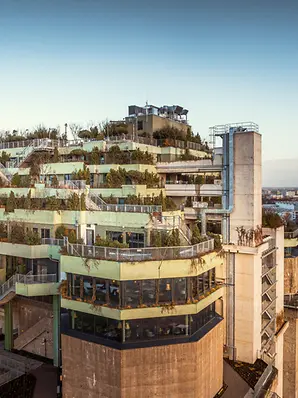
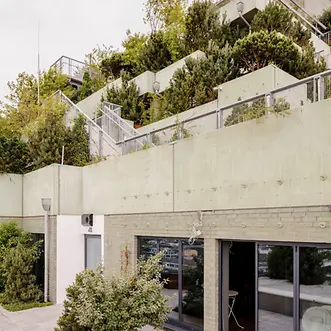
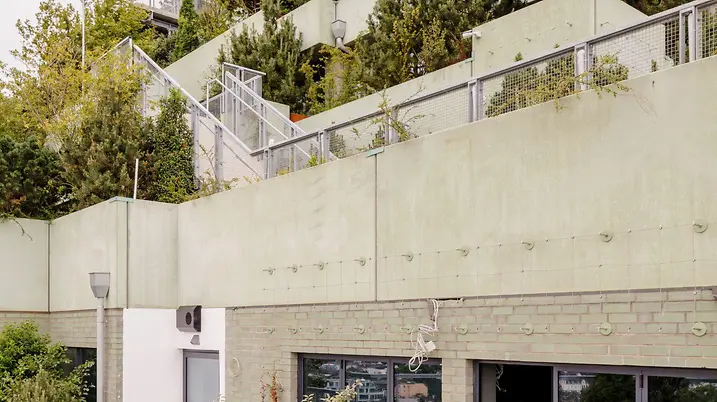
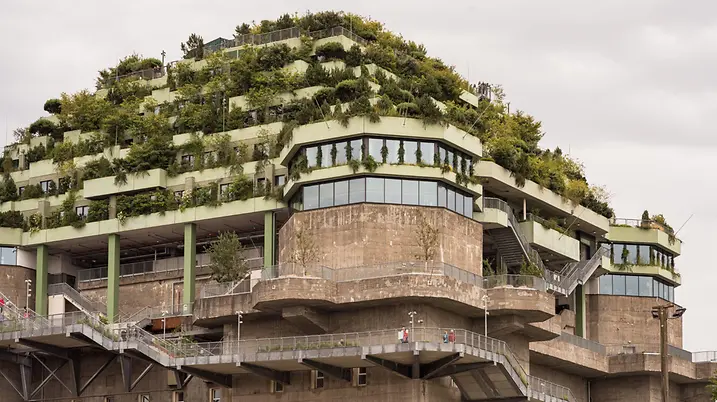
The listed bunker has been expanded significantly: the pyramid-shape of the bunker roof houses five new floors, providing an additional 10,000 square metres of usable space for hotels, restaurants, shops and entertainment. Many of these areas are accessible to visitors free of charge. Particular highlights include the green roof garden on the sixth floor, the park-like communal areas and the mountain path that you can use to walk up around the outside of the building. The numerous plants stay green all year round and offer habitats for small animals and insects. At the same time, the greenery improves the microclimate and cools the building, meaning less energy is required to control the climate in the bunker during the summer months.
Important witness to the changing times
During the second World War, the bunker offered protection against air strikes for up to 25,000 people. Remnants of things like ammunition repositories still serve as a reminder of this time. Memorial and information centres have been established in the bunker to maintain a culture of remembrance. After the Second World War, the bunker became famous as the first editorial office of Axel Springer Verlag and as the broadcasting centre for the Tagesschau news programme, hence it also became known as the Hamburg Media Bunker. Additionally, the bunker gained recognition in the 1980s as a popular venue for concerts and cultural events. With the new concept for use, the bunker continues to be a vibrant place for social involvement and an example of a highly successful transformation.
Robust aluminium systems in action
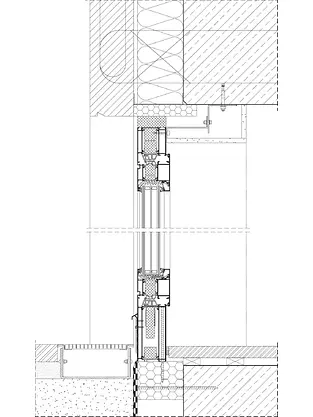
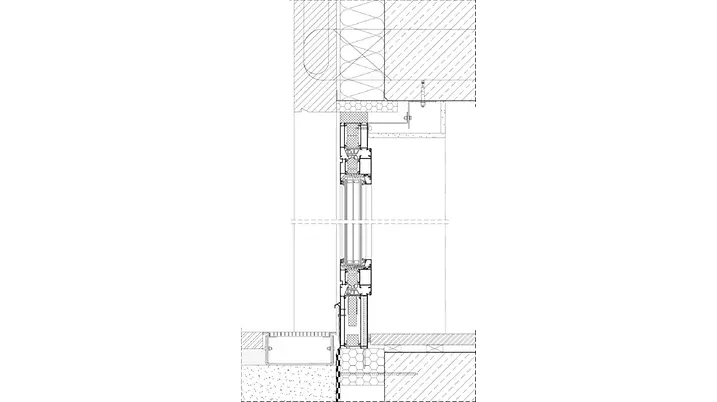
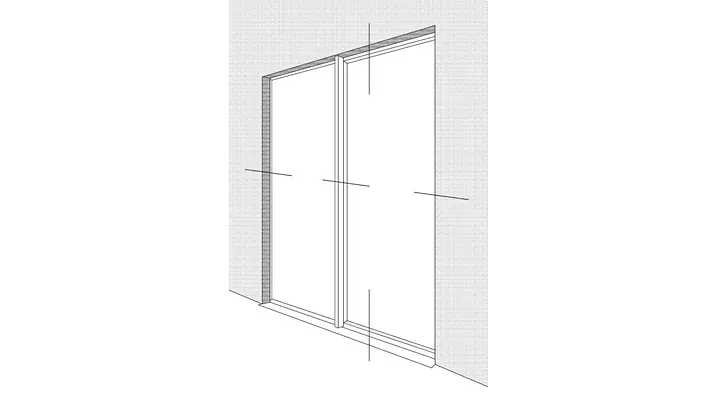
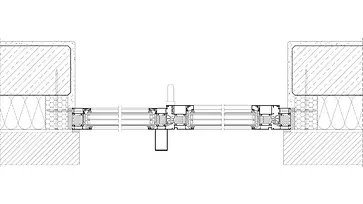
By adding five additional floors, the bunker has increased in height by 18 metres to a total of 58 metres. Due to the significant wind loads, robust aluminium units such as the FWS 50 mullion/transom façade were used in conjunction with the AOC add-on construction and the AWS 75.SI aluminium window with ALB large louvre blades, as well as the ADS 75.SI and ADS 65 door systems. In order to meet current fire protection requirements, fire doors from the ADS 80 FR30 series were used.
Product information
Inspiration from the reference project