H. C. Andersens Hus

New fairy-tale museum building

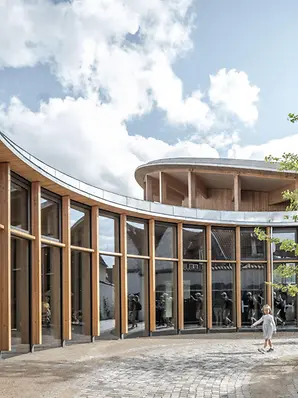
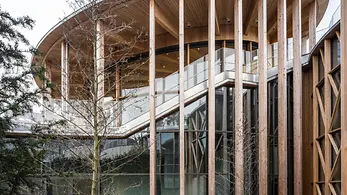
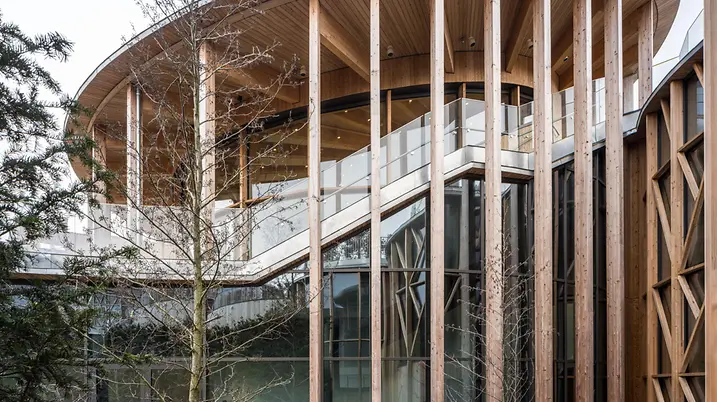
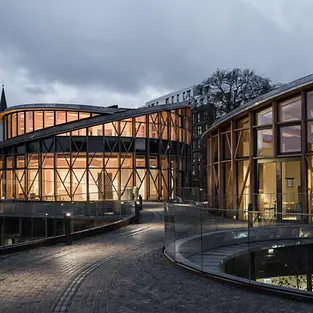
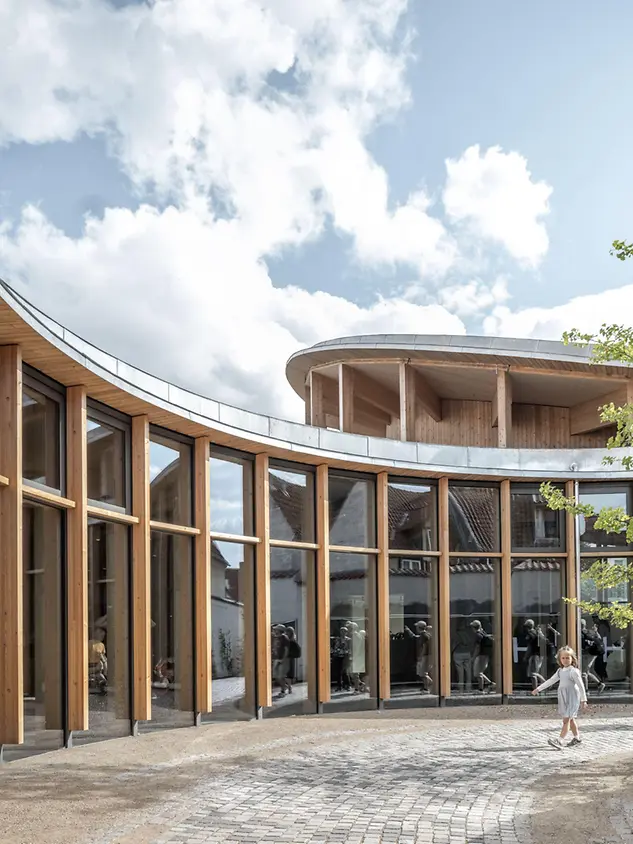
In the Danish city of Odense, H. C. Andersens Hus welcomes you on a fairytale escape. The architecture of the museum is also befitting of this: Japanese architects Kengo Kuma & Associates have designed an organic ensemble consisting of five circular timber pavilions. The museum’s underground exhibition halls can be found directly below. 

Detaljer om referansen

Bygningstype Sport og kultur
Produktområder Dører Fasader
Schüco-systemer FWS 60 AD UP 75
Egenskaper Nybygg
Sted Odense, Denmark
Ferdigstillelse 2021
Arkitekt C&W Arkitekter,Kengu Kuma Associations Europe
Forhandler REDTZ Glas &Facade A/S
Foto © Rasmus Hjortshøj

Mostly concealed

The fairy tales of Hans Christian Andersen (1805-1875) continue to inspire children and adults around the world to this day. Given this unwavering popularity, Denmark’s third largest city, Odense, has recently dedicated a rather unusual new museum building to its most famous son. To embrace the historical architecture of the mostly single-storey rows of houses in the old town and simultaneously create space for a beautifully designed garden, Kengo Kuma And Associates have housed most of the museum underground. A group of circular timber pavilions of different heights is all that can be seen above ground.

Artistic design for the space

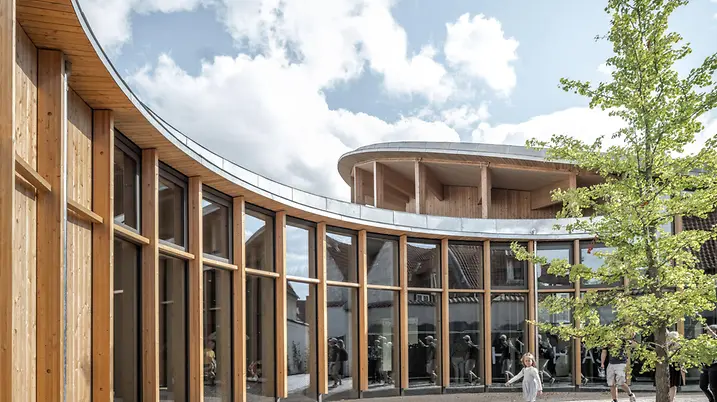
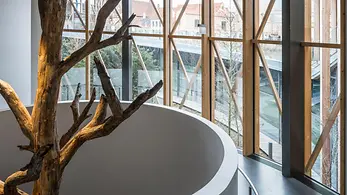
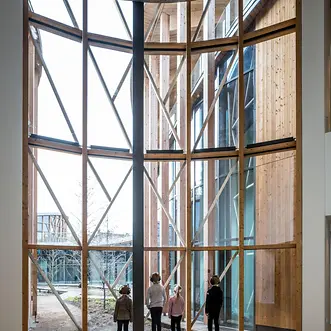
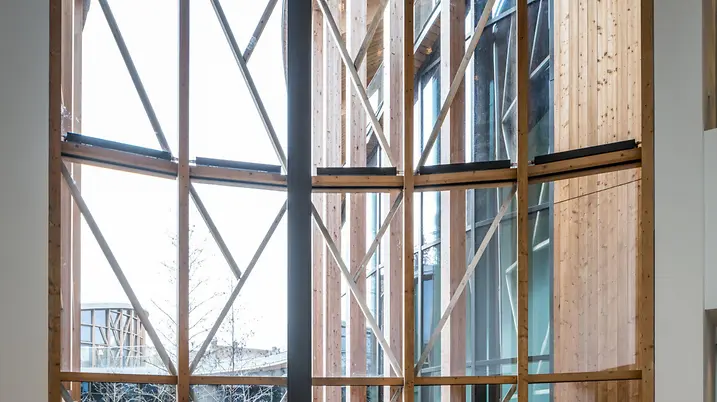
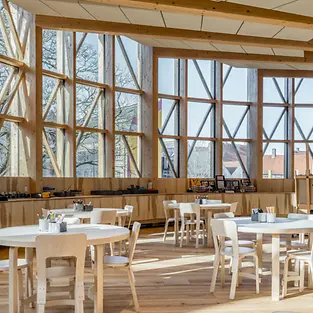
The five building structures accommodate the entrance area, museum shop, café and workshop rooms. They blend in completely organically with the enchanted garden landscape thanks to their curved glass façades and sloping green roofs. In the centre of the complex, the view opens up over glazed barriers down to a sunken garden containing a small expanse of water. The underground exhibition areas are arranged around this space. The interplay of the different floors creates an artistic spatial design that immerses visitors into the fantastic world of H. C. Andersen.

Tradition meets modern architecture

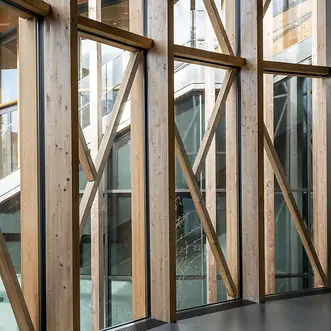
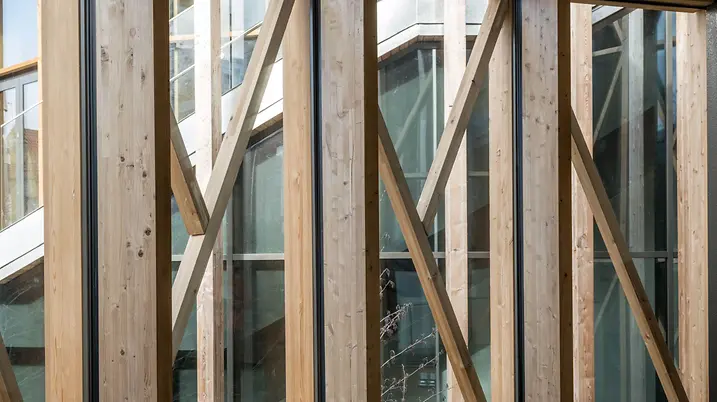
The architects took great care when designing the curved glazed façade, with the striking diagonal struts and the half-timbered architecture echoing the author’s neighbouring birthplace. A timber add-on construction allows a harmonious look to be achieved inside the building. Laminated timber profiles have been used in some areas externally to emphasise the style of a traditional half-timbered building.

Produktinformasjon

FWS 60

Schüco Fasadesystem FWS 60

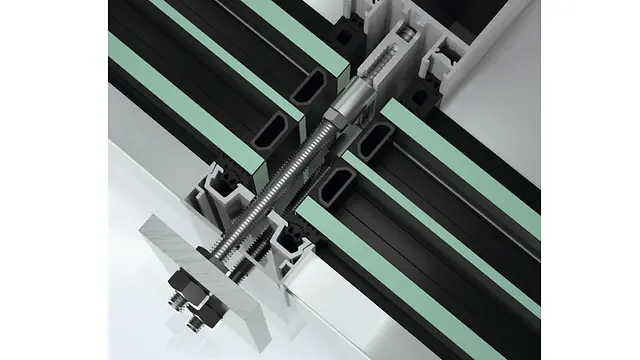
En ny generasjon av klassiske og etasjehøye vindusbånd med et bredt spekter av bruksområder – maksimalt utsyn, smale profilbredder og høy funksjonalitet inklusive.

Stadig høyere etterspørsel og krav til støy- og varmeisolering har i de senere årene ført til dominerende vindusprofiler. Det har virket umulig å konbinere gjennomgående smale profiler med de økende tekniske kravene. Nå har Schüco med det nye fasadesystemet Schüco FWS 60 CV (Concealed Vent) lykkes i å finne en revolusjonerende løsning for vindusbånd, hvor man kombinerer slanke profilbredder med høy funksjonalitet og optimal varmeisolering. Siden vindusrammen er integrert i bærekonstruksjonen, får brukeren maksimalt utsyn. Samtidig er det umulig å skille mellom åpningsvindu og fastkarm utenfra, noe som er unikt for bransjen. På innsiden blir åpningselementene bare synlige ved hjelp av en smal skyggefuge og vindusvrideren.

Les mer

AD UP 75

Schüco Dørsystem AD UP 75

En dør med 75 mm profildybde egnet for næringsbygg med høyfrekvent bruk så vel som for et eksklusivt inngangsparti i en bolig

Schüco aluminiumsdør AD UP 75 (universell plattform) kombinerer svært god varmeisolasjon med høy stabilitet og er velegnet for bruk i både bolig- og næringsbygg. Dørens konstruksjonprinsipp sikrer gode statiske egenskaper og yter høy funksjonalitet innen alle bruksområder.

Les mer