Embodied emissions - material choice makes the difference​

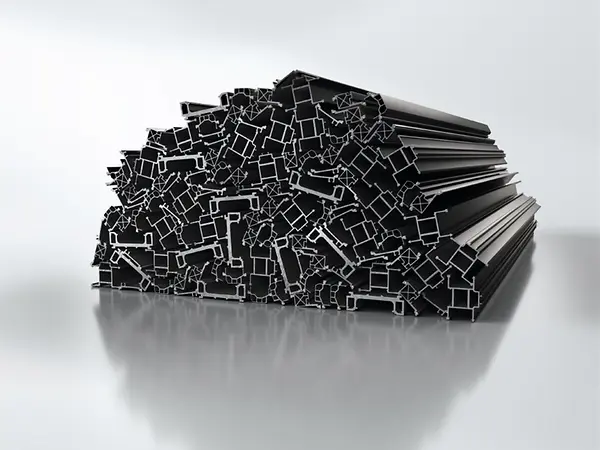
Material selection directly affects the CO₂e value of the components assessed. Compared with Schüco standard aluminium, our Schüco Low Carbon, Schüco Ultra Low Carbon and Schüco Ultra Low Carbon+ aluminium grades* reduce the carbon footprint by 46–87%. Further options include our RECYCLED PVC, BIO-ATTRIBUTED PVC and BALANCED PVC grades, as well as hybrid constructions—for example, timber combined with an aluminium add-on structure.​

FDH_CarbonControl_SC

The material makes all the difference

Embodied carbon is the CO₂ emissions contained within the material that are generated when the units are produced. These embodied emissions can be reduced through the use of materials that have been produced in a particularly efficient way with regard to CO₂. However, when selecting a suitable material with as little carbon input as possible, you should always check that the material is suitable for the specific building requirements and can fulfil its function.

An overview of carbon-efficient materials from Schüco

Low Carbon (LC) aluminium

Schüco Low Carbon aluminium profiles have a GWP value of 3.84 kg CO₂e/kg. This is achieved through the use of materials with recycled content or green energy during production. Compared to standard Schüco aluminium profiles, profiles made from Schüco Low Carbon aluminium save around 3.27 tonnes of CO₂ per tonne of aluminium profile – that's 46% of CO₂ saved.

Ultra Low Carbon (ULC) aluminium

Schüco Ultra Low Carbon contains at least 75% post-consumer recycled material and has a GWP value of 1.99 kg CO₂e/kg aluminium profile. Compared to standard Schüco aluminium profiles, profiles made from Schüco Ultra Low Carbon aluminium save around 5.12 tonnes of CO₂ per tonne of aluminum profile – that's 72% of CO₂ saved.

Ultra Low Carbon+ (ULC+) aluminium​

Schüco Ultra Low Carbon+ contains at least 99.5% post-consumer recycled material and has a GWP value of 0.89 kg CO₂e/kg aluminium profile. Compared to standard Schüco aluminium profiles, profiles made from Schüco Ultra Low Carbon aluminium save around 6.22 tonnes of CO₂ per tonne of aluminum profile – that‘s 87% of CO₂ saved.

Schüco allotment process​

Schüco Ultra Low Carbon+, Ultra Low Carbon and Low Carbon aluminium are supplied through an allotment process. The different material grades are not separated during delivery, reducing transport, handling and warehousing requirements. Irrespective of the grade ordered, delivered profiles may consist of Standard, ULC+, ULC or LC aluminium. For the EPD-based GWP value, the determining factor is the CO₂ value specified in the order and allocated during production.​  ​  

* The reference value for Schüco standard aluminium profiles, together with the stated values for Schüco Low Carbon (LC), Ultra Low Carbon (ULC) and Ultra Low Carbon+ (ULC+) aluminium and profiles, is taken from the respective Environmental Product Declarations (EPDs).​

FDH_CarbonControl_SC

Aluminium grades: Low Carbon, Ultra Low Carbon and Ultra Low Carbon+ aluminium​

Schüco Low Carbon, Ultra Low Carbon and Ultra Low Carbon+ aluminium grades have substantially lower embodied carbon than conventional aluminium, due in part to recycled content and renewable electricity in production. The EPDs report 3.84 kg CO₂e/kg for Schüco Low Carbon profiles, 1.99 kg CO₂e/kg for Ultra Low Carbon profiles and just 0.89 kg CO₂e/kg for Ultra Low Carbon+ profiles.**​  

**Reference value for Schüco standard aluminium profiles and values for Schüco Low Carbon, Ultra Low Carbon and Ultra Low Carbon+ aluminium and profiles, according to the Environmental Product Declarations (EPDs) dated January 2025 and December 2025, respectively.​

BALANCED PVC

All BALANCED profiles—which represented 60% of our PVC profiles last year—are produced as standard with recycled material* or, alternatively, a resource-optimised formulation in the inner core. This formulation contains only the components required to ensure material quality and, for example, omits colour pigments to conserve raw materials.​

RECYCLED PVC

Every PVC profile in this material class is guaranteed to contain recycled material in its inner core, sourced from post-consumer windows and profiles as well as production scrap. Depending on the profile geometry, recycled content in the inner core ranges from 30% to 57%.​ 

BIO-ATTRIBUTED PVC

For BIO-ATTRIBUTED profiles, Schüco uses bio-attributed PVC produced through a mass-balance process in which fossil crude oil is replaced with tall oil, a non-fossil feedstock. Compared with conventional virgin PVC from the same producer, the PVC used in BIO-ATTRIBUTED profiles reduces CO₂e by up to 90%. The feedstock is accounted for under an RSB- and ISCC PLUS-certified mass-balance process: fossil and non-fossil raw materials are combined during production and tracked through audited records, with external audits conducted annually.​

4067a08-Web

Plastic Material Classes​

PVC is well suited to certified, future-ready buildings and can help reduce embodied emissions. Schüco PVC windows can be efficiently recycled through Rewindo*.​  

Under our BALANCED PVC material standard, profiles are produced as standard with recycled material or, alternatively, a resource-optimised formulation in the inner core. This formulation contains only the components required to ensure material quality and, for example, omits colour pigments to conserve raw materials. We aim to increase the share of recycled raw materials in our standard portfolio continuously. Last year, 64% of our PVC profiles were produced with recycled material or, alternatively, a resource-optimised inner-core formulation.​

* In Germany, 94.5% of all post-consumer PVC windows were recycled in 2025 (Rewindo, 2025).​  ​

shutterstock_2279647005

NEW: PVC profiles containing bio-attributed PVC from tall oil

With this material class, investors can meet theDGNBcertification requirements for Quality Level 4, reducetheCO₂e footprint compared with conventional virgin PVC,anduse a non-fossil raw material base at the same time.​

During PVC production, crude oil is replaced with tall oil inamass-balance process. Tall oil is a by-product ofpaperproduction. It is a renewable, non-fossil raw materialderivedfrom pine trees and does not compete with the foodchain.Compared with virgin PVC made from crude oil, tall-oil-basedPVC can reduce CO₂e emissions during themanufacturingprocess by up to 90%*.​

Bio-attributed PVC is integrated into existing supply chainsandproduction processes through a mass-balanceapproach. Thismeans it can also be combined individuallywith the BALANCEDPVC and RECYCLED PVC materialclasses.​

The mass-balance process is certified under the RSB andISCCPLUS schemes. This allows fossil and non-fossil rawmaterialsto be mixed during production, while the quantity ofpurchasedtall oil can be traced through the entire supplychain—from thepaper manufacturer to Schüco’s productionfacility inWeißenfels—using a bookkeeping system. Eachstage of thevalue chain is audited annually as part of theexternalcertification process.​

BIO-ATTRIBUTED PVC is available for all Schüco PVCsystems.​

* Compared with the manufacturing process for virginPVCproduced by the same manufacturer.​

Recycling as standard: The same insulating bars, less CO₂

Schüco is transitioning all PA 66 GF 25 polyamide insulating bars across all product groups to recycled material. Compared with virgin PA 66 GF 25, the recycled polyamide reduces CO₂e by 65%. Based on manufacturer declarations and calculations in accordance with the EPD standard EN 15804+A2.​  This measure can further lower a building’s GWP (Global Warming Potential), with the savings compounding particularly in large-scale applications.​  ​  

Product properties, certifications, catalogue numbers and article numbers will remain unchanged. The ordering process will also remain the same, as the transition will happen automatically.​

Cradle to Cradle Products Program

Cradle to Cradle-Certified Systems​

Material recirculation can be designed into products from the outset. Cradle to Cradle (C2C) Certified systems are assessed against criteria including circularity, material health, environmental performance and social responsibility. Schüco currently offers 95 systems certified at Silver or Bronze level. Each is designed to facilitate disassembly and material reuse.

vinyl-verified

PVC Systems with the VinylPlus Product Label​

All Schüco PVC systems carry the VinylPlus® Product Label. This sustainability label was developed by VinylPlus in collaboration with the Building Research Establishment (BRE) and The Natural Step.​
Schüco PVC systems can be reintroduced into the material cycle through the Rewindo system and meet the criteria required to retain this label.​

Zertifizierungen zum Download

Schüco has a number of certifications for buildings, individual products and management systems. You can download the certificates here.