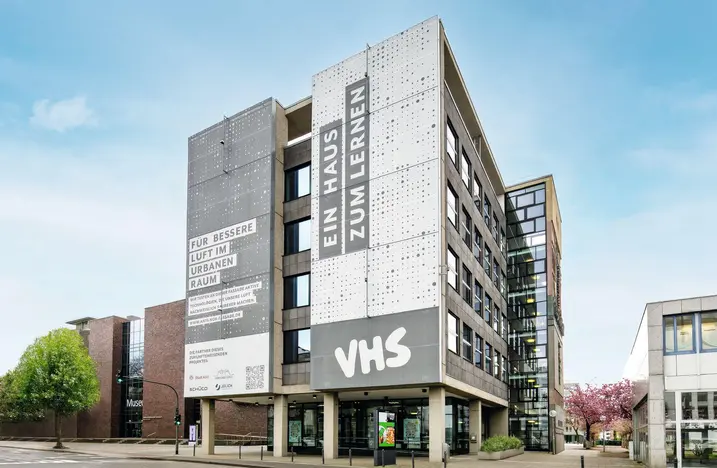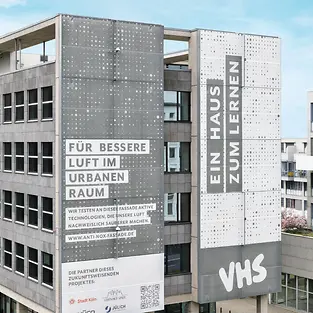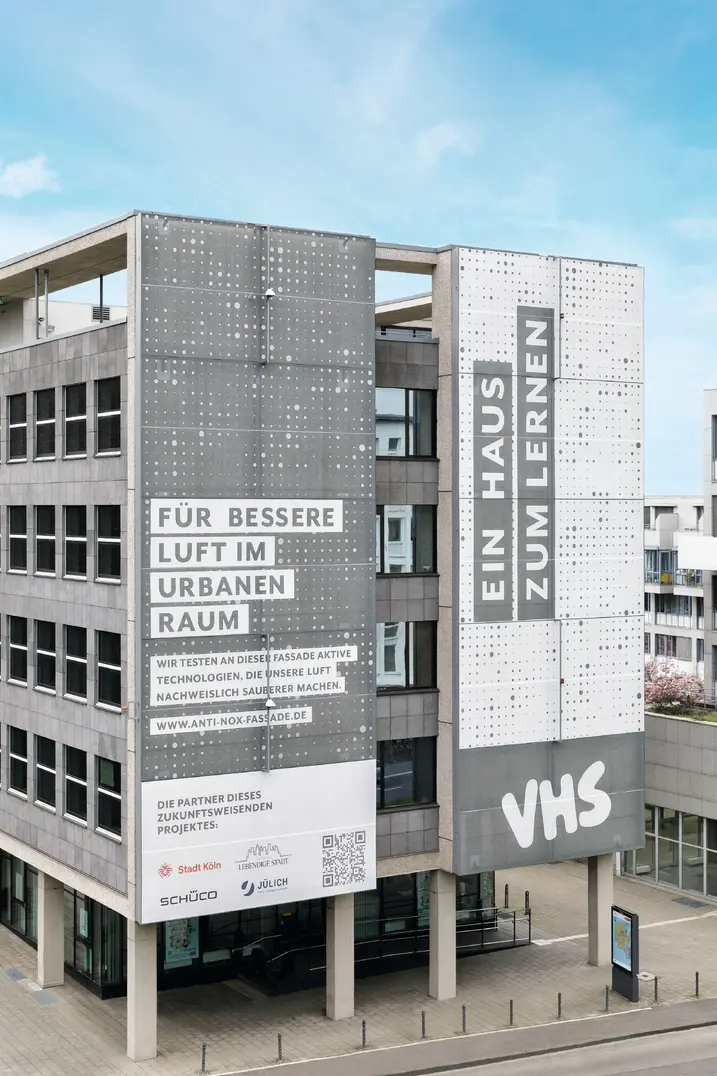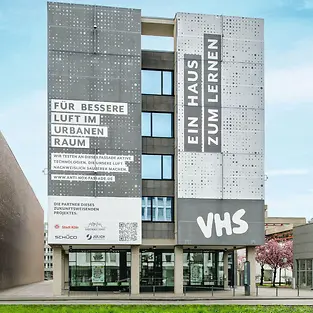
Volkshochschule Cäcilienstraße

Textile façade filters out over 30% of nitrogen oxides from the air

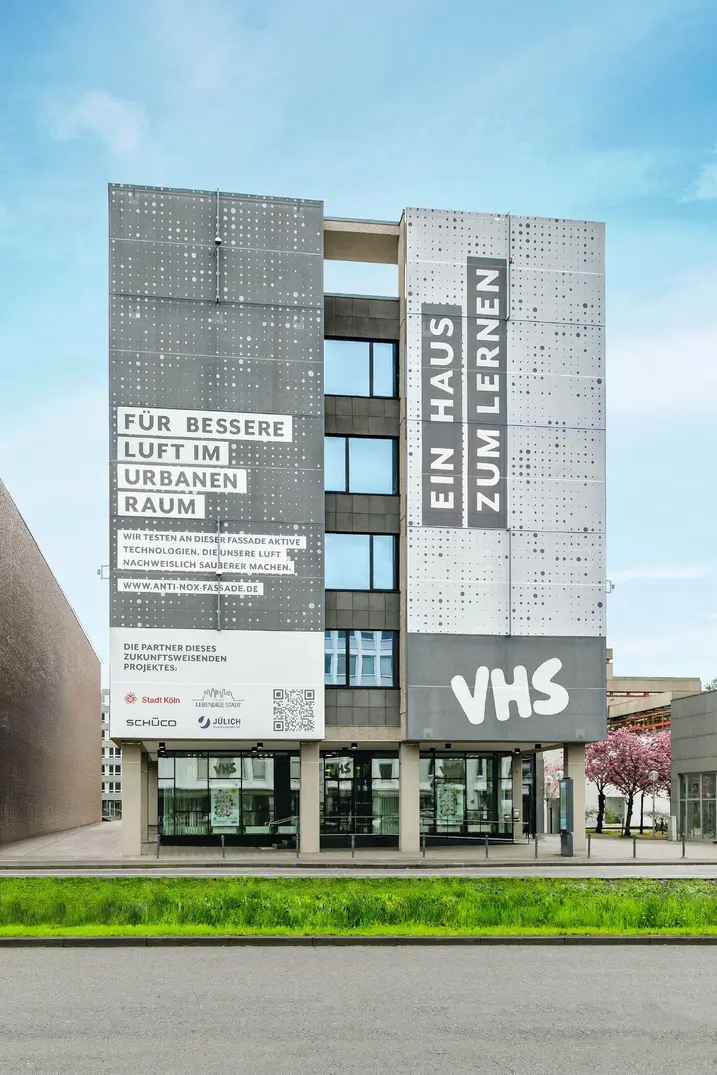
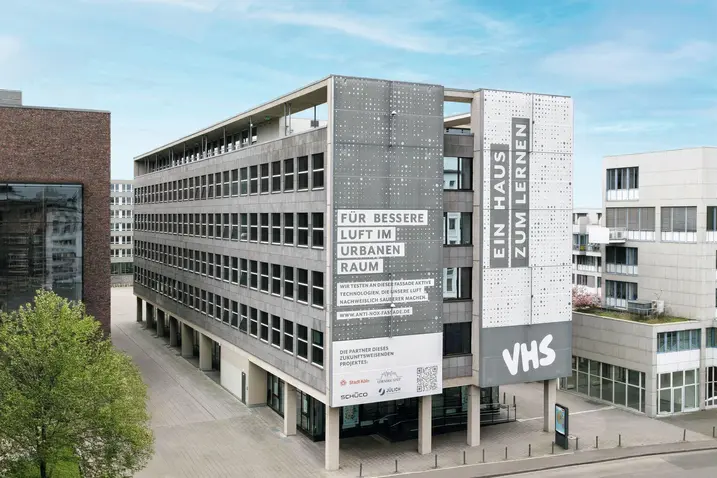
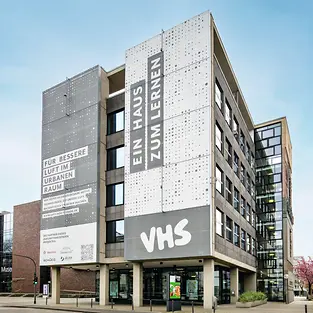
As part of a research project carried out by the city of Cologne, the “Lebendige Stadt” Foundation and Schüco, a photovoltaic textile façade was installed at the adult education centre in Cologne's Cäcilienstraße. The measurements show that it reduces nitrogen oxide pollution in the air by approx. 30%. The project is intended to serve as a model for other cities.
Reference details

Type of Building Education and research
Product areas Health
Schüco Systems FACID AC
Location Köln, Germany
Completion 2024
Architects Jan Serode
Specialist company Hillebrandt GmbH
Picture credits © Fotografie Ulrik Eichentopf

New membrane cleans the city air

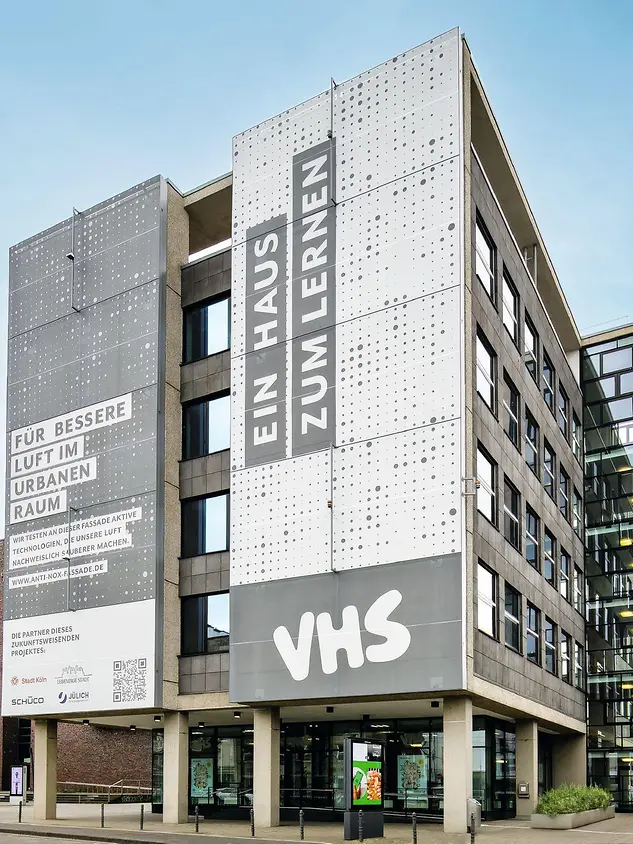
The project to clean nitrogen oxide-polluted air in inner city Cologne began in 2024. For this, a textile façade that binds nitrogen oxides was installed on the adult education centre building in Cologne's Cäcilienstraße. The membrane uses special active agents to filter out the nitrogen oxides that are harmful to our health and the environment, and converts them into harmless minerals. The photovoltaic filter consists of two printed membrane surfaces, each measuring 8 x 20 metres. Digital technology measures the air quality in front of and behind the membrane in order to evaluate and document the filter performance.

Filter performance continually improves

The measurements taken on the nitrogen oxide-binding membrane show that, based on average monthly values, filter performance of around 30% is achieved. Individual measurements taken daily are even higher. For the shadier, north-facing orientation of the education centre building, this is an impressive value. The project also demonstrated that filter performance increases with increasing exposure to daylight and high temperatures. Since January 2025, the filter performance has continually improved. This positive trend has so far continued unbroken. With the membrane positioned in a south-facing orientation, it can be assumed that, under otherwise identical environmental conditions, the light intensity would be up to three times higher and therefore filter performance would be considerably better than on a north-facing façade.

Product information

FACID AC

Schüco Façade System FACID AC

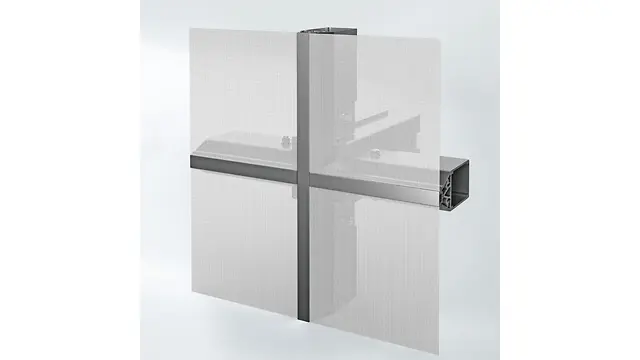
Multifunctional textile façade with an aluminium construction

Façades which radiate style, ensure maximum transparency or feature impressive illumination. With the new Schüco FACID AC (Aluminium Construction) textile façade, the external appearance of a building can be quickly and efficiently adapted to changing requirements without limiting the function of the property or using a steel substructure. As there is no steel substructure, fewer work steps are required, which significantly reduces the workload.

Learn more

Adapting to climate change

The membrane has a cooling effect on the inside of the building, as it protects the façade from direct sunlight and the interior from overheating. This reduces the energy requirements for cooling, which lowers carbon emissions. At the same time, the membrane emits less heat into the urban space which, in turn, produces its own cooling effect. This is an important component for climate adaptation strategies.

Made from reuseable materials

The textile façade is made from reusable materials. Over 4400 recycled PET bottles were used to produce it, and aluminium with a recycled material content of 75 percent was used for the substructure. Adhesives were not used in its construction. This means the textile façade can be fed back into the recycling loop later.