ToHa (Totzeret Haaretz) Tower 1

Innovative façade solution for Tel Aviv

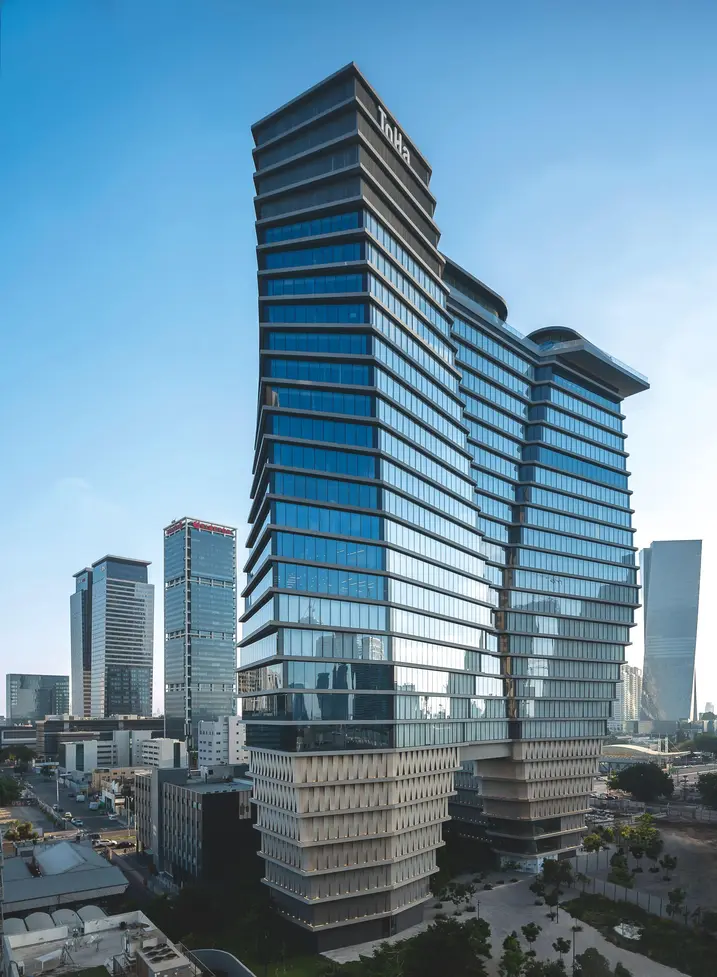
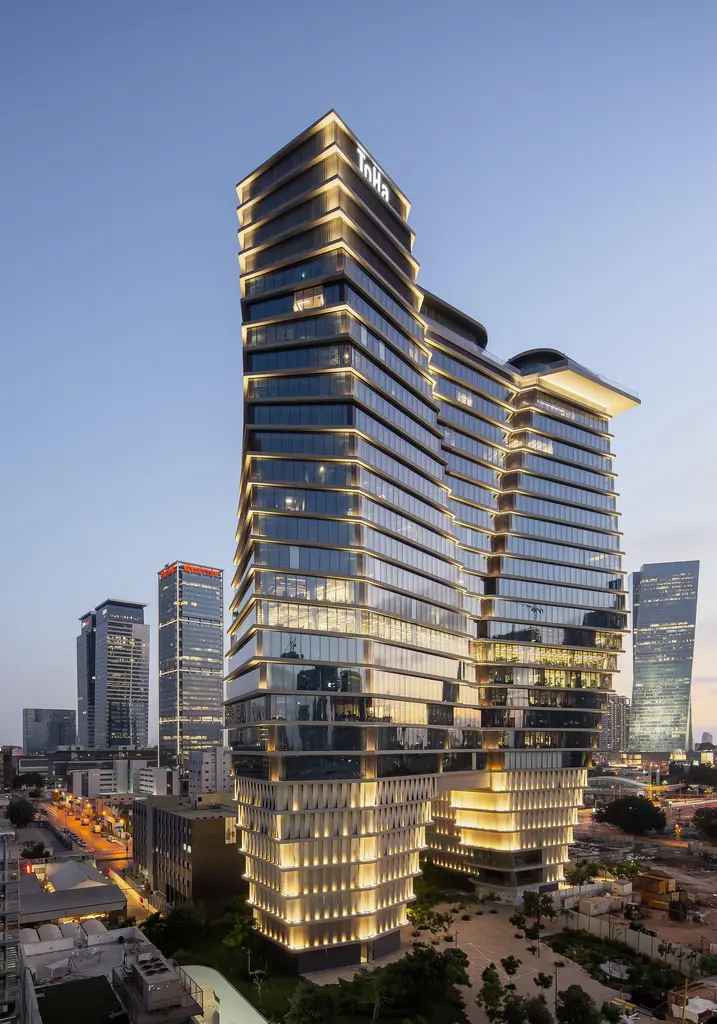
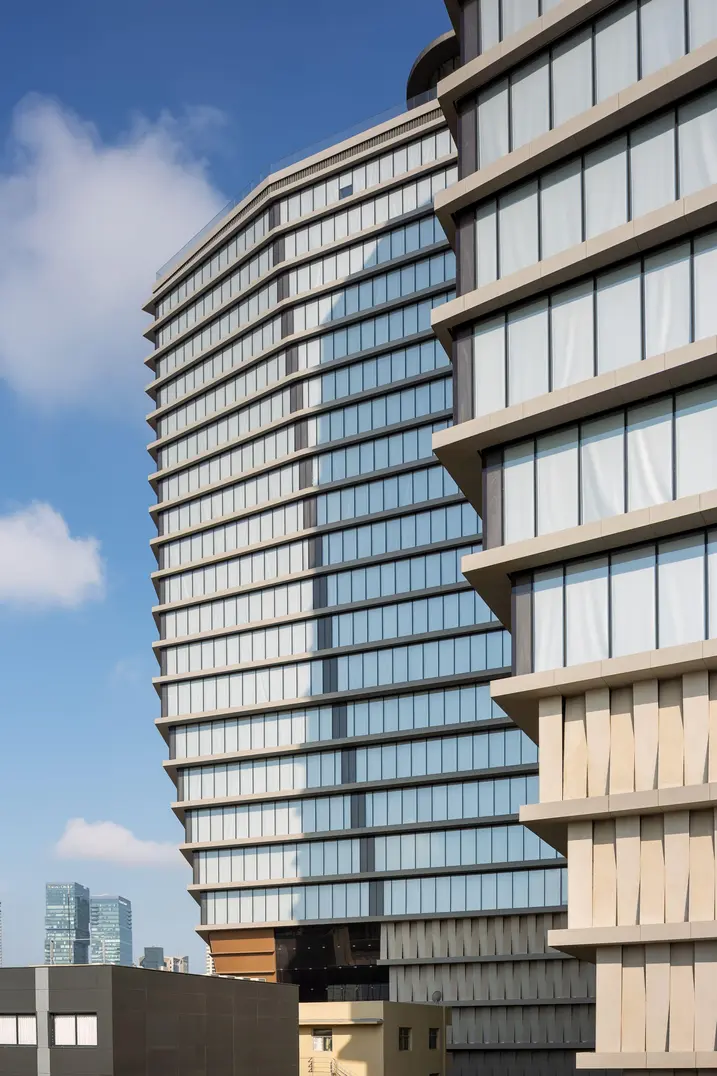
Fitted with an innovative closed-cavity façade that Schüco played a vital part in designing and developing, ToHa Tower 1 meets the special requirements of an Israeli metropolis with its sustainable façade solution: comprehensive sound reduction, high energy efficiency and minimal cleaning needed. It has been awarded “Best Tall Office Building” and “Best Tall Building Middle East & Africa” by the Council on Tall Buildings and Urban Habitat (CTBUH) in Chicago.

Reference details

Type of Building Office and administration
Product areas Facades
Features New build Energy efficiency Resilience Exceptional architecture Famous Building
Location Tel Aviv, Israel
Completion 2019
Architects Ron Arad Architects,Y.A Yashar Architects Ltd.
Specialist company Aluminium Construction Ltd.
Picture credits Sharon Tzarfati Photography

Aesthetic iceberg shape with climatic effect

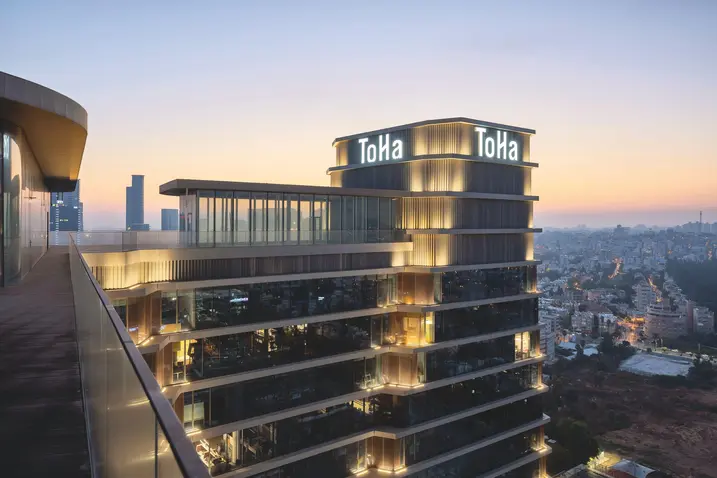
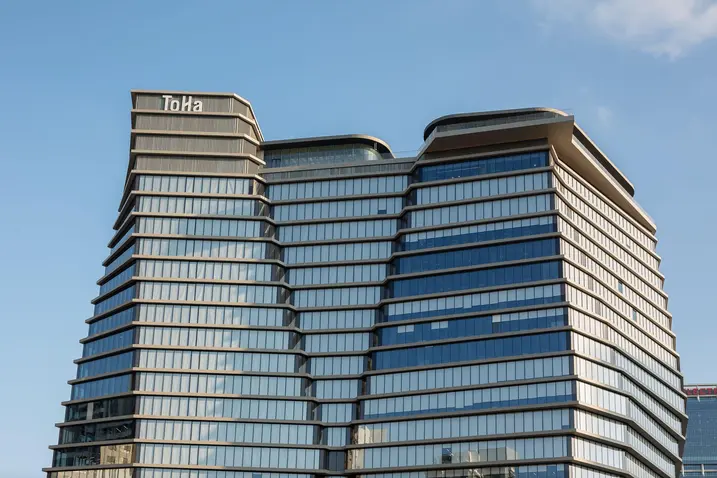
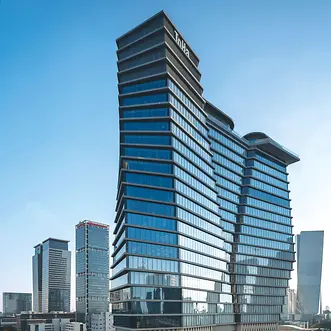
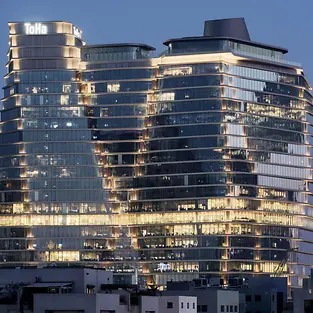
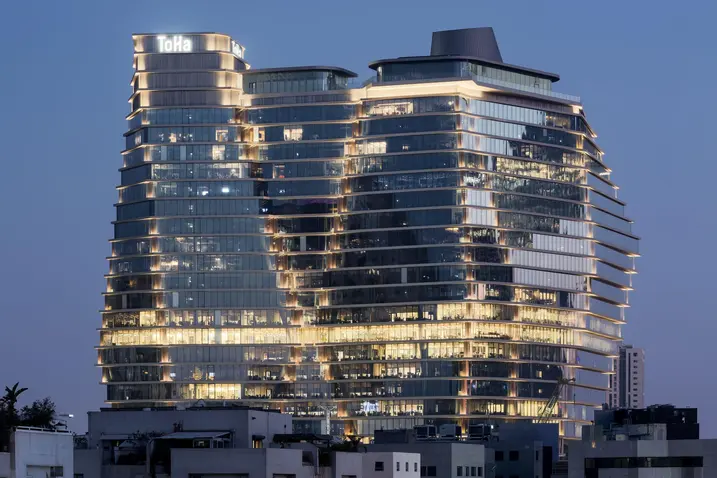
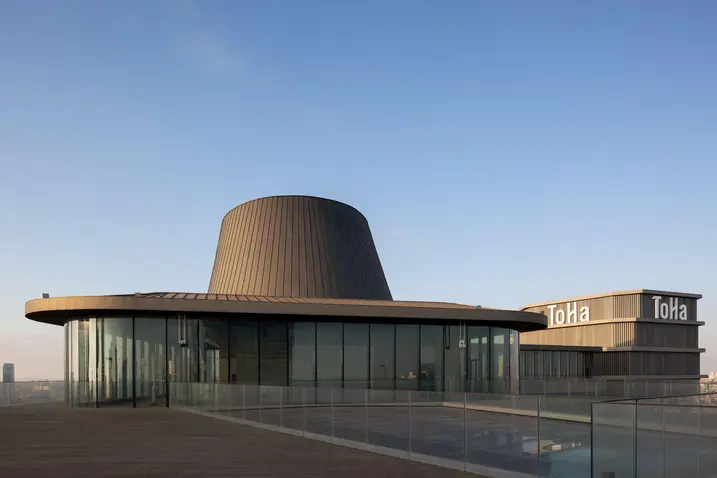
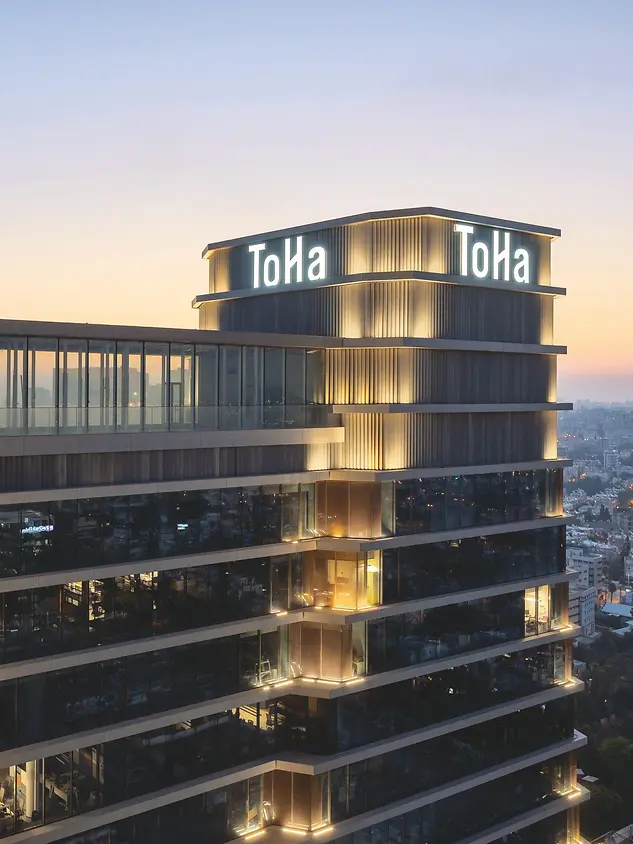
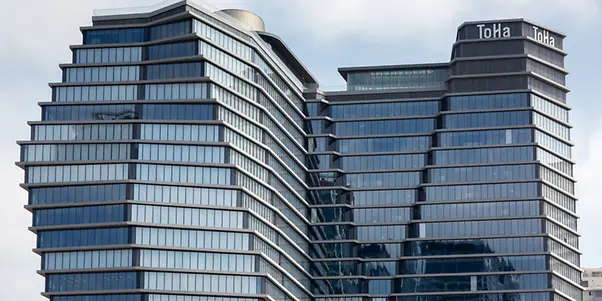
Ron Arad Associates from London worked together in Tel Aviv with the local practice Yashar Architects to deliver the 27 to 29-storey ToHa Tower 1 office high-rise. The tower stands at a height of 110 m with a net floor area of 53,000 m². Its appearance is inspired by the concept of an iceberg, exhibiting irregular shapes in all directions. This is not only a design feature but also serves functional purposes. By extending the floor slab of each storey beyond the plane of the building envelope, the interior is protected from direct sunlight, while natural light and fresh air enter the office spaces through an atrium that spans the full height of the building.

Façade against heat, noise and sand dust particles

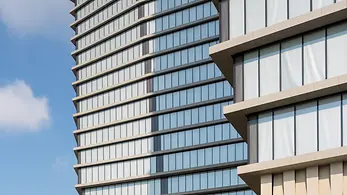
For the office levels, a closed-cavity façade was developed that is tailored to the climate. It is a special version of the double façade with a completely closed chamber between the inner and outer skins. Due to its closed, double-layer configuration, this special façade construction provides excellent sound reduction, without the need for special sound reduction glazing. Cooling loads and operating costs can be reduced by means of the protected sun shading that is integrated into the cavity. Since the internal sun shading and the space between the façade skins is completely closed off to dirt from both the outside and inside, it does not require cleaning. In addition, the closed-cavity façade features excellent energy efficiency, which is also thanks to the closed space between the façade skins.

A cavity that remains completely free of condensation

Comprehensive structural calculations were initially carried out to ensure the closed cavity of the façade can withstand the changing temperatures of the location and no condensation develops. Taking these calculations as a basis and using sensors installed in the cavity to constantly monitor the relative humidity and temperature, clean and conditioned air is fed into the individual closed cavities via a centrally controlled ring circuit system as required. Every façade front and storey is monitored and controlled separately. Excess air can be guided out through a pressure-relief valve in the outer frame. This ensures that the relative humidity, temperature and pressure in the cavity always remain within the calculated limit values, so that no condensation can form.

Testing of materials under extreme conditions

Tests, including so-called fogging tests, had to be carried out at the Institute for Window Technology in Rosenheim to prove that the closed-cavity façade was suitable for the climate conditions in Israel. These tests subjected all of the materials that were to be installed in the closed cavity to high temperatures. This enables any potential degasification of materials that could lead to condensation forming in the space between the façade skins to be identified at an early stage. Only materials that displayed no degasification, even at high temperatures, could then be used in the closed-cavity façade.