Lui House

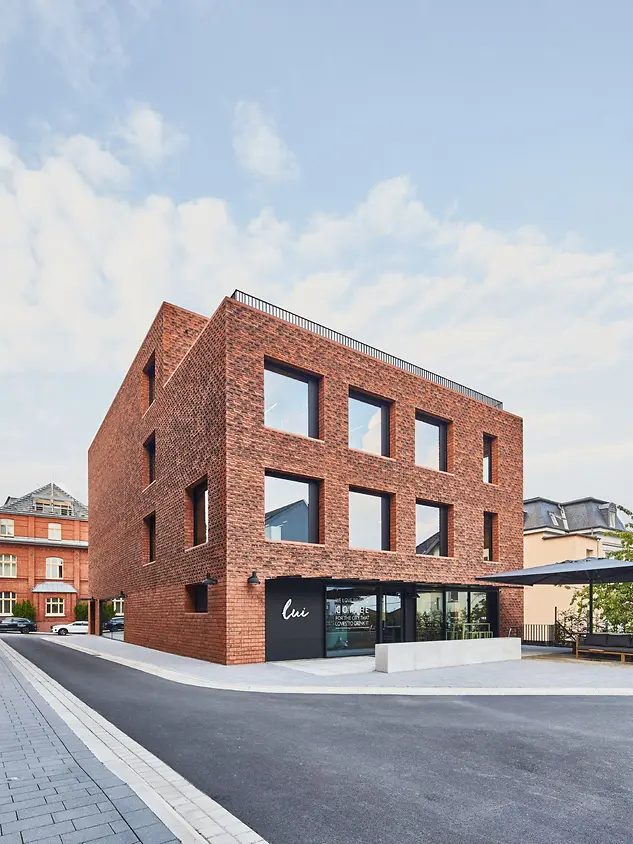
LUI HOUSE – the brick business card

With LUI HOUSE, architect Karsten Monke was able to realise his vision of modern, future-oriented working. The creative hub, located in Herford's innovative MARTa district, is as versatile as its architect, who served as its project manager, interior designer and client. The inventive complex reflects the intersection of sustainable building, mindset and personal values.

Reference details

Type of Building Office and administration
Product areas Windows Doors Facades Fire and smoke protection Sliding doors
Schüco Systems FWS 50.SI AWS 75.SI+ ADS 80 FR 30 ASE 67 PD AD UP 75
Features New build Energy efficiency Cradle-to-Cradle Fire protection Design and Aesthetics
Location Herford, Germany
Completion 2020
Architects archwerk GmbH
Specialist company ALUBA Aluminiumbau GmbH & Co.KG
Picture credits LT ArchitekturfotografieLaura ThiesbrummelHaydnstraße 880336 MünchenDeutschlandDie Bildnutzung ist honrarpflichtig und bedarf einer Lizenzierung.Gemäß § 13 bestehe ich auf Namensnennung bei Veröffentlichung der Bildwerke (Fotocredit: Laura Thiesbrummel / www.lt-architekturfotografie.com)

A building with history

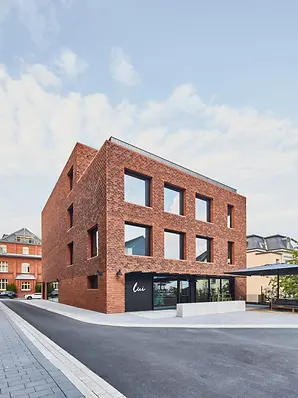
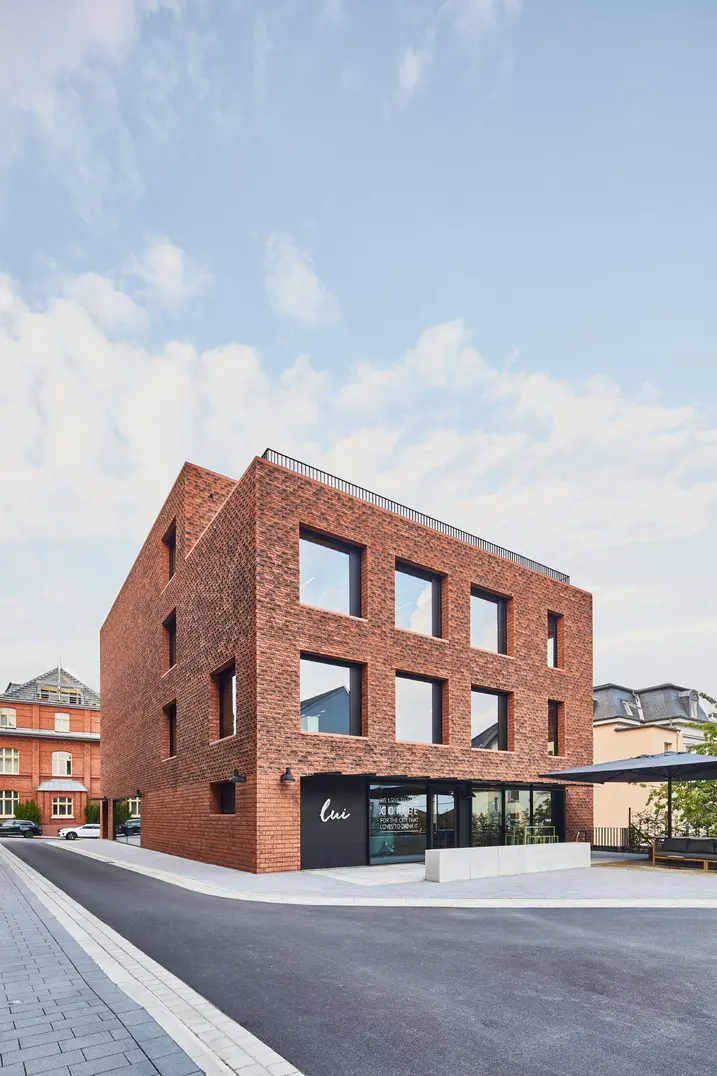
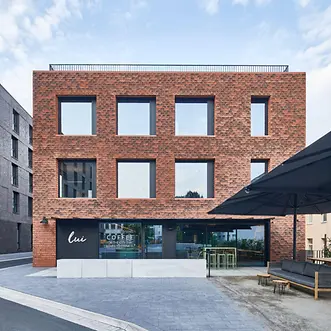
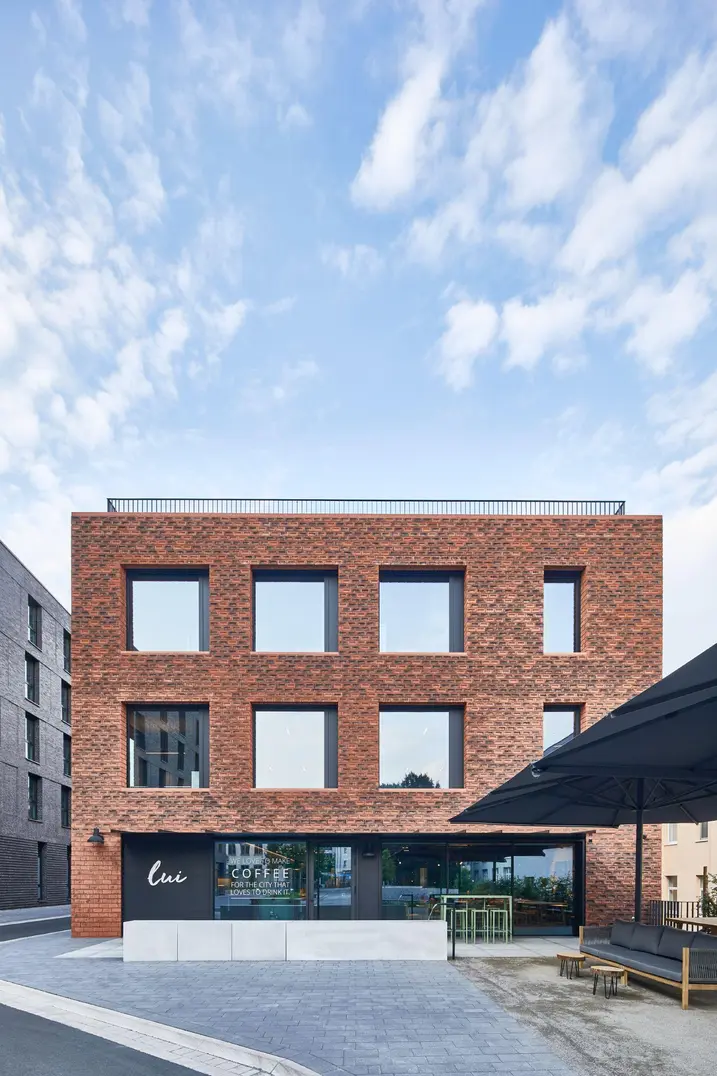
It could be said that this four storey, orange-red brick building was the missing puzzle piece which now completes Herford's MARTa district. The cube-shaped building fits in naturally amongst various points of interest such as the MARTa museum, the Elsbach Haus, the historic Rubensfabrik and the Steigenberger Intercityhotel, which was also designed by Karsten Monke. It is of course no coincidence that the colour scheme and materials chosen for LUI HOUSE complement its neighbouring buildings. Yet every element in and on the building tells a unique story: its own.

“An architect should never build his own house...

... because he'll probably never be finished with it. He needs to make decisions while being influenced by an enormous number of factors.” Architect Karsten Monke knows what he is talking about. All the same, he managed to design and build his 2000 square metre LUI HOUSE in a swift 18 month period, including the interiors. Over the 18 months, Monke put as much of his free time, energy, and heart and soul into realising his vision as he did practical work. “During that time, my children only talked to me using the formal German ‘you’ pronoun,” the Herford-born architect jokes. Monke's flexible position as client, architect, project manager and interior designer enabled him to circumvent lengthy coordination processes with a client and complete the build in good time.

A vision of vibrancy

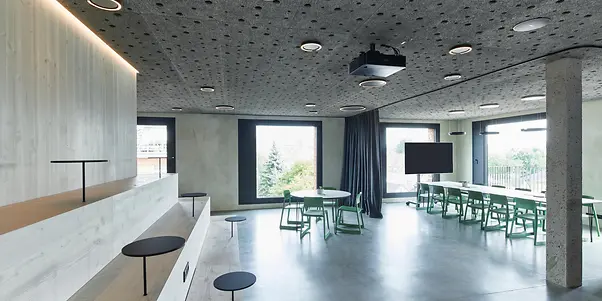
Monke had already formed a vision for the office building in the first few weeks of the planning stage. Instead of a classic complex with offices rented out long-term, LUI HOUSE would be a vibrant place where diverse people and sectors could come together. The actual workspaces were reduced to the basics. To compensate for this, the building features co-working spaces, a creative lab for workshops, training, and company events, and conference rooms which can be rented out. The conference rooms are equipped with state-of-the-art media and conference technology, and can be booked and used by companies and independent business owners; they are used only when needed. This means that vacancy and idle funds are avoided.

Schüco Showroom Berlin

BEST WORKSPACES Award 2022

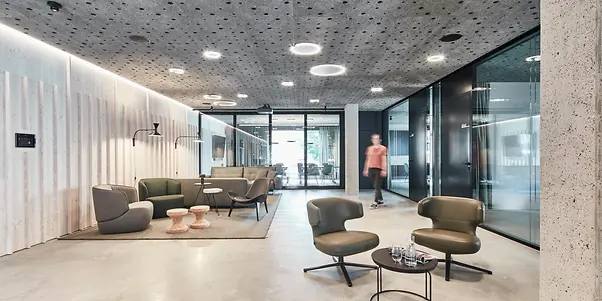
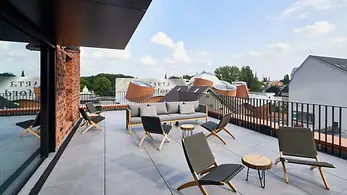
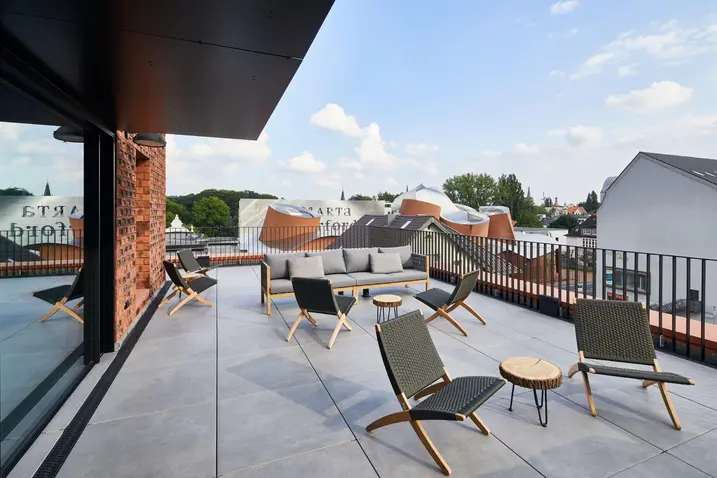
The ‘new work’ concept is topped off with a multifunctional lobby, which can be used for intimate concerts for up to 250 people or can function as a public café. “The eatery connects the inside to the outside.” Monke explains. “Besides serving the people who work in the building or who are attending conferences and workshops, it is also available to those from outside the complex, who want to enjoy the view over the new boulevard while sipping a coffee on the southern terrace.” LUI HOUSE was nominated for the BEST WORKSPACES Award 2022 in Germany. BEST WORKSPACES is the first international architecture award for intelligent workspaces and office buildings.

Compromises are not a solution

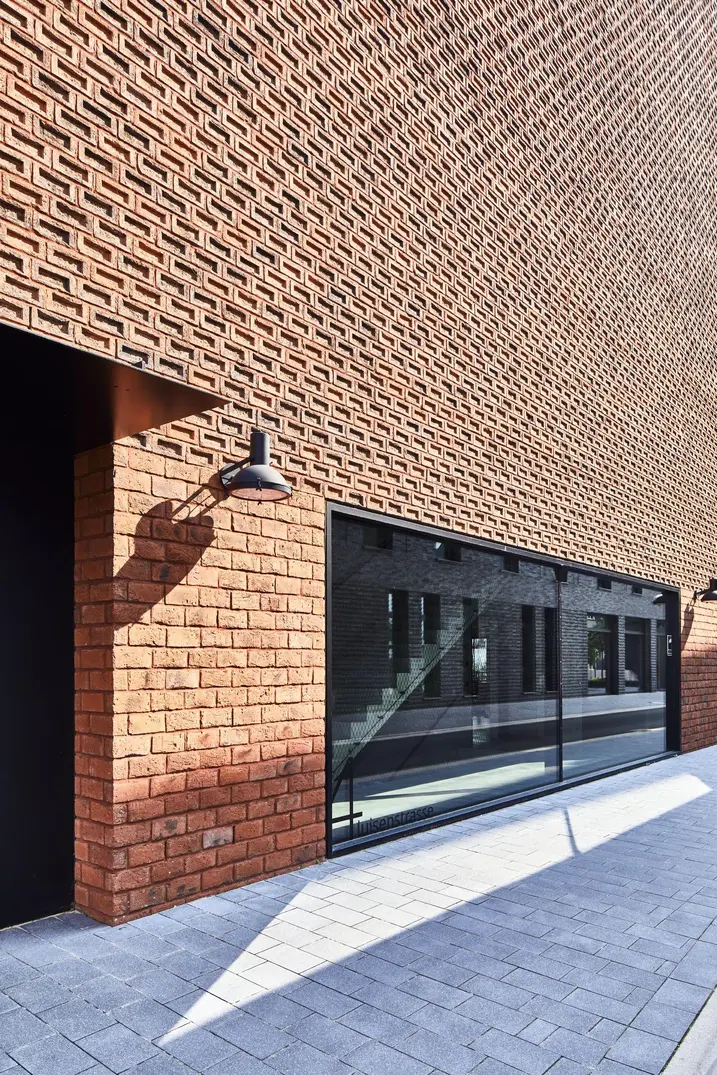
The theme of vibrancy runs like a thread through the whole building project, just like the client's love of detail. The results can be seen in the brickwork of the façade: unlike a classic wall, the bricks are arranged so that their indents are visible. The inspiration behind the exciting surface of creative brickwork came from a group of buildings Monke saw on a private trip to Copenhagen. With the help of his personal brick expert, Backstein-Kontor from Cologne, Monke sought out a small brick factory in the south of Denmark which made these bricks in the traditional way. "The production leader and I ended up experimenting with various designs before settling on our final hand-moulded brick. I really wanted to create a colourful vibrancy in the brickwork – we achieved this black colouring by scattering the bricks with manganese.” As if this weren't exciting enough, Monke wanted the LUI HOUSE façades to be made completely out of clinkers. “Every window, every spandrel height, every lintel height needed to fit with the crooked Danish clinkers. We therefore mapped out almost every detail and every brick of this building before construction.” To check whether the dimensions would fit, Karsten Monke built the first sample wall out of clinkers himself during the shell construction phrase.

Schüco Showroom Berlin

Repurposing and thinking creatively

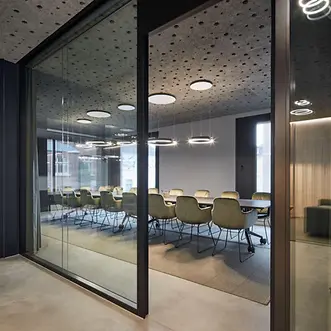
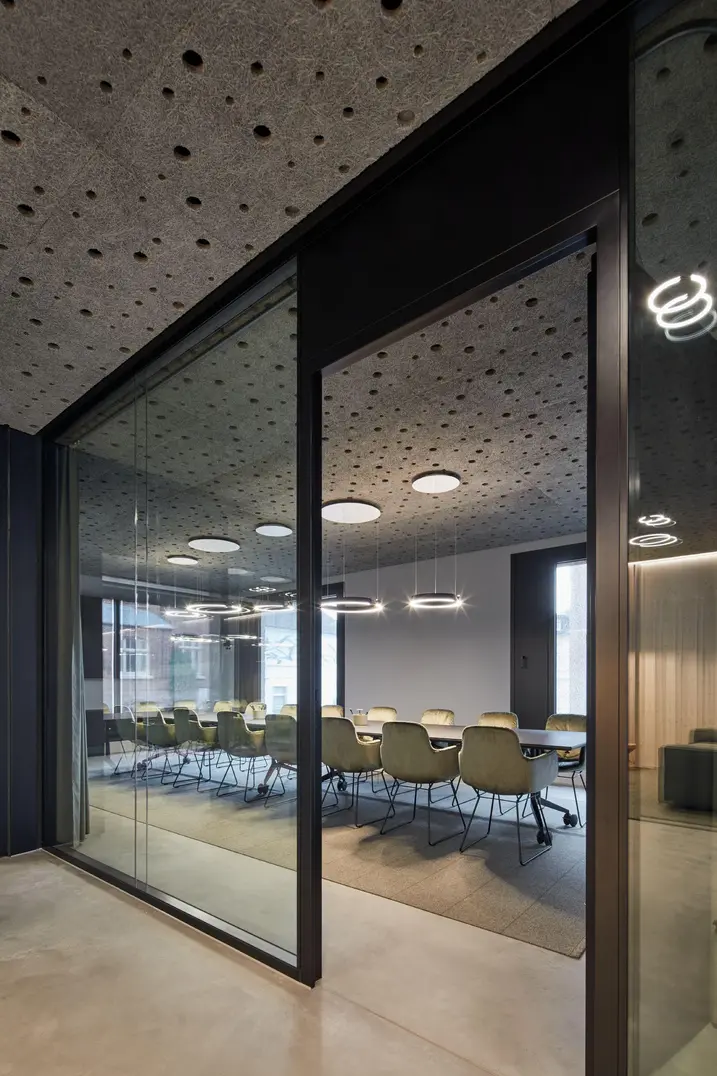
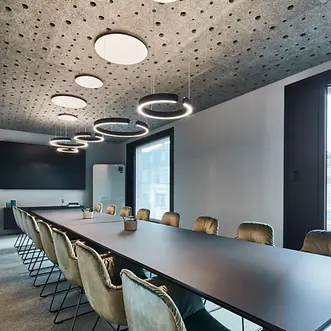
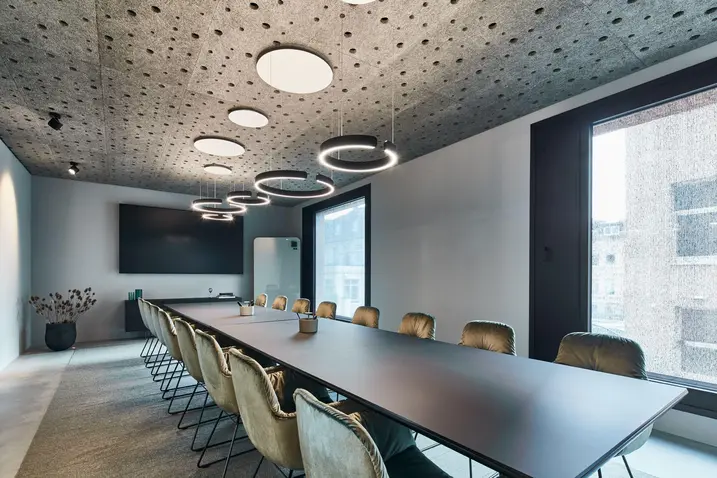
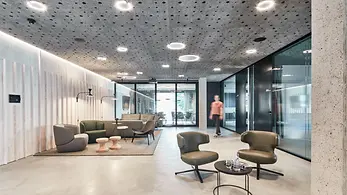
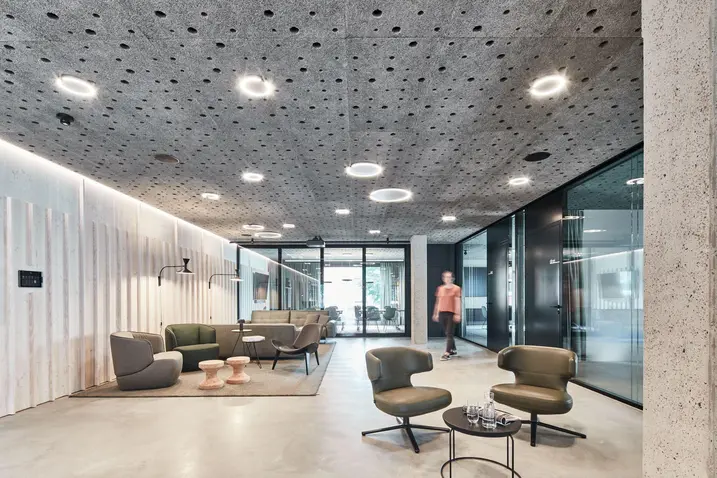
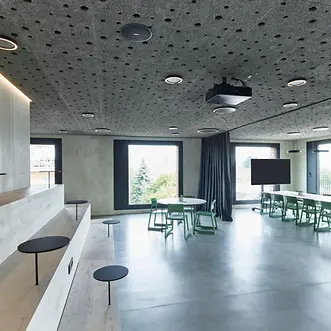
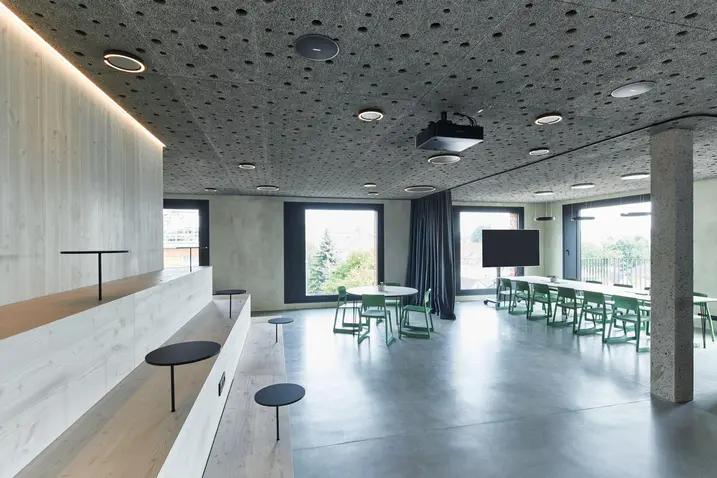
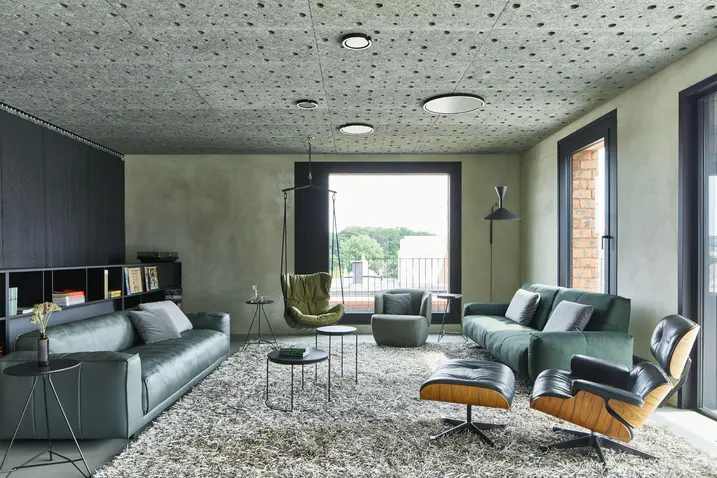
This was the challenge for the Herford-born architect with the ceilings which now cover the whole building, too. According to his design, the suspended ceiling needed to allow for cooling via concrete core activation, while keeping noise to a minimum, complementing the sophisticated architecture, and extracting moisture to prevent damp. There wasn't any such design on the market,  so Monke decided to develop his own product here too, and worked with a manufacturer of composite wood panels to create a perforated pattern which the carpenter then cut into the material.

Playing with light and atmosphere

Besides acoustics, the lighting concept played an important role for Monke. “Lighting can be used to support the architecture and can really set the scene. But it can also ruin a scene, for example in a car dealership, where everything is equally lit.” The entire building is fitted with Occhio lights which offer smart light control. The software allows every level of the building to be programmed with a variety of distinctive settings, which can create different atmospheres in a room depending on need, time of day or season. By using an iPad or hand gestures, the lighting can be dimmed or faded and the colours changed. “Light needs shadow to be effective,” explains the expert.

Schüco Showroom Berlin

Function becomes art

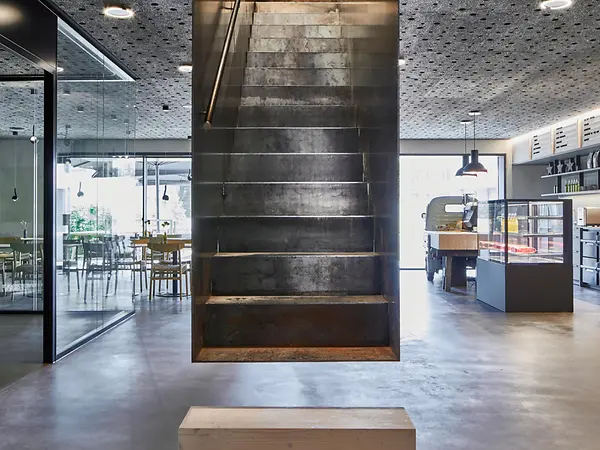
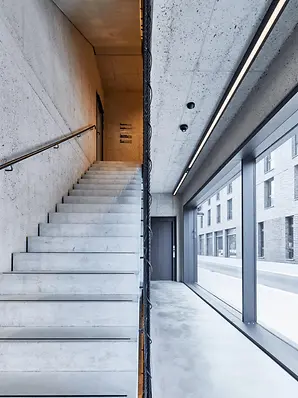
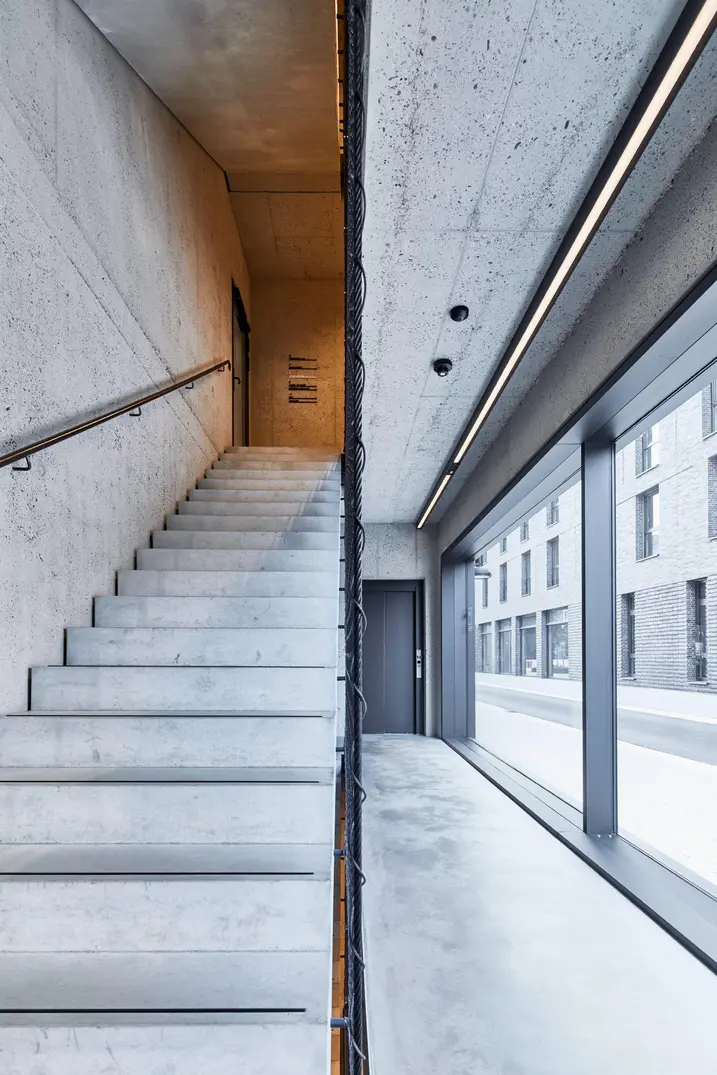
But LUI HOUSE is effective in many other ways too. Functional elements are staged artistically, like the internal staircase which acts as a sculptural piece in the space. Made entirely of steel, the staircase connects the ground floor to the co-working space on the first floor, without touching the ground. “The floating staircase is only 80 centimetres wide, and the walls are made entirely of steel. The psychological effect when you climb it is really something.” Although Monke would like to wipe the word ‘classic’ from his vocabulary, he says that it is not all about “reinventing the wheel”. Instead, he wants to get more uses out of the available natural raw and recyclable materials, and interpret, manufacture and arrange them in new and unconventional ways. 

Ecologically and economically sustainable

LUI HOUSE is completely energy self-sufficient even down to the water taps, and its sustainable building structure makes it a showcase project for the area of Herford and East Westphalia. The large photovoltaic system on the roof generates energy for the whole building, be it for the smart lighting on all the floors, technical equipment, or the two heat pumps. These pumps are connected to a deep geothermal energy system with eleven holes, each of which is located 100 metres lower than the previous one. Heat recovery via floors and ceilings enables aeration and ventilation, and bidets aid in reducing the use of toilet paper.

Monitoring life cycle costs

But is the energy-efficient concept also economically sustainable? “Far too few architects and clients consider the life cycle costs,” says Monke. But around 80 percent of the total costs which arise during a building's life cycle crop up only after construction has been completed. Therefore, the choice of materials has a huge impact on maintenance and repair costs. “We can usually only make these decisions in the planning process. The concept of ‘Cradle to Cradle’ is on everyone's lips nowadays, but it should be a matter of course, not just a trend.” This idea played a vital role in this project. 

Schüco Showroom Berlin

Expert craftsmanship

The experience Karsten Monke gained from various internships prior to his degree in architecture, such as working as a roofer and a structural engineer, reveals itself in his planning and construction. “I naturally approach things more practically and look at building materials differently. My colleagues who have completed purely theoretical degrees lack the awareness of the complexity of a building, and the understanding of how materials work on a build.” Monke's practical expertise and background in construction and engineering have, however, also helped shape his attitude towards architecture. “Today, you can buy tiles that mimic the appearance of a hardwood floor. I can't understand that.” Neither does he have time for synthetic products used to prevent a material from changing visually. “When synthetic materials are damaged, they look broken. But when an authentic material has a flaw, like faded colours or a change in the surface finish due to age, it gives it a certain character. Just like us, materials can age gracefully.”

Authenticity lasts the longest

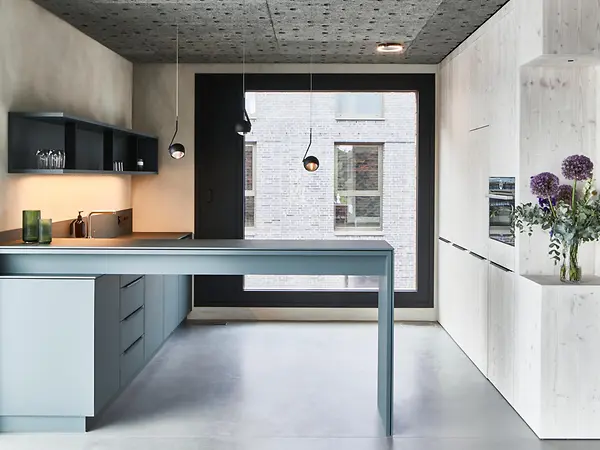
With LUI HOUSE, Karsten Monke was able to immortalise this sentiment. He used only authentic natural materials which were manufactured by hand. The modern and robust polished stone floors contribute towards achieving this architectural vision, as do the exposed plastered walls. These were intentionally left uncoated so as to let the vibrancy of the material shine through. “The walls were only covered in a transparent coat of paint to prevent them from from deteriorating, so the natural cloudiness of the lime-cement plaster was preserved. These imperfections reinforce the overall image of the building excellently.” The architect also conceptualised the complex's interior and selected the elements himself. As with the rest of the building, he placed tremendous value on individual elements, high-quality craftsmanship, and character. Karsten Monke's combination of the modern with the traditional gives his design a distinctive character and makes his work unmistakable. Every eye-catching element of the building serves (at least) one function; so, even here, idle capital is avoided.

Schüco Showroom Berlin

Bella Ciao!

Upon stepping into the in-house café, another centrepiece stands out: an authentic Italian Piaggio Ape C from the year 1960, which was converted into the café counter and lovingly integrated into the space. The idea of the small, three-wheeled vehicle had been in the back of Monke's mind for decades during his trips through Italy. When designing the café, he was reminded of something he had seen at the Italian furniture fair ‘Salone del Mobile’: a bubble car which had similarly been repurposed to have an espresso machine and eating area. The architect did not want a vehicle which could be found on any street, however. He wanted an ‘old-timer’ in original condition; a special piece. So special in fact, that he was only able to find three such vehicles in Europe. And after clattering down the streets of Herford himself in one of them, Monke could finally introduce the vehicle to its new home. Monke's affinity with Italy (which starts with wine and ends with fashion) began when he first started to be self-employed and planned showrooms for four Italian furniture companies. The Italian touch is even hidden in the name of the building. “As this building is also my baby, the word 'Lui' (meaning ‘he’ in Italian) represents myself as a person and also refers to Luisenstraße (on which the complex lies).” A character-filled house through and through.

Product information

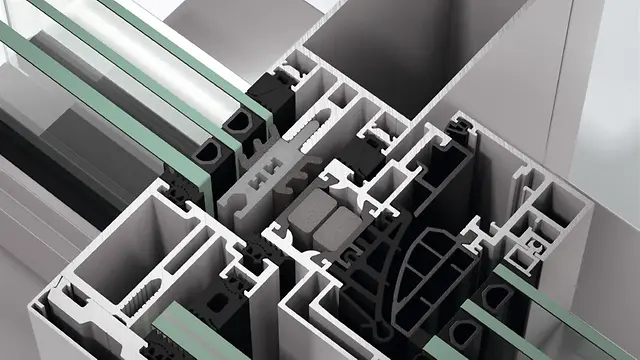
FWS 50.SI

Schüco Façade System FWS 50.SI

Passive house-certified mullion/transom façade for a variety of solutions

Based on pioneering isolator technology, the Schüco FWS 50.SI (Super Insulated) façade system offers highly thermally insulated solutions for designing diverse façades and skylights to passive house level, including optimised fabrication and installation processes.

Learn more

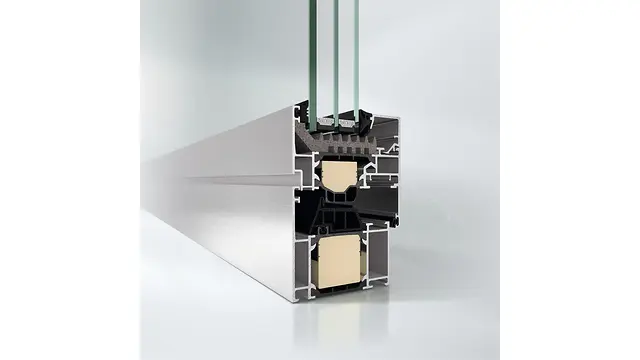
AWS 75.SI+

Schüco Window System AWS 75.SI+

Improved thermal insulation, security and fabrication

The optimised Schüco AWS 75.SI+ (Super Insulation) standard window system for the 75 mm basic depth is part of the Schüco AWS system platform and forms the basis for a range of applications in energy-efficient building envelopes. Depending on the architectural requirements, the highly thermally insulated aluminium system can be used as a punched opening, ribbon window, façade insert unit or in combination with Schüco door systems.

Learn more

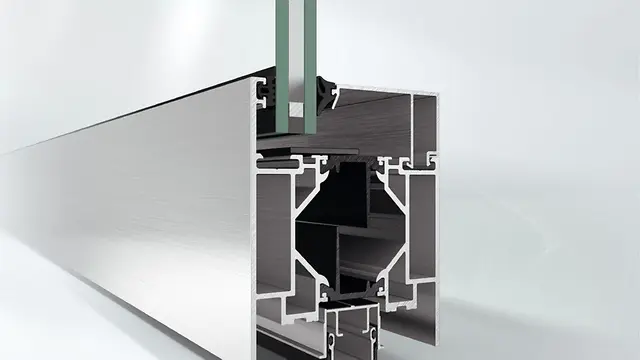
ADS 80 FR 30

Schüco Door System ADS 80 FR 30

Door and wall construction for multi-functional fire and smoke-protection applications

The proven Schüco ADS 80 FR 30 (Fire-Resistant) door system with a basic depth of 80 mm, which is based on highly stable 5-chamber hollow profiles, features impressive versatility in terms of application, function and design.

Learn more

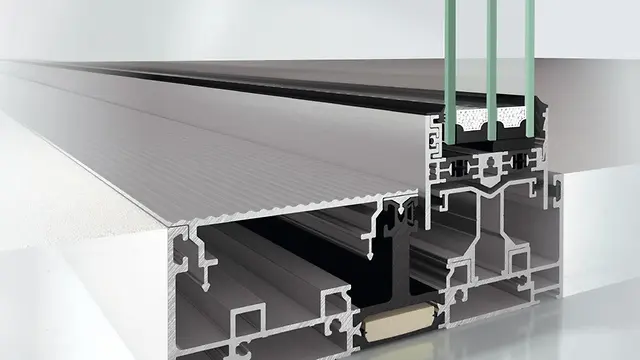
ASE 67 PD

Schüco Sliding System ASE 67 PD

Panorama Design combined with maximum flexibility and transparency

The thermally insulated Schüco ASE 67 PD (Panorama Design) sliding system allows for flexible solutions that meet the highest demands in terms of ease of use and design; it received the Red Dot Design Award 2019.

Learn more

AD UP 75

Schüco Door System AD UP 75

Universal use as heavily used commercial door and stylish entrance door

Excellent insulation properties combined with high stability – the Schüco AD UP 75 door system with a 75 mm basic depth offers high functional reliability for all requirements in luxury residential and commercial buildings.

Learn more