Acoustic camera – visualising and localising sources of sound

The acoustic camera is a versatile device. Sound waves are used to generate an image of the surroundings. A conventional camera uses light to capture images whereas, with the acoustic camera, sound waves are converted into visual data. This makes it possible to visualise sources of sound and consequently detect weaknesses in building envelopes or machines, for example.
How can sound sources be seen with an acoustic camera?

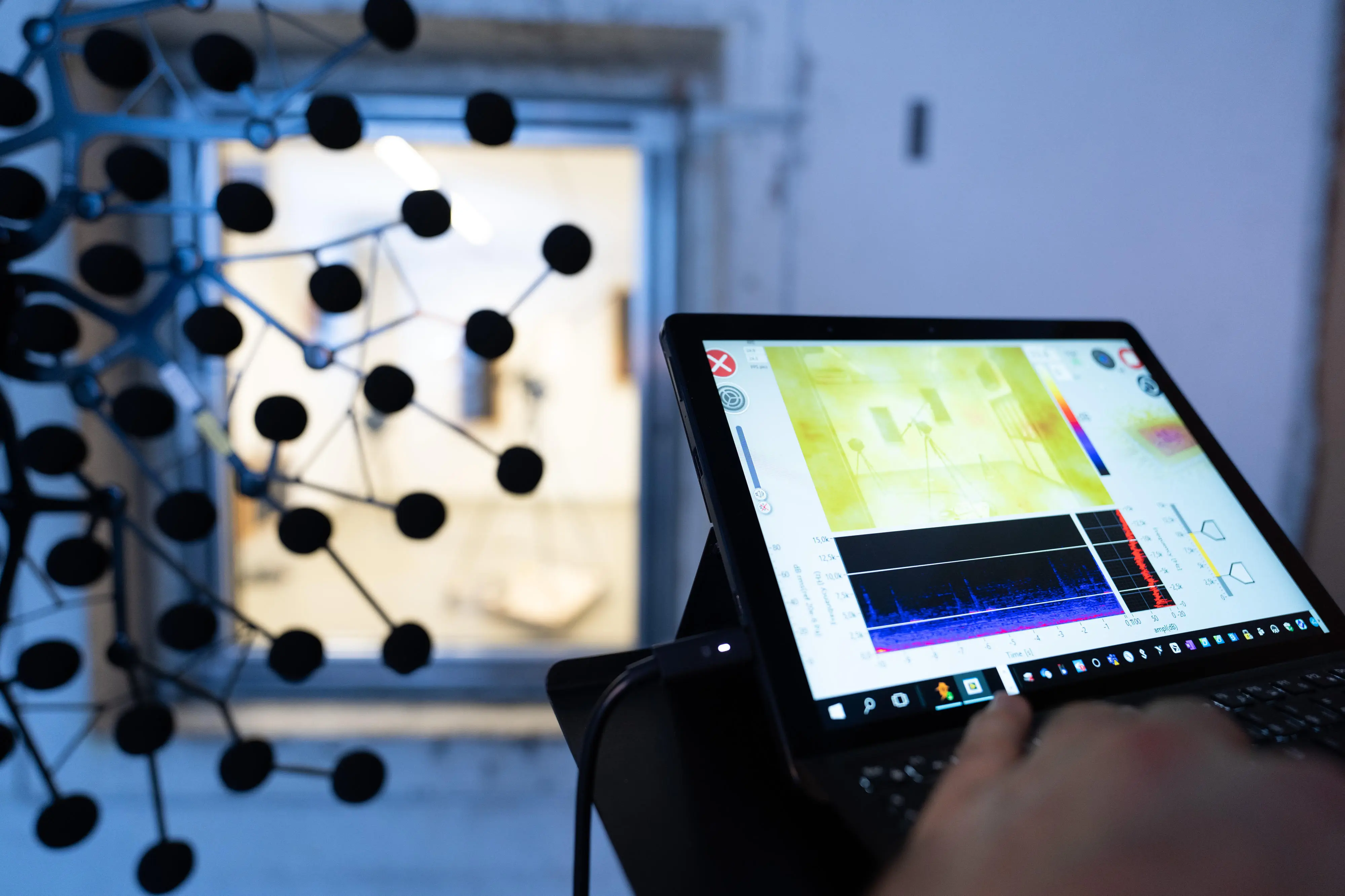
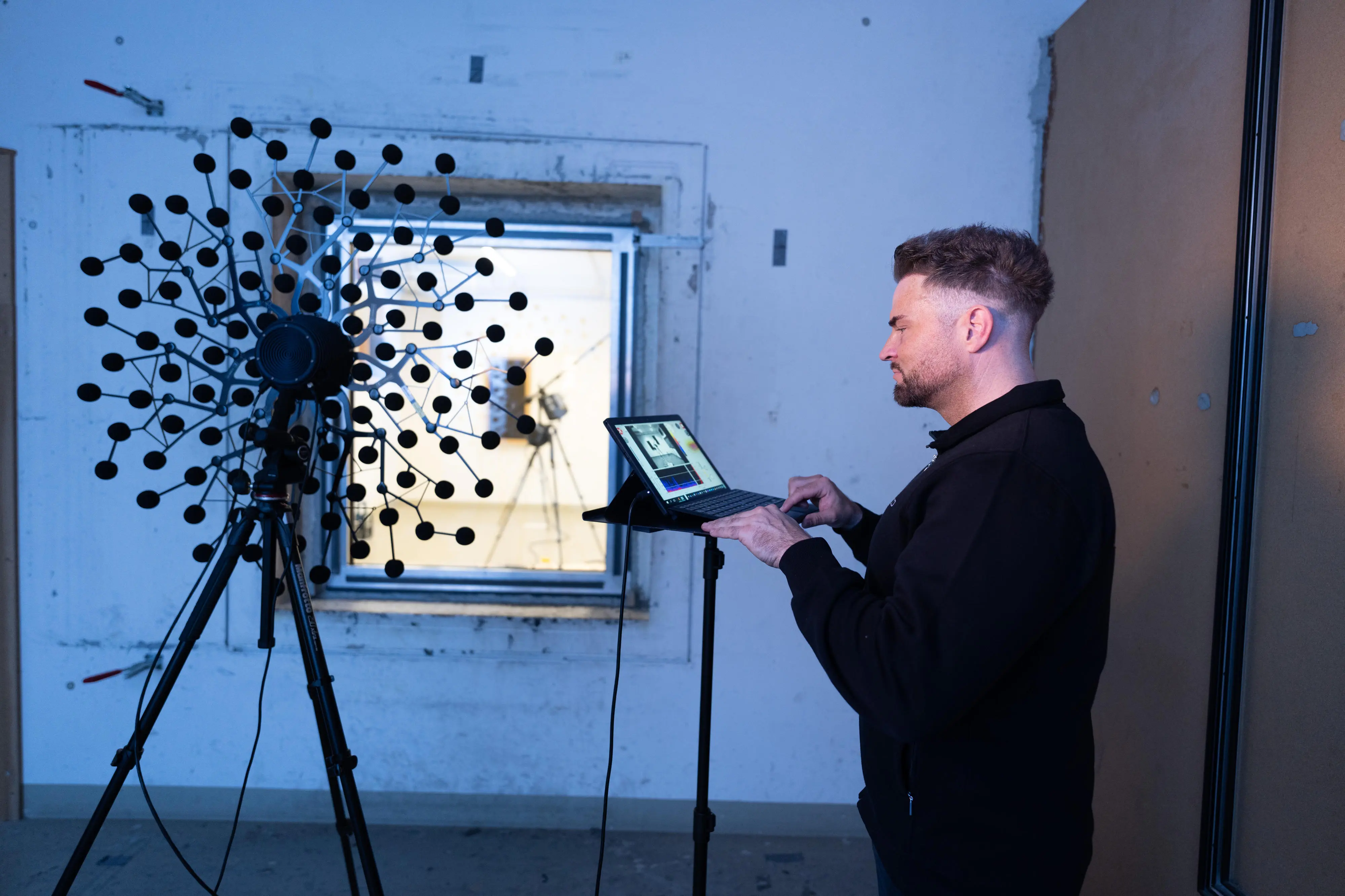
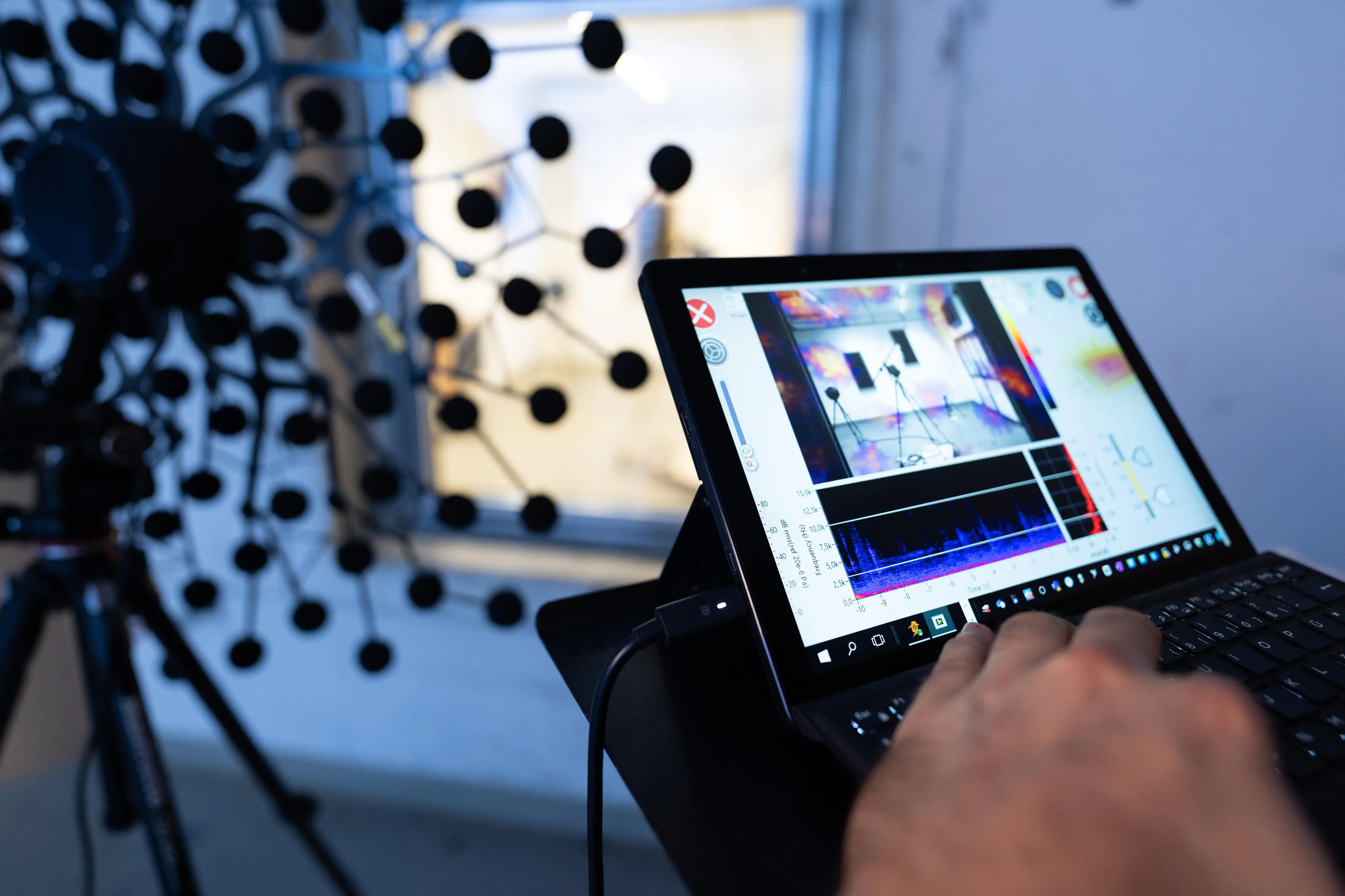
A different number of microphones may be used depending on the manufacturer. The data generated from these microphones is used to create a visual representation of the surrounding environment. These microphones are arranged on a single level, forming what is known as a microphone array. The level and phase differences between the individual microphones are processed in the algorithm using the relevant time and frequency information. This means that one or multiple sound sources can be identified. A camera shows the object being tested in the associated software and adds the acoustic image on top of it (as a heat map). The heat map is used to create a visual representation of the analysed data by using different colours to represent different sound pressure levels. Areas marked in red have the highest sound pressure levels. By doing this, loud or unwanted sound sources can be located. In addition, multiple sources of sound can be simultaneously identified and displayed in the software. A major advantage of the acoustic camera is the real-time evaluation of data, as well as its mobility. The microphones can process frequencies from 10 Hz to 24 kHz. A wide range of sound pressure levels from 33 dB to 120 dB are also possible. The camera is connected to a laptop using only a LAN cable, ensuring the system is highly flexible and can be used in the relevant locations.

Sound sources and a video are saved. The file can be edited afterwards.

Prüfer mit Visualisierungssoftware und der akustischen Kamera vor Prüfobjekt
Acoustic camera in use

What can an acoustic camera be used for?

The acoustic camera is used to support development work in the building acoustics department at the Schüco OneLab Technology Center. It can be used when opening and closing building components and for difficult acoustic issues, where fittings are producing annoying noises. The camera is also ideal for use with particularly large test specimens. This is because both our own hearing and conventional measurement methods often have limitations when it comes to dealing with complex acoustic questions. The Schüco OneLab Technology Center not only tests products in their development phase, but can also test project solutions for Schüco partners and fabricators.

Following a building acoustics test in accordance with DIN EN 10140-2 (measurement of sound insulation of building components under test conditions), the acoustic camera was used to identify points of weakness in the window. Incorrectly adjusted fittings or ill-fitting gaskets can be located in real time.

Software der akustischen Kamera
Darstellung der Software mit unterschiedlichen Einstellungsvarianten der akustischen Kamera
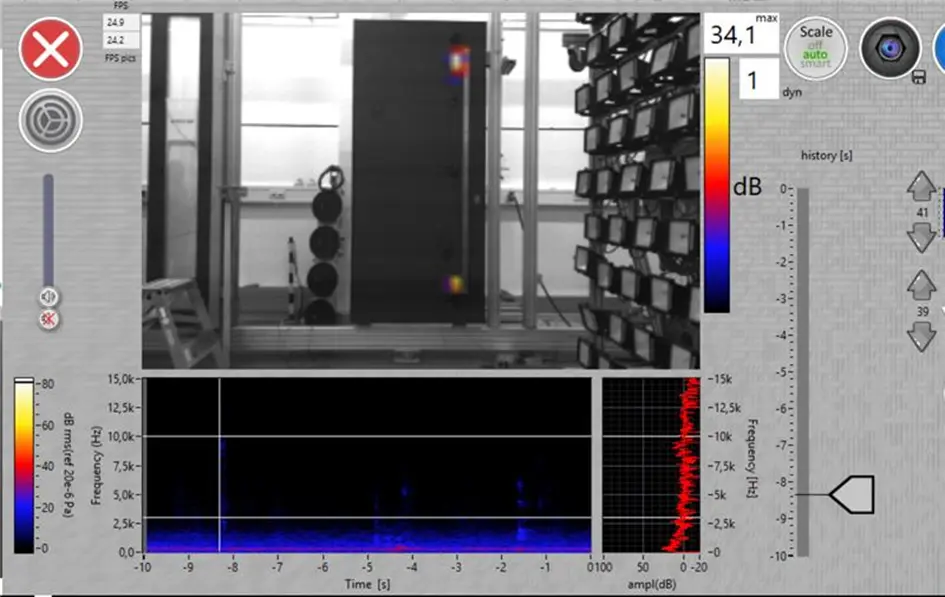
Visualisierung von Knackgeräuschen einer Tür

The software allows parameters such as dynamics to be adjusted, which can be essential when trying to localise sounds. This is shown in the readings in the images above. No sources of sound can be identified in the acoustic image on the left but, by changing the dynamics, the individual sound pressure levels can be visualised more clearly, as shown in the image below.

The test specimen shown in this image is a door. It was first heated using the radiation wall to acoustically check for and locate changes in the material.

As a result of this heating process, the acoustic camera is able to show the effect of temperature on different materials. Although the levels are very low, they can be seen through the camera. The corresponding frequencies of sound in kHz can be determined in the frequency-time curve.

The acoustic camera is versatile and can be used for much more than just systems in the building envelope

The acoustic camera has a wide range of applications in the industry too: for locating sources of sound in workplaces, machines or engines, but also in areas of building technology.

With its impressive ability to create a visual representation of sound, the acoustic camera helps us to better understand our environment and its acoustic properties. It is an important tool for sound reduction, quality assurance and research in the field of acoustics, as well as being very easy to transport anywhere.

Have you noticed disruptive noises in your building or in other products but are struggling to locate them? Then mobile use of the acoustic camera might also be an option for you.