Townhouse Linda

Dilapidated old building renovated and extended

Built in the 1920s, largely destroyed during the Second World War and then rebuilt immediately afterwards, the home of the Kuck family from the district of Poll in Cologne has already undergone many changes. It demonstrated its versatility once again in 2021/22 when it was completely refurbished, expanded and adapted to bring it up to today's standards and to meet the individual requirements of the clients.

Reference details

Type of Building Private Home
Product areas Doors Sliding doors
Schüco Systems LivIngSlide ADS 60
Features Building extension Refurbishment Energy efficiency Healthy living
Location Köln, Germany
Completion 2022
Architects Christian Richter, arctum plus Architekten
Specialist company JK Hausdesign, Jacek Kwasik
Picture credits © Philipp Oesterle

A house in the heart of Poll, Cologne

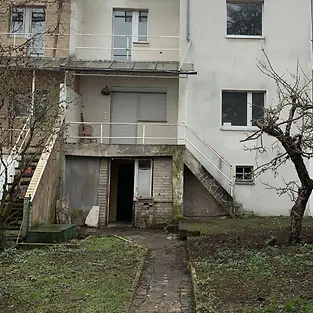
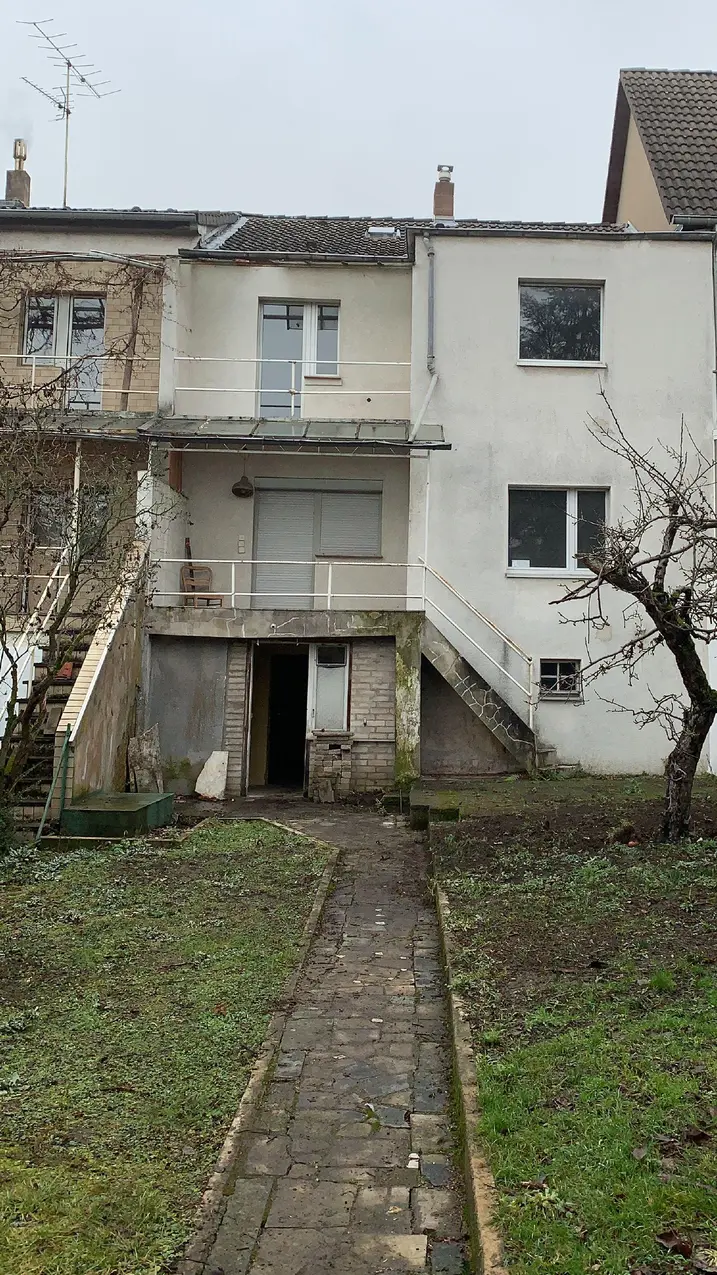
The townhouse, which had belonged to Dominic Kuck's grandmother until ten years ago, is located in a large, trapezium-shaped block of houses in the district of Poll on the left bank of the Rhine, close to the city centre. The river is just a few hundred metres away; you can catch a glimpse of it from the front garden. On the southeast side at the rear, the terraced house borders an eight metre-wide and about 50 metre-deep garden containing mature fruit trees. It is surrounded on all three sides by other private gardens, some of which are very densely overgrown.

Taking a cautious approach

One of the things up for debate was whether or not the building should be demolished and rebuilt. However, this would have required the party walls that the house shares with its neighbours to be underpinned – a risk to safety that the married couple were unwilling to take. The remaining option was to renovate the building. “What can we keep of the old building, and what has to go? It was a really emotional time, because at first we didn't know which direction things would go in,” the client recalls. They therefore took a slow and cautious approach to the project, exposed the timber ceiling beams and stripped the wallpaper off the walls. For Dominic Kuck, there was no question that he would be getting his own hands dirty. “Anything we can do ourselves,” he says, “saves us money. It also makes the house even more our own.” 

Wald aus Vogelperspektive mit sich drehenden Pfeilen als Recyclingsymbol

Gutting the existing building

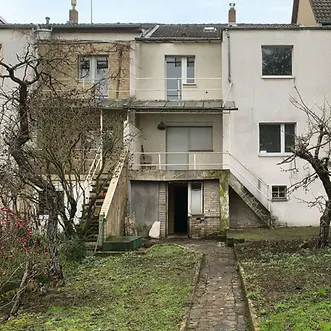
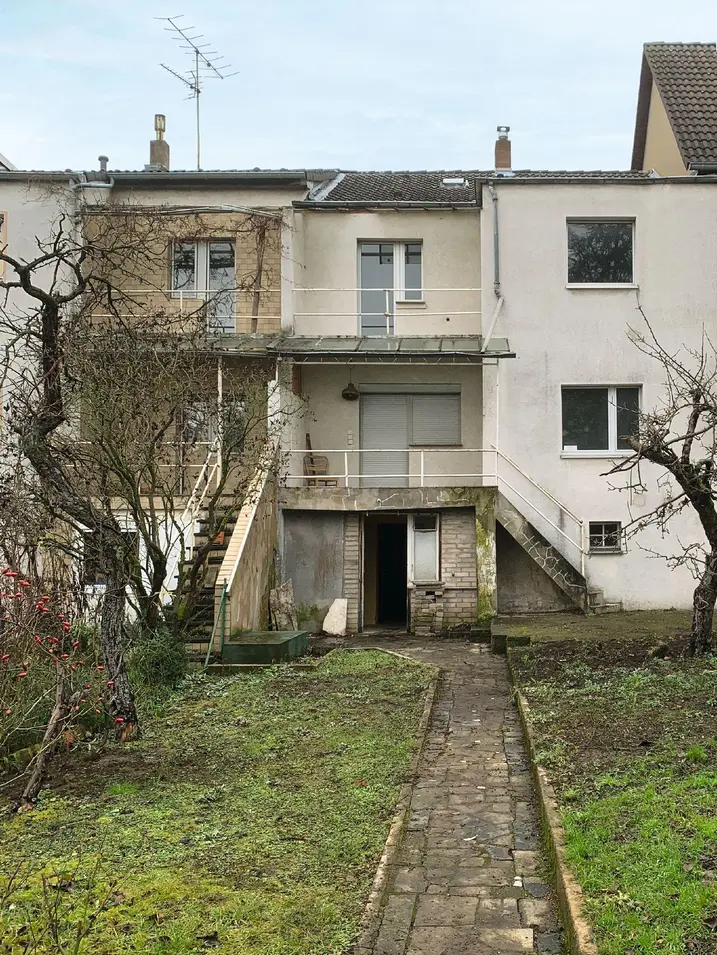
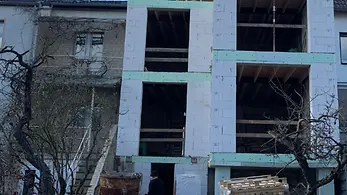
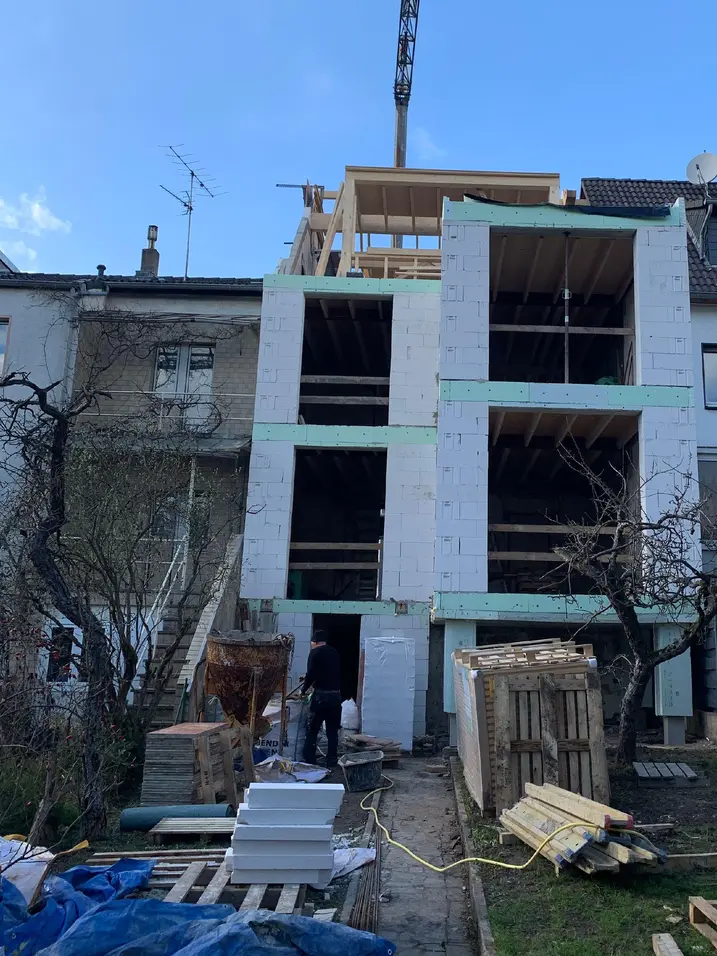
disillusionment: a lot of the house was dilapidated, not to mention the quality of the materials they found. Hardly surprising, as following the war people used whatever was available at the time: cardboard, rubble and other debris. “Each ceiling was filled with something different,” says the client. And the beams were rotten, so we had to completely replace them, unfortunately.” On the advice of their architect Christian Richter from the arctum plus Architekten practice in Cologne, the couple therefore decided to completely gut the existing building, although sections of the external wall facing the street were preserved.

Using glass to create an open and bright home

The interior of the old building was very dark; there were small windows, confined spaces and an equally narrow staircase. It was very important for the clients to make their new home as open as possible. “Although we had a limited amount of space, the floor plans had to have a clever design so that each child could have their own room later on,” explains Kerstin Kuck. To create more living space, Christian Richter proposed adding an extra floor as well as a two-storey extension at the rear of the building. As a result, the architect increased the living space from the original 120 m² to 180 m² and completely redesigned the garden façade in the process as well. 

Wald aus Vogelperspektive mit sich drehenden Pfeilen als Recyclingsymbol

“We wanted the rooms to be as big as possible and flooded with light. That's why glass plays such an important role in our home.”  

Kerstin Kuck, client

View from the street only slightly changed

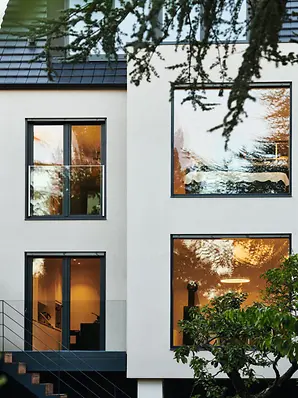
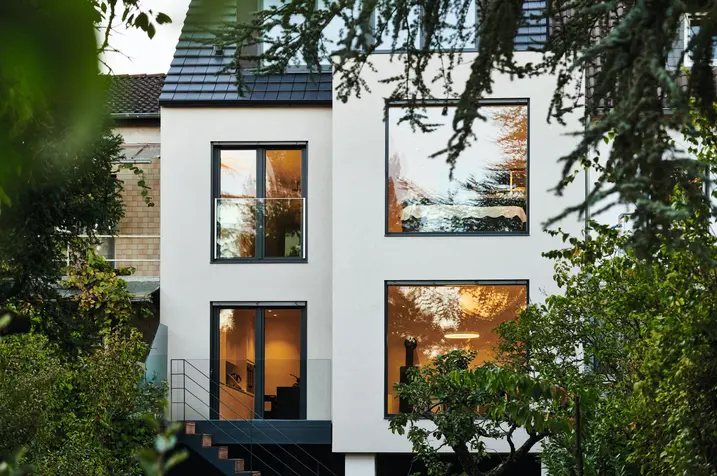
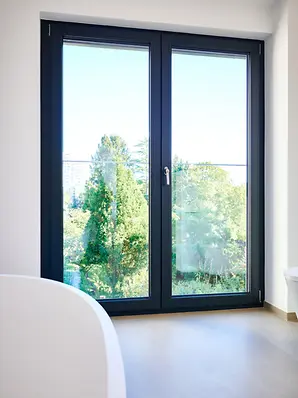
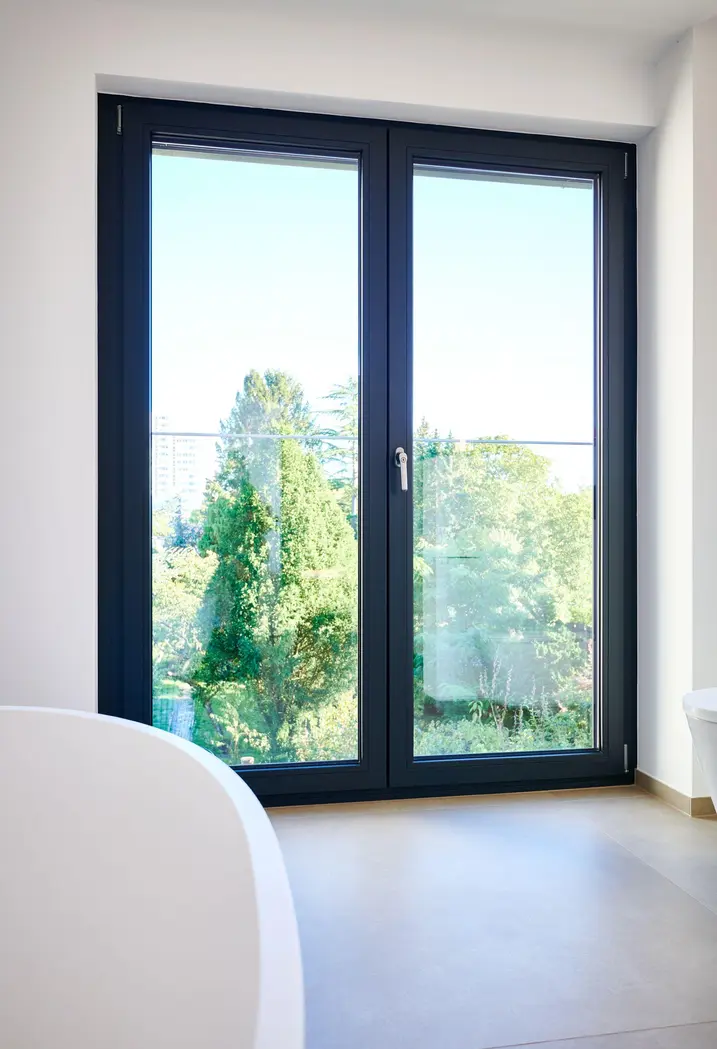
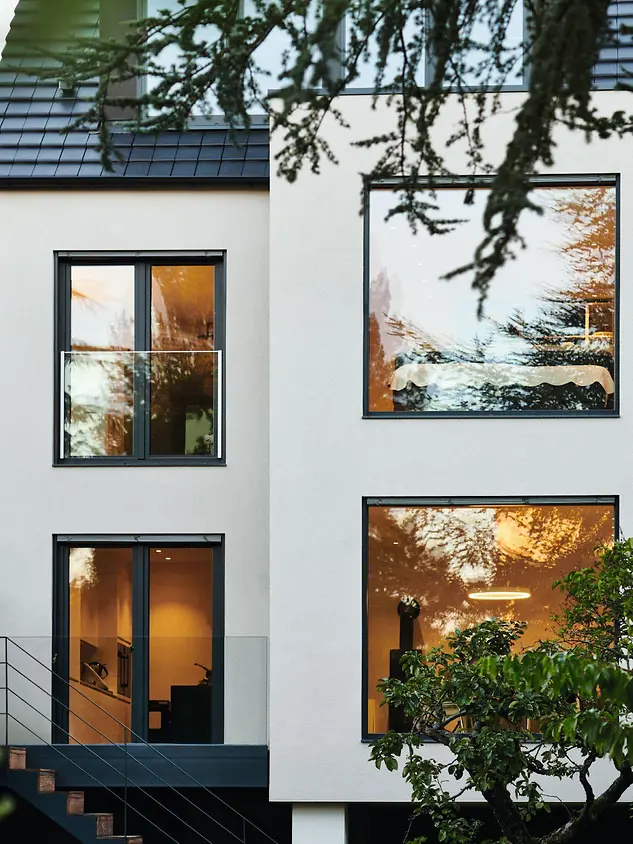
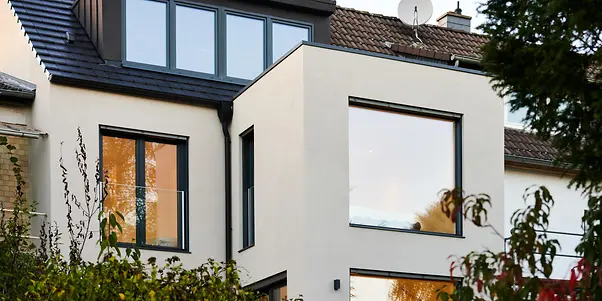
Richter explains: “Although we have retained the small windows on the front façade, we have upgraded them. As the building lives from the inside out, we have created views to match. This has obviously resulted in some different openings than there used to be.” PVC-U windows from the Schüco LivIng system have been used throughout. There is one large opening vent and one small, fixed unit on the street-facing façade of the townhouse. Their slimline, anthracite grey frames are embedded in a light plastered façade with deep reveals. 

Extended living space and kitchen

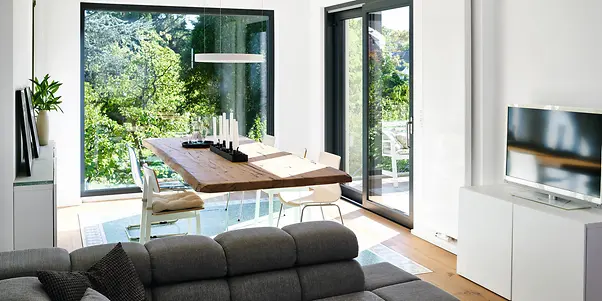
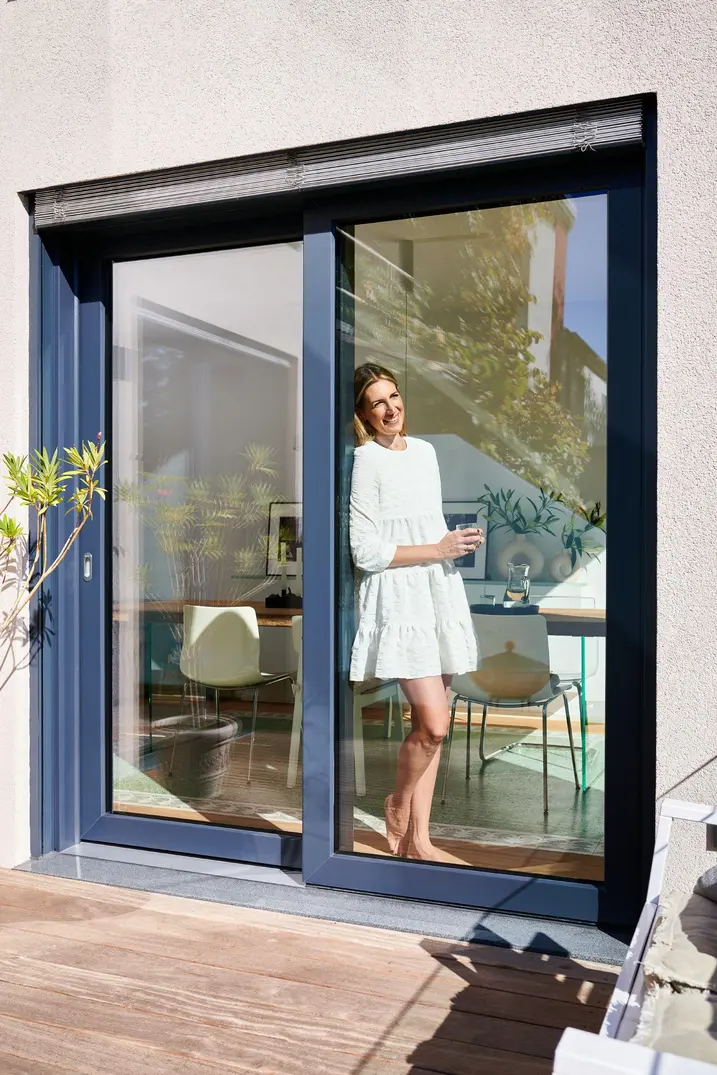
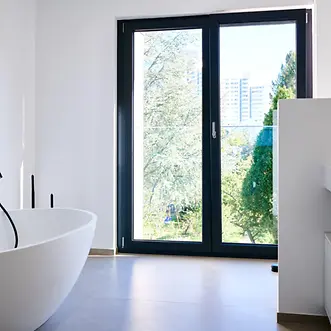
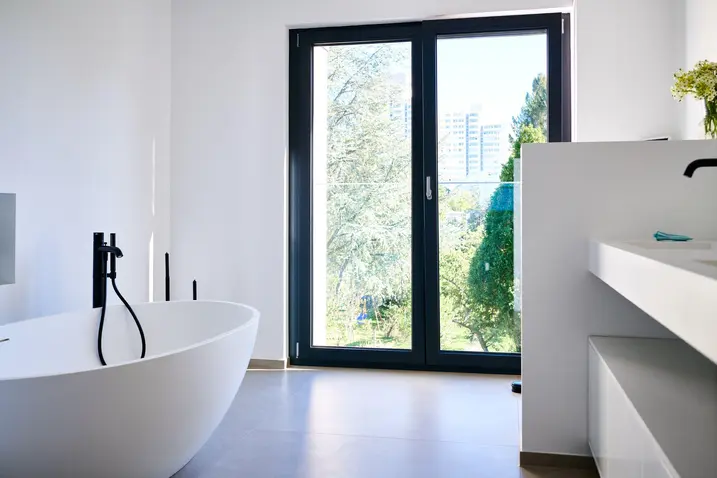
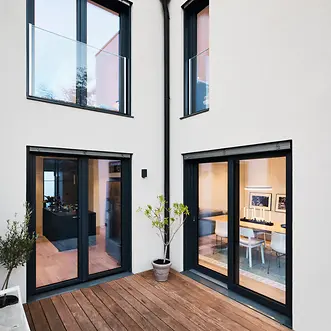
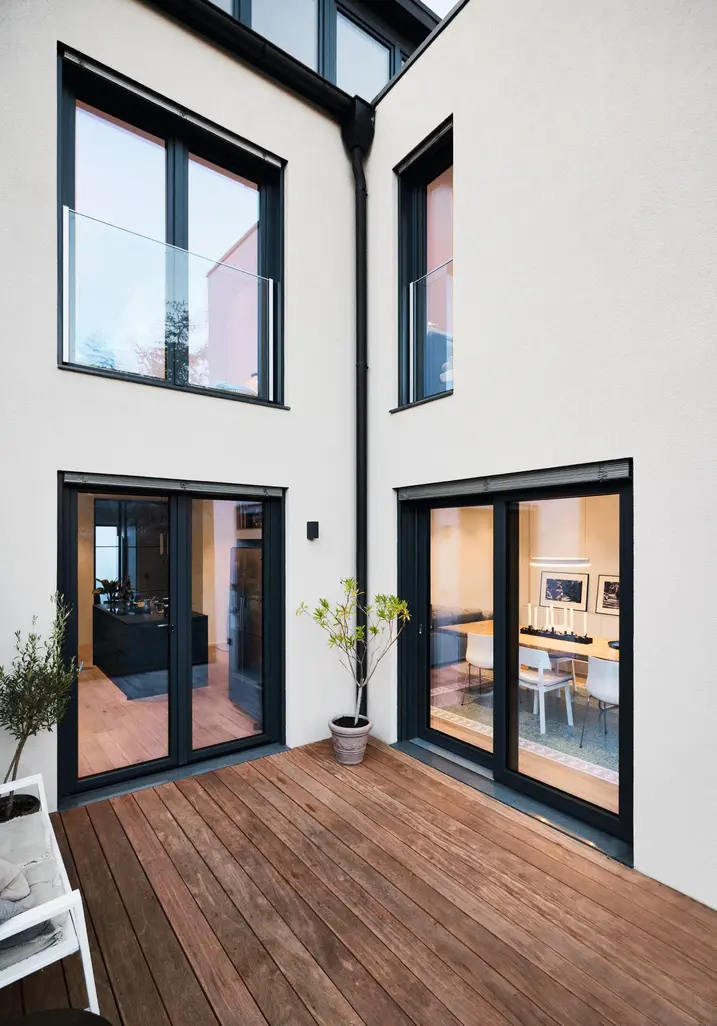
On the garden side of the building, the architect had a different aim for the design: to open up the whole house. Where there used to be balconies, the house has now been extended out by one metre for the kitchen on the ground floor and the bathroom upstairs. Three metres wide and four metres deep, the protruding extension adjacent to it houses sections of the living room and the parents' bedroom. From the living room, you can access a small, steel terrace through a lift-and-slide door from the PVC-U Schüco LivIngSlide system, while the garden can be reached from the terrace via a steel staircase in matching anthracite grey.

Wald aus Vogelperspektive mit sich drehenden Pfeilen als Recyclingsymbol

Garden views

Access from the kitchen to the balcony is also via a Schüco LivIngSlide sliding door in the same colour, RAL 7016. “To simply open the door, step outside and breathe in the fresh air – it was really important to me to be able to extend the kitchen and living space outside,” says the client. “When you set foot inside the house, you look straight into the garden through the kitchen and sliding door. It gives the space enormous depth!” One reason the clients opted for PVC-U windows and sliding doors was the outstanding thermal insulation values combined with the excellent value for money that they offer. However, the appearance was also pivotal in their choice.

Wald aus Vogelperspektive mit sich drehenden Pfeilen als Recyclingsymbol

“We wanted the whole frame to have just one colour on the inside. The Schüco series made this possible.” 

Dominic Kuck, client

Framing an ever-changing view

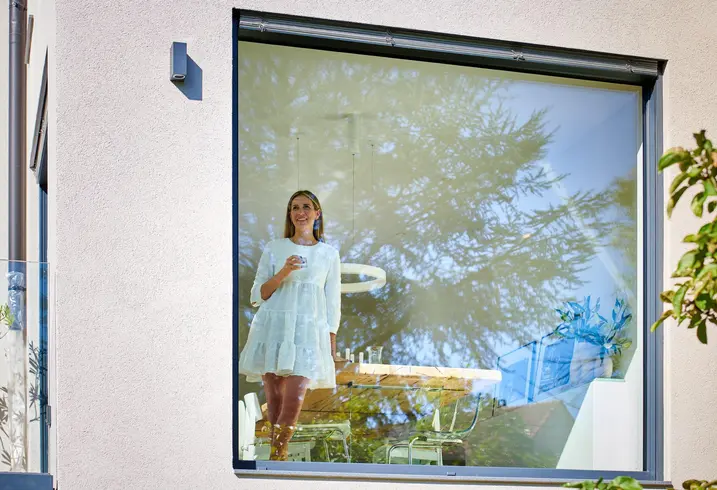
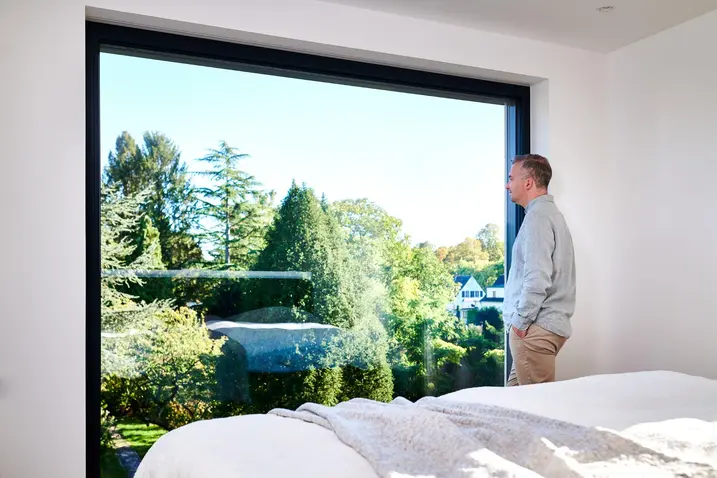
In the rear façade, the two floor-to-ceiling fixed openings also create a link with the outdoors: two window units measuring around 2.3 x 2.3  metres from the Schüco LivIng system. They frame a view that changes according to the time of day and the season, creating a different atmosphere inside the home. “It's wonderful waking up to this view of the garden and looking at the greenery and fruit trees from the dining table,” the client gushes, before adding: “Schüco products strike a great balance between visual appeal and cost-effectiveness. We're really pleased with them.”

Energy consumption significantly reduced

All the windows are triple glazed, which helps to minimise the amount of energy required by the home. Dominic Kuck explains: “Being a terraced house, the transmission heat loss is relatively low as it is enclosed on two sides. It is also fully insulated on both sides, as is the roof. Its primary energy requirement is all that distinguishes it from a KfW 55 home.

A glimpse into the future

The attic is the only floor that has not been completed. That will change when the Kucks' children are older and their rooms are moved there. Sometimes, however, the couple does venture up to the attic. When they do, they enjoy the truly beautiful, light-filled space and the high ceilings, even though it's not yet complete. Through the dormers, which have four large windows on each side, they look out over Cologne's rooftops and the meadows of Poll all the way down to the Rhine.  What a wonderful place to live!

Product information

LivIngSlide

Schüco Lift-and-slide System LivIngSlide

Highly thermally insulated PVC-U lift-and-slide system – everything from a single source

The innovative Schüco LivIngSlide lift-and-slide system has been designed on the basis of the Schüco LivIng system dimensions. The resulting compatibility of the systems means that a large number of accessory profiles, such as glazing beads and other glazing accessories, can be used. Furthermore, the uniform system dimensions allow simple and flexible planning as well as the implementation of attachment options.

Learn more