Powerhouse Telemark

A milestone in sustainable architecture

Norway has ambitious climate protection targets and one of the most important is that its buildings should be virtually carbon neutral by 2050. One of the pioneering sources of inspiration for the decarbonisation of new office buildings is Powerhouse Telemark, which was designed by Snøhetta and offsets its carbon footprint over its entire lifecycle. Powerhouse Telemark is BREEAM-NOR-certified.
Reference details

Type of Building Office and administration
Product areas Facades
Schüco Systems FWS 50.HI
Features New build Decarbonization Circularity Energy efficiency BREEAM Cradle-to-Cradle Design and Aesthetics
Location Porsgrunn, Norway
Completion 2019
Architects Asplan Viak AS,R8 Property,Skanska Norge as,Snøhetta, Oslo Norway
Specialist company H-Fasader Glassteam AS
Picture credits © Sindre Ellingsen
Nahaufnahme einer Facid Fassade von Schüco in der Farbe Grau

A blend of aesthetics and sustainability

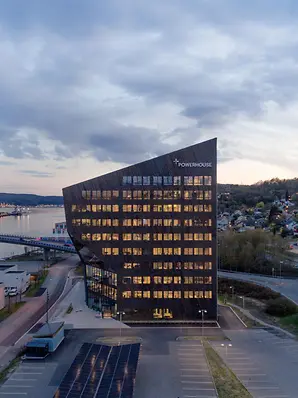
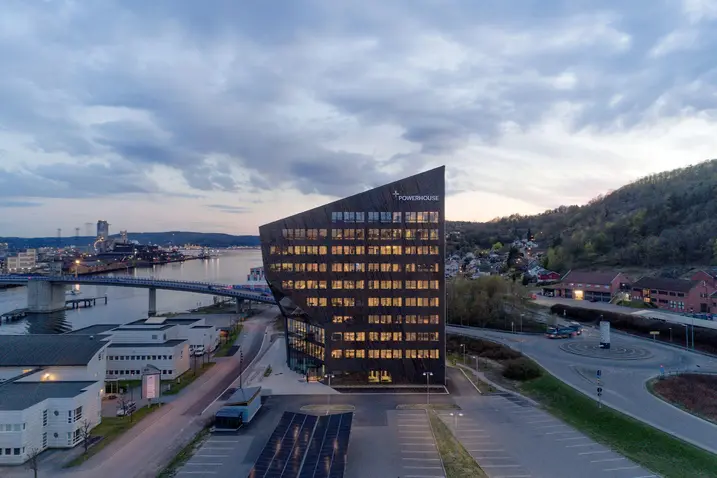
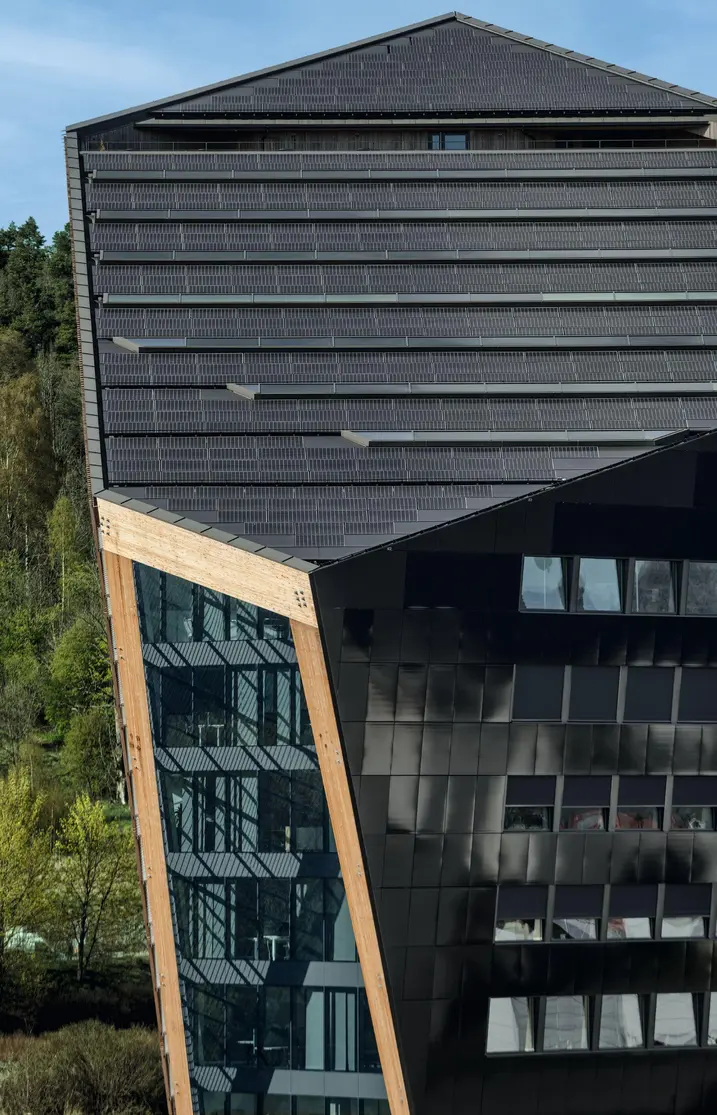
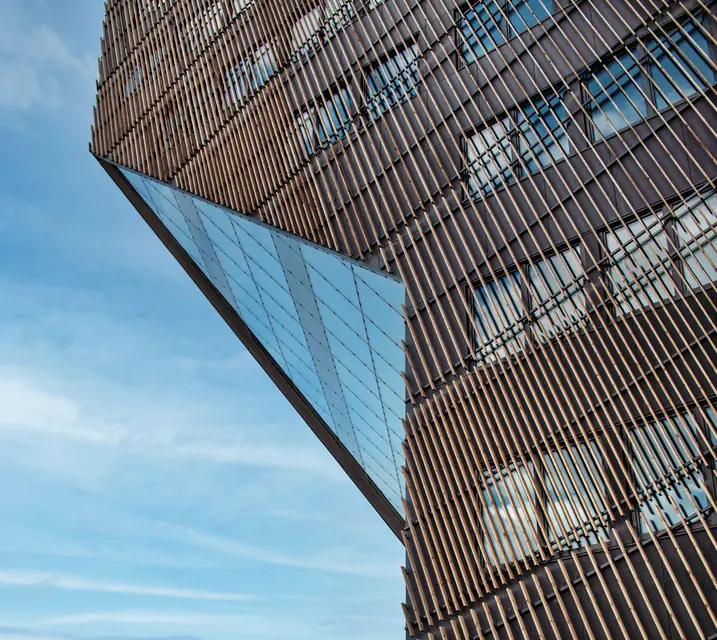
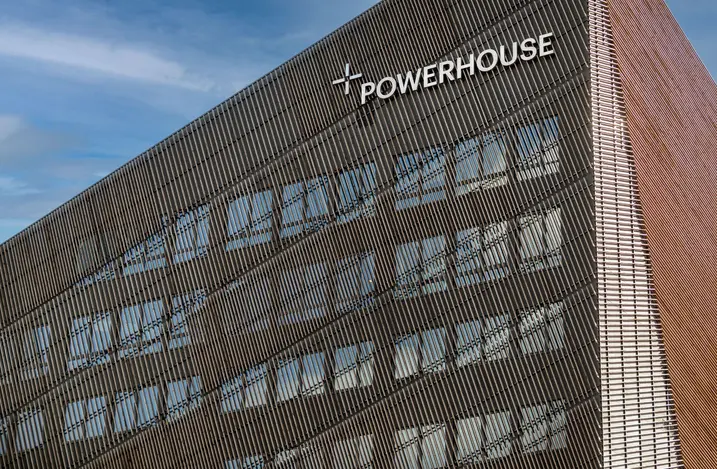
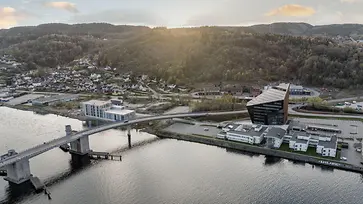
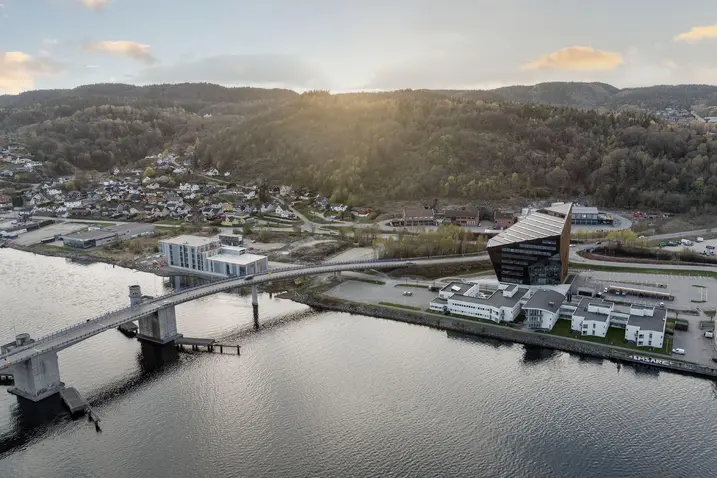
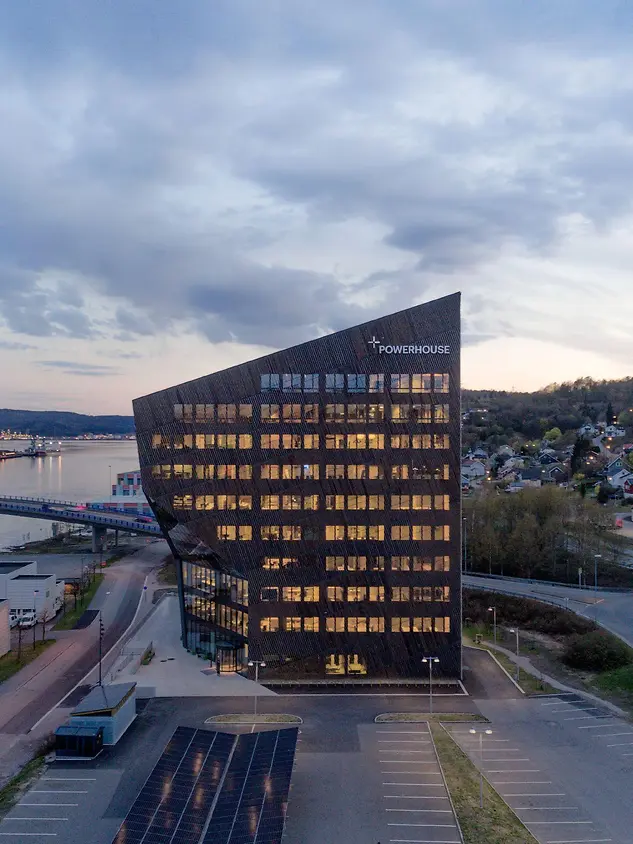
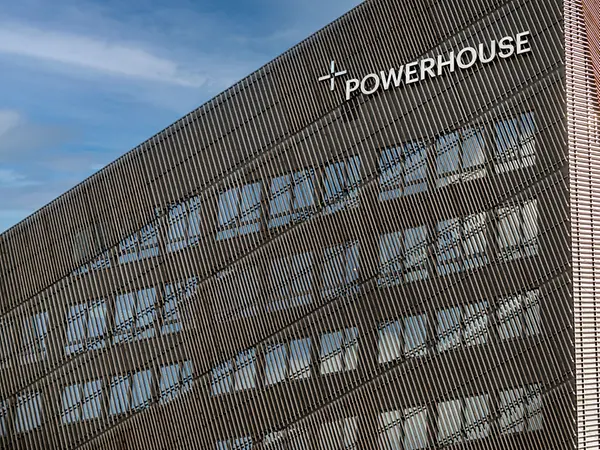
The striking silhouette of Powerhouse Telemark is visible far beyond the industrial city of Porsgrunn. The eleven-storey office tower, which glistens in the sunshine like an amber-coloured diamond, is a truly eye-catching building. However, the building is not only an architectural masterpiece but is also a prime example of the integration of sustainability and innovative solutions in modern construction. It offsets the carbon emissions produced throughout the entire life cycle of the building – from the production of building materials to the construction process and disposal. A particular highlight is the innovative façade solution, which contributes significantly to the success of this project.

Optimal use of natural light

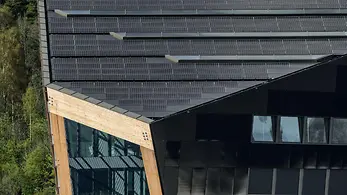
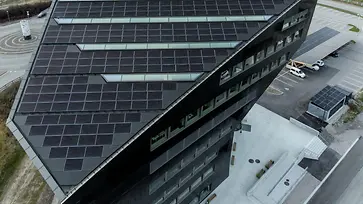
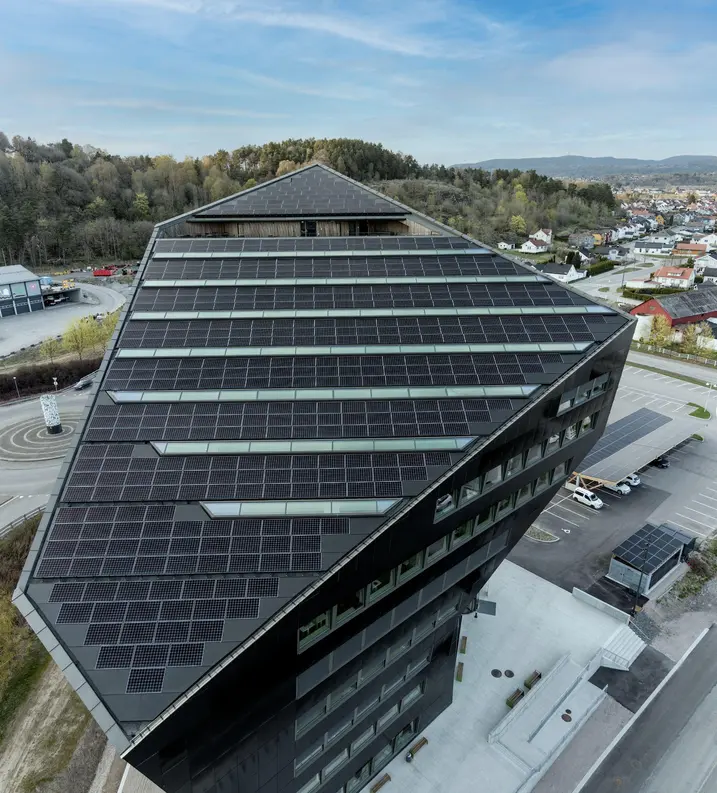
Comprehensive planning formed the foundation. Firstly, it was essential to ensure that the building could be operated using eco-friendly energy. The key to this was to ensure the best possible use of daylight, so that artificial light sources could be avoided wherever possible. Lighting is often a significant energy consumer in office buildings. To reduce consumption to an absolute minimum, the creative team at Snøhetta designed a lighting concept that only used 2.3 watts of energy per square metre. Additionally, they created a room concept that offered a stimulating atmosphere through the interplay of light and shadow, offering fluid transitions between the different work stations. Vertical slit windows were also added to the roof of the building to provide daylight for the three upper office floors.

Simulate first, then construct

Secondly, it was important to determine the energy requirements for heating and cooling. Thirdly, carbon emissions had to be analysed from material production to subsequent replacement and disposal, so that the grey energy could be calculated. These values formed the foundation for the energy concept. The digital building model was developed using BIM. The complex calculations were completed using Simien v6.009 simulation software and a calculation tool based on DIN EN ISO 11855-2 (EU standard for environmentally friendly building design), among other tools. The result is a building envelope with excellent thermal insulation, which is combined with renewable energies in a closed-loop system, supported by low-tech solutions and resource-saving, recycled materials.

Nahaufnahme einer Facid Fassade von Schüco in der Farbe Grau

Cradle to Cradle-certified façade system

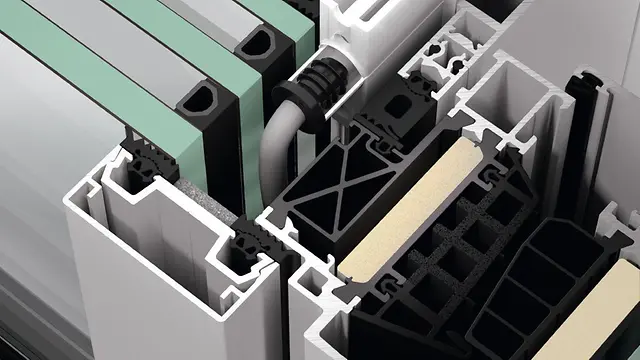
The widely used Schüco FWS 50.HI façade system was chosen for the skylight construction, which allows large span widths to be implemented in a way that is architecturally appealing, especially in large-scale projects such as shopping centres, office and administrative buildings, and hotels. The decisive factor for the planning team and the client in choosing this solution was the proven environmental compatibility of the materials, as certified by the Cradle to Cradle product standard. Following their usage phase, Cradle to Cradle-certified systems can be fed back into the material cycle as many times as desired and meet high requirements in complying with social standards and the responsible use of water and energy during manufacture.

Great performance with an elegant appearance

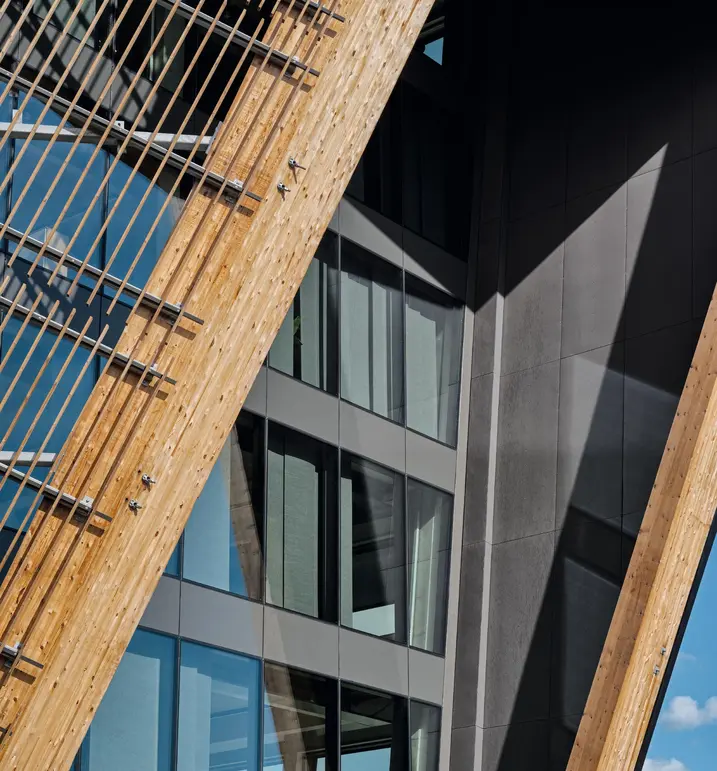
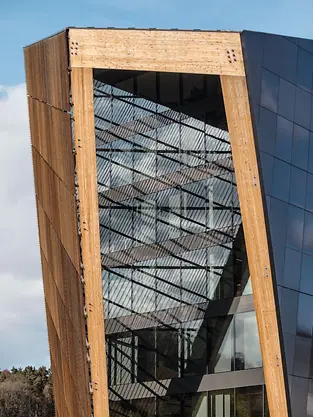
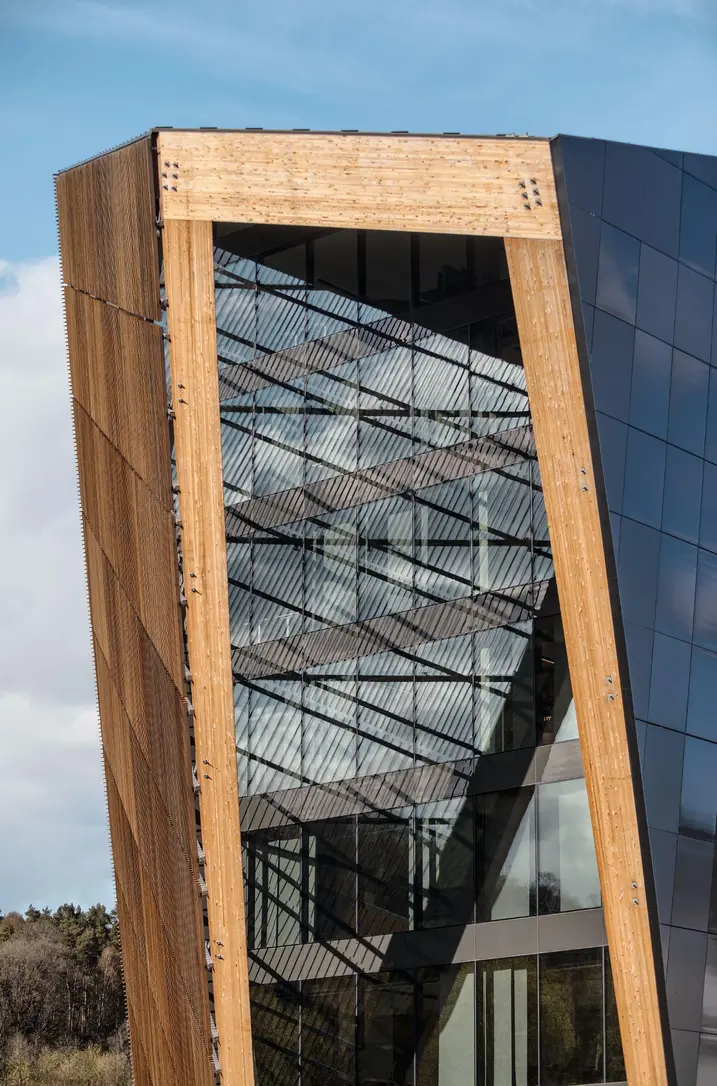
Other parts of the building envelope were also designed with the Cradle to Cradle-certified FWS 50 SG.SI façade system, which helped to make the design of the large, upward-sloping window front in the lower section of the south east-facing façade as elegant as possible, while maximising natural light and using sustainable products. The semi-structurally glazed look, with a narrow face width of just 50 mm, ensures that the profiles are only visible from the inside, giving the outside a flush-mounted all-glass appearance with slim joints, lending the Powerhouse a graceful air – in contrast to what its name might suggest.

Ecodesign makes a difference

In order to save as much CO₂ as possible, environmental compatibility and durability were also top priorities when selecting the materials. The Schüco FWS aluminium façade system impresses not only because it is 100% recyclable, but also because there is no loss in quality. Other advantageous properties of the material were also decisive factors when choosing the façade system, such as the light weight combined with very high stability, as well as the high resistance to corrosion due to anodisation and insensitivity to temperature fluctuations. All of these features are extremely beneficial for a positive carbon footprint.

Product information

FWS 50.HI

Schüco Façade System FWS 50.HI

Mullion/transom façade for a variety of solutions with high thermal insulation

The highly thermally insulated Schüco FWS 50.HI (High Insulated) façade system offers high flexibility and attractive design options for highly thermally insulated façades and skylight areas in a narrow steel look, including optimised fabrication and installation processes. Thanks to a broad system range, solutions for the most varied requirements and applications can be implemented.

Learn more