H. C. Andersens Hus

New fairy-tale museum building

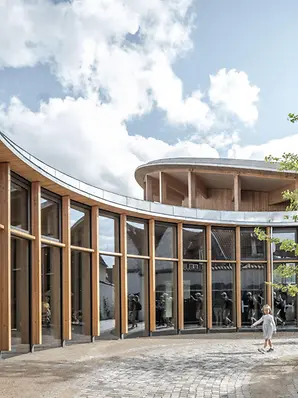
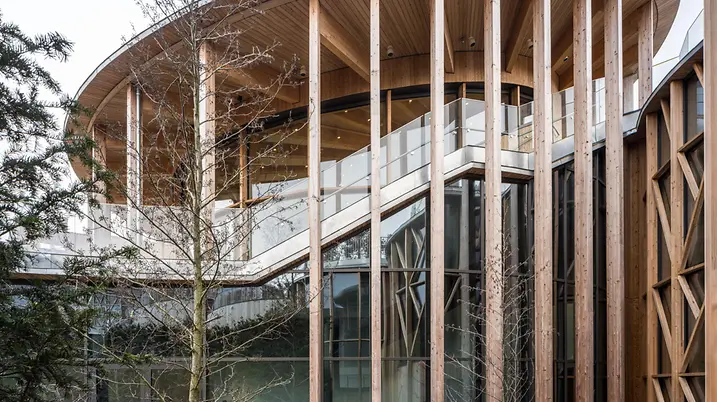
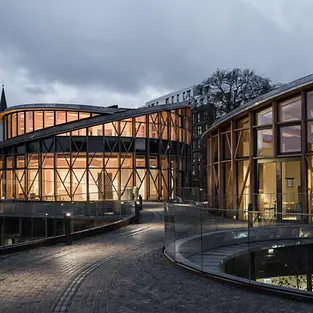
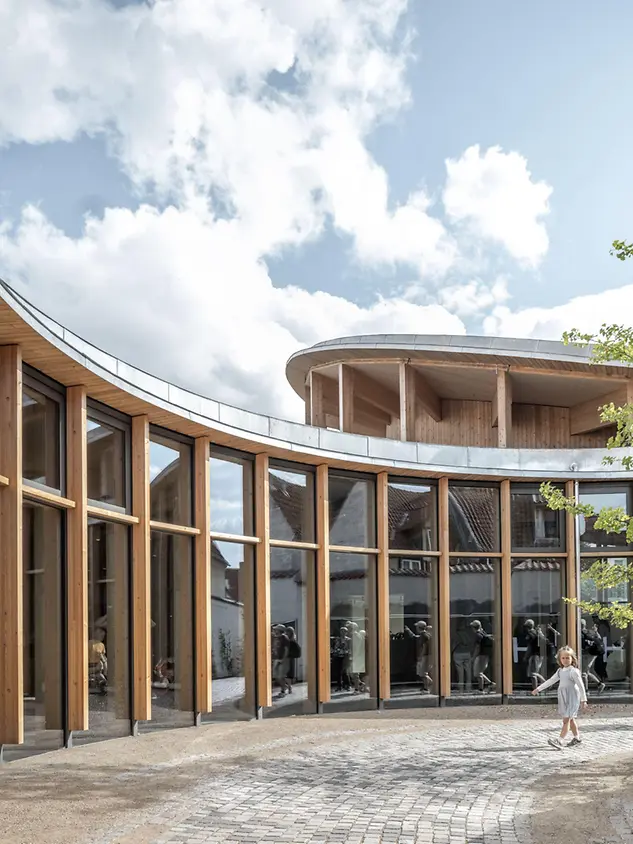
In the Danish city of Odense, H. C. Andersens Hus welcomes you on a fairytale escape. The architecture of the museum is also befitting of this: Japanese architects Kengo Kuma & Associates have designed an organic ensemble consisting of five circular timber pavilions. The museum’s underground exhibition halls can be found directly below. 
Informacje o obiekcie referencyjnym

Rodzaj budynku Sport i kultura
Rodzaje produktów Drzwi Fasady
Systemy Schüco FWS 60 AD UP 75
Cechy Nowa budowa
Lokalizacja Odense, Denmark
Zakończenie 2021
Architekci C&W Arkitekter,Kengu Kuma Associations Europe
Firma specjalistyczna REDTZ Glas &Facade A/S
Zdjęcia © Rasmus Hjortshøj

Mostly concealed

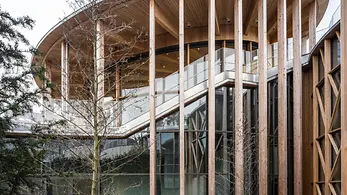
The fairy tales of Hans Christian Andersen (1805-1875) continue to inspire children and adults around the world to this day. Given this unwavering popularity, Denmark’s third largest city, Odense, has recently dedicated a rather unusual new museum building to its most famous son. To embrace the historical architecture of the mostly single-storey rows of houses in the old town and simultaneously create space for a beautifully designed garden, Kengo Kuma And Associates have housed most of the museum underground. A group of circular timber pavilions of different heights is all that can be seen above ground.

Artistic design for the space

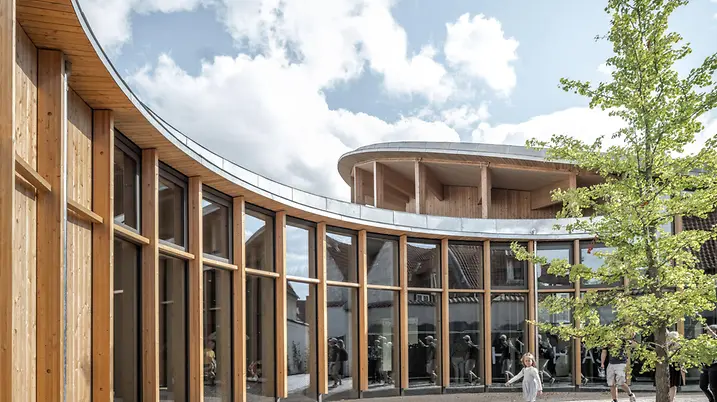
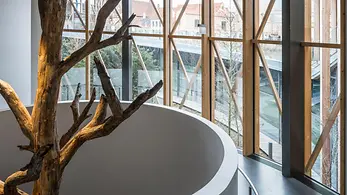
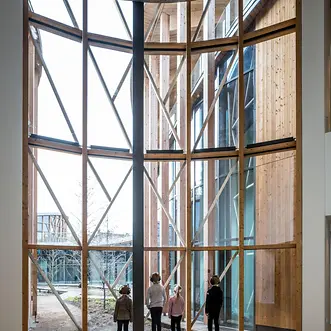
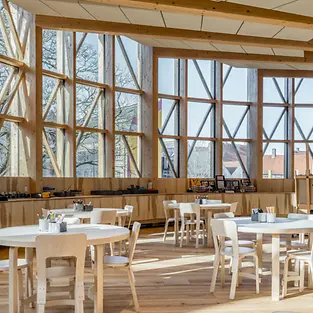
The five building structures accommodate the entrance area, museum shop, café and workshop rooms. They blend in completely organically with the enchanted garden landscape thanks to their curved glass façades and sloping green roofs. In the centre of the complex, the view opens up over glazed barriers down to a sunken garden containing a small expanse of water. The underground exhibition areas are arranged around this space. The interplay of the different floors creates an artistic spatial design that immerses visitors into the fantastic world of H. C. Andersen.

Tradition meets modern architecture

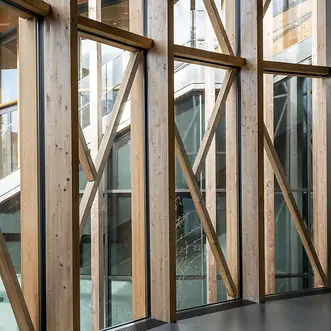
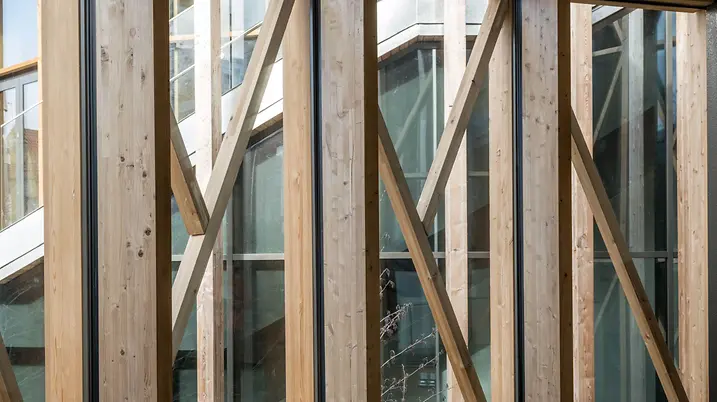
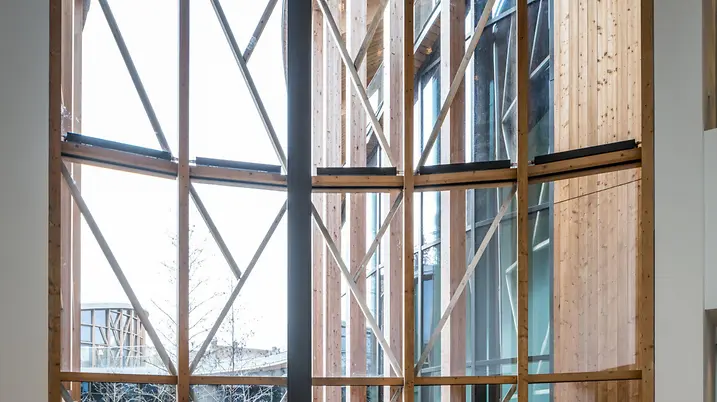
The architects took great care when designing the curved glazed façade, with the striking diagonal struts and the half-timbered architecture echoing the author’s neighbouring birthplace. A timber add-on construction allows a harmonious look to be achieved inside the building. Laminated timber profiles have been used in some areas externally to emphasise the style of a traditional half-timbered building.

Informacje o produkcie

FWS 60

System fasad Schüco FWS 60

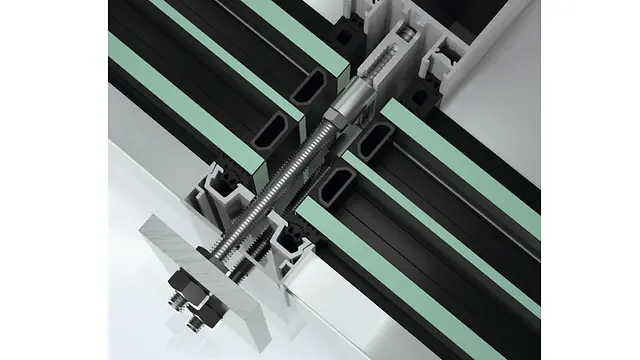
Nowa fasada słupowo-ryglowa Schüco FWS 60 łączy maksymalnie uproszczoną obróbkę z najlepszą efektywnością energetyczną na poziomie budownictwa pasywnego.

Fasada Schüco FWS 60 wyznacza nowe standardy w zakresie obróbki i efektywności energetycznej. Dobrze sprawdzone systemy zostały udoskonalone przede wszystkim pod kątem wygodniejszej obróbki w warsztacie i na budowie. Nowe, prefabrykowane komponenty systemowe zapewniają np. znacznie szybsze, a tym samym bardziej wydajne wykonawstwo.

Dowiedz się więcej

AD UP 75

System drzwiowy Schüco AD UP 75

System drzwi o uniwersalnym przeznaczeniu: od obiektów komercyjnych o dużym natężeniu ruchu po budownictwo mieszkaniowe

System drzwiowy Schüco AD UP 75 o głębokości zabudowy 75 mm, oferuje doskonałą izolacyjność cieplną w połączeniu z dużą stabilnością. Ponadto zapewnia wysoką niezawodność funkcjonalną wymaganą we wszystkich obszarach budownictwa mieszkaniowego i komercyjnego o wysokim standardzie.

Dowiedz się więcej