Glasner House

Resilience through intelligent architecture

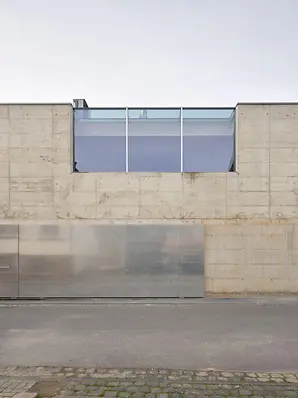
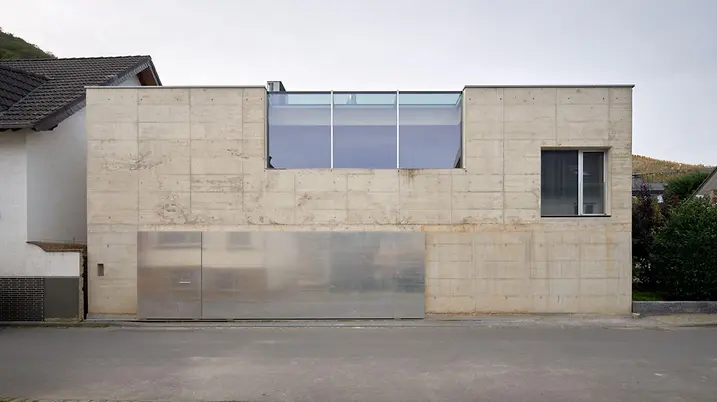
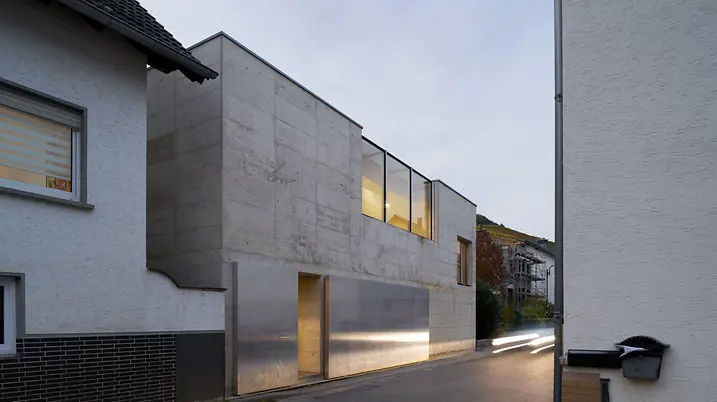
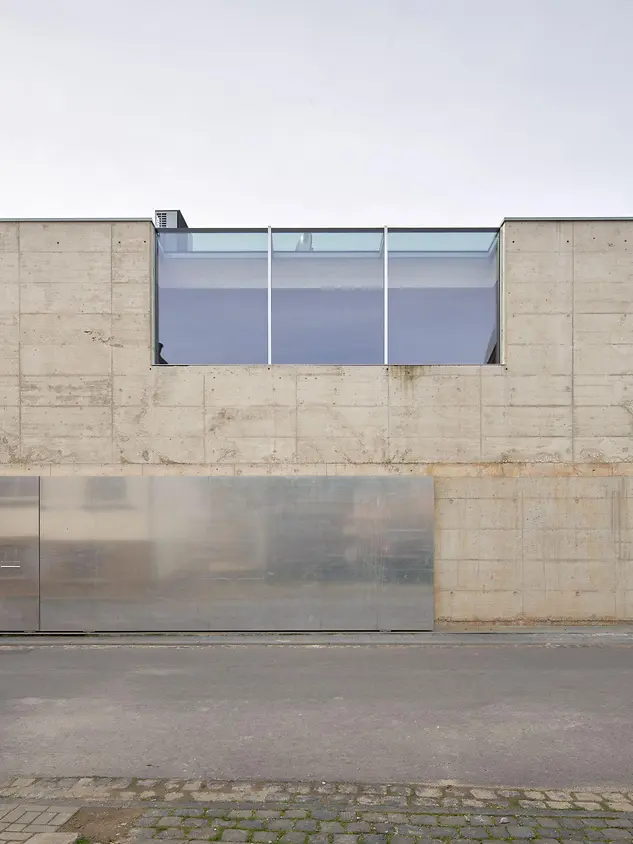
The Glasner House in Dernau, designed by studio hertweck, combines traditional forms of construction with modern requirements in resilience and functionality. The solid base made from reinforced concrete protects the living spaces against flooding and raises it above potential flood levels. This carefully considered construction ensures that the building will be able to cope with the challenges of climate change.
Informacje o obiekcie referencyjnym

Rodzaj budynku Domy jednorodzinne
Rodzaje produktów Okna Drzwi Fasady Automatyka budynku
Systemy Schüco Czujnik magnetyczny AD UP 90 FWS 50.SI AWS 75.SI+
Cechy Modernizacja Efektywność energetyczna Cradle-to-Cradle Odporność na warunki
Lokalizacja Bad Neuenahr-Ahrweiler, Germany
Zakończenie 2022
Architekci Studio Hertweck
Firma specjalistyczna Klein Metallbau GmbH
Zdjęcia ©Veit Landwehr/ bildpark.net

Traditional courtyard house with a functional envelope

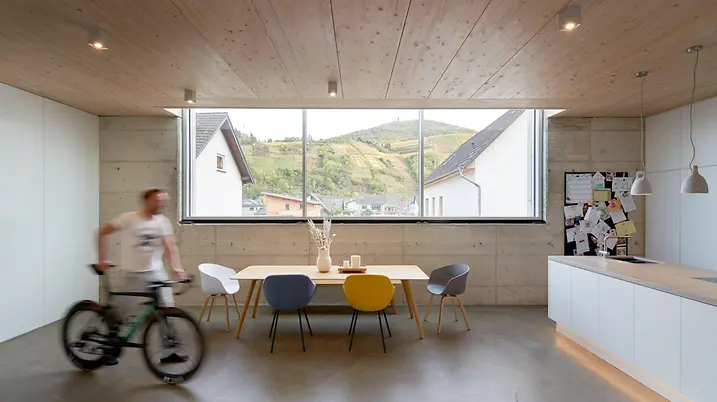
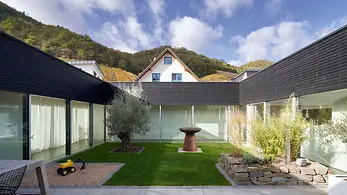
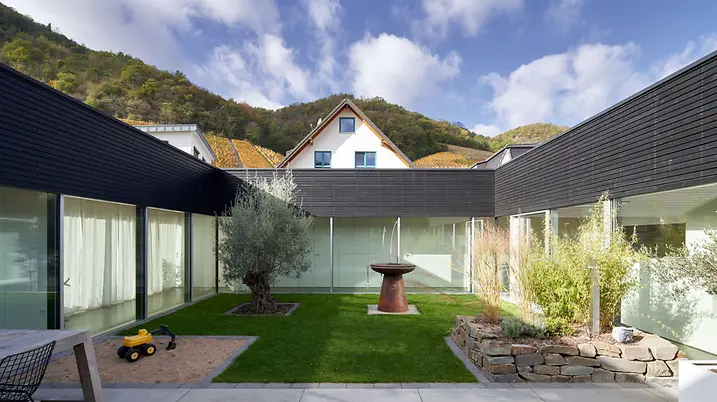
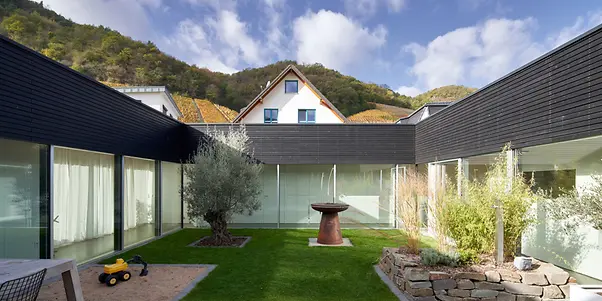
The work of Luxembourg-based architects studio hertweck, the design of Glasner House references the traditional typology of the courtyard house in the villages of the Ahr valley. However, this only becomes apparent on second glance – the solid base made from reinforced concrete and the clean geometry of the building suggest a cool, modern architectural language. Nevertheless, the design and choice of materials are not purely the result of aesthetic aspirations. The local conditions prevailing in Dernau in the Ahr valley mean that the concrete base is exclusively reserved for functional rooms and parking spaces, raising the living areas on top significantly above the hundred-year flood water level (HQ100). This means that, if the water level rises again, the lower section can be flooded with causing any problems.

Learning from past experience

This precaution has not come about by chance – although the building had already been equipped with flood protection measures, it was severely damaged by flooding in summer 2021. The water rose so quickly that it got underneath the floor slabs and screed on the first floor and drenched the thermal insulation. Extensive renovation work was required in order to make Glasner house habitable again.

Wald aus Vogelperspektive mit sich drehenden Pfeilen als Recyclingsymbol

Living concept offers plenty of privacy

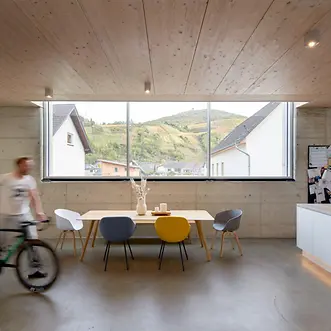
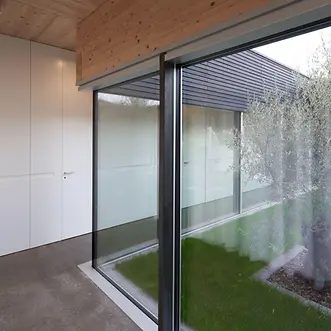
Behind the double-skin base façade is a timber house consisting of stacked ceilings and wooden post-and-beam walls, surrounding the inner courtyard which is sheltered from the sometimes rather tall neighbouring houses. The children's rooms and playrooms are located in the rear, single-storey section of the building. The living room, dining room and parents' bedrooms are situated at the front. While the communal areas are thus largely screened from view, the large Schüco panoramic windows permit far-reaching vistas, showcasing the vineyards beyond.

Building sustainability

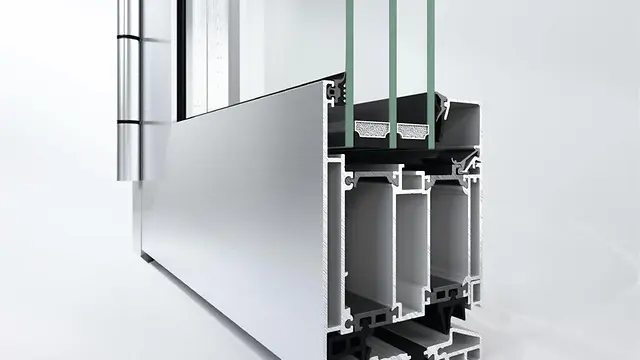
The architecture of this family home not only combines traditional construction methods with an awareness for future climatic developments and adverse weather events, it also emphasises sustainability in building. All of the Schüco systems installed – from the highly thermally insulated mullion/transom façade to the equally highly thermally insulated windows and incredibly robust door – have been awarded the “Cradle to Cradle certified™” sustainability label and therefore contribute towards making the building envelope sustainable.

Informacje o produkcie

Magnetic switch

Automatyka budynku Schüco Czujnik magnetyczny

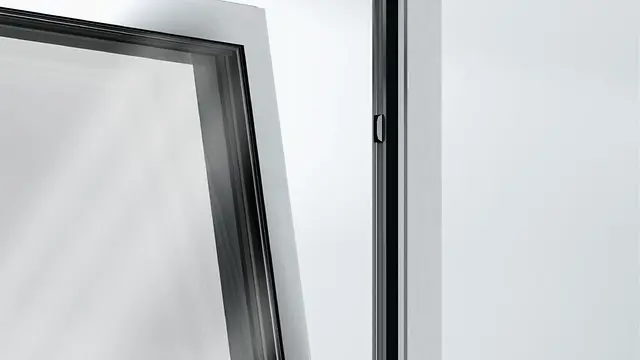
Bezpieczny, wygodny i w pełni ukryty monitoring okien, drzwi i systemów przesuwnych.

Systemy monitorowania składają się z różnych zestawów czujników magnetycznych, osłon ochronnych i urządzeń testowych do przeprowadzania odbioru. Czujniki magnetyczne stanowią centralną część systemów monitorowania. Zostały one specjalnie dopasowane do systemów profili okiennych, drzwiowych i przesuwnych Schüco.

Dowiedz się więcej

AD UP 90

System drzwiowy Schüco AD UP 90

Innowacyjny, wysokoefektywny system drzwi do budynków mieszkalnych i komercyjnych

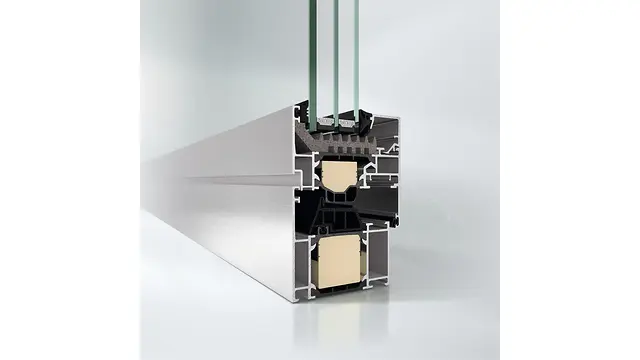
System drzwiowy Schüco AD UP 90 o głębokości zabudowy 90 mm został zaprojektowany z myślą o najbardziej wymagających rozwiązaniach projektowych w budownictwie mieszkaniowym i komercyjnym. Bazuje na trójdzielnej konstrukcji profilu z podwójnym systemem uszczelnienia środkowego, który zapewnia maksymalną efektywność energetyczną, izolacyjność i właściwości uszczelniające.

Dowiedz się więcej

FWS 50.SI

System fasad Schüco FWS 50.SI

Fasada słupowo-ryglowa z certyfikatem domu pasywnego o szerokiej gamie różnorodnych zastosowań

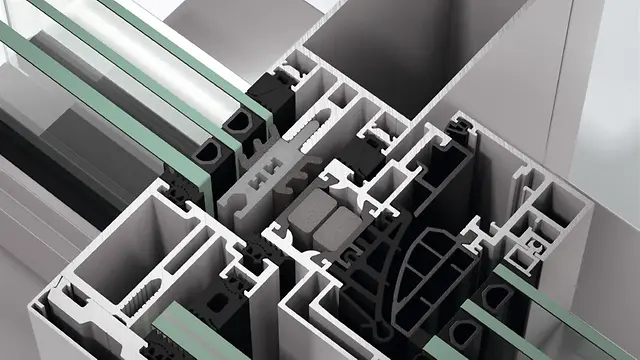
System fasadowy Schüco FWS 50. SI (Super Insulated) bazujący na nowatorskiej technologii izolatorów, umożliwia realizację szerokiej gamy fasad i świetlików dachowych o najwyższej izolacyjności cieplnej na poziomie pasywnym, przy zapewnieniu zoptymalizowanych procesów produkcji i montażu.

Dowiedz się więcej

AWS 75.SI+

System okienny Schüco AWS 75.SI+

Lepsza izolacyjność cieplna, bezpieczeństwo i produkcja

Zoptymalizowany standardowy system okienny Schüco AWS 75.SI+ (Super Insulated) o głębokości zabudowy 75 mm jest częścią platformy systemowej Schüco AWS i stanowi bazę dla szerokiego zakresu zastosowań w energooszczędnych przegrodach budowlanych. W zależności od wymagań architektonicznych, wysoko izolowany system aluminiowy może być stosowany jako okna elewacyjne, okna wstęgowe, wpinane w fasadę lub łączony z systemami drzwiowymi Schüco.

Dowiedz się więcej