kupa-Quartier

Window planning with a mix of materials

The new kupa quarter in Pasing, Munich, has been successfully completed following the renovation of a historic factory in line with listed building regulations and the addition of five new buildings. To meet the diverse requirements for the windows and doors, the planners found perfect solutions in the comprehensive range of products from Schüco.

Referensdetaljer

Byggnadstyp Kvarter och blandad användning
Produktområden Fönster
Schüco-system LivIng
Egenskaper Nybyggnad
Plats München, Germany
Färdigställande 2021
Arkitekter LeitWerk AG
Fackföretag FTF Fenster Türen
Bildkälla © Sorin Morar

A vibrant neighborhood steeped in Munich's industrial history

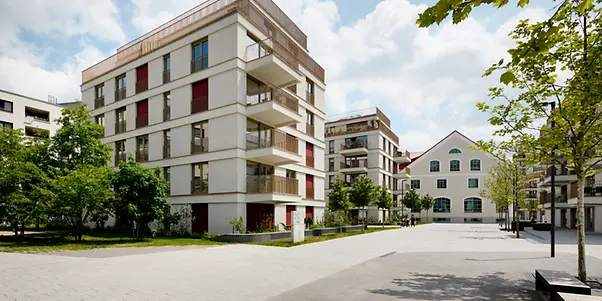
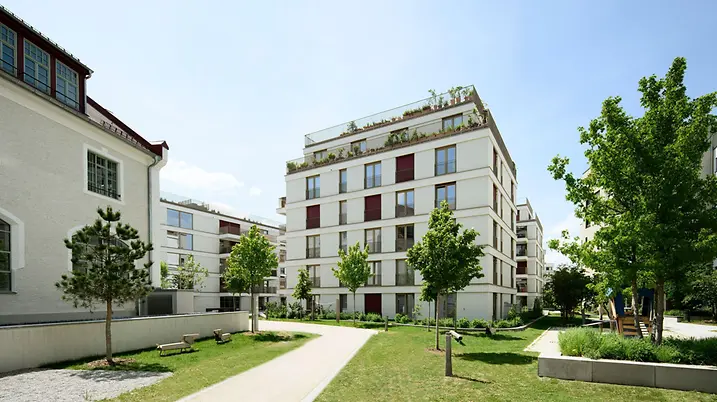
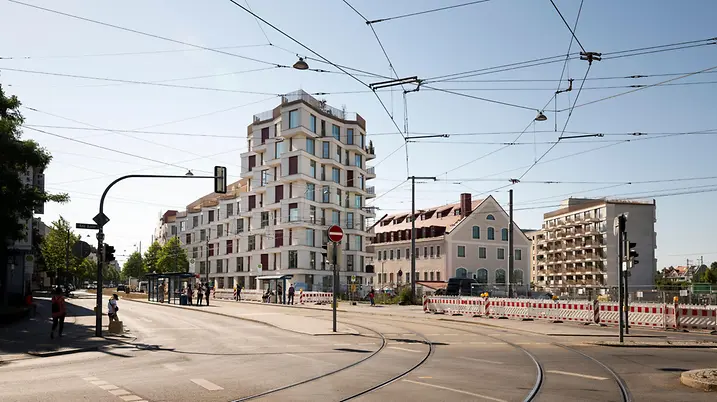
Five very different types of residential building are grouped around Pasing's former envelope factory, which is the heart of the new kupa quarter. Built in 1906 in line with plans by architect Leonhard Moll, the factory building is a protected piece of Munich's industrial heritage and is now home to restaurants and office spaces. Commercial and retail facilities along Landsberger Straße complement the range of services on offer. The new quarter also accommodates a total of 176 apartments, ranging from 44 to 203 square metres in size, as well as a number of communal facilities. The entire complex is nestled away in a spacious, car-free green area, with private and communal planters and a lively town square that offers an urban atmosphere for residents and passers-by. 

Five multi-storey residential buildings are grouped around the envelope factory, which was renovated in line with its listed building status and gave the quarter its name “kupa”, from the German word "Kuvertfabrik" meaning envelope factory.

Contrasting architecture

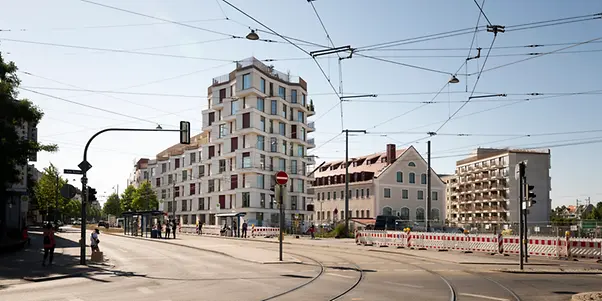
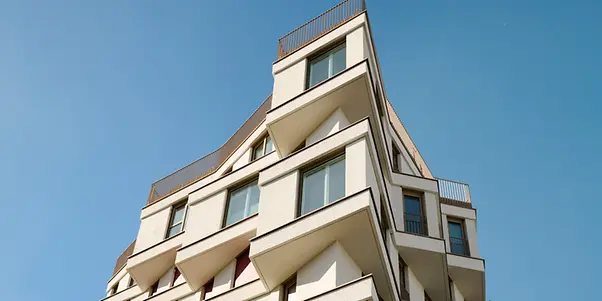
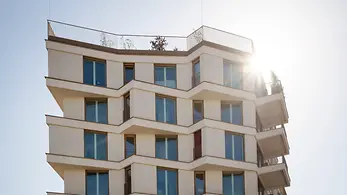
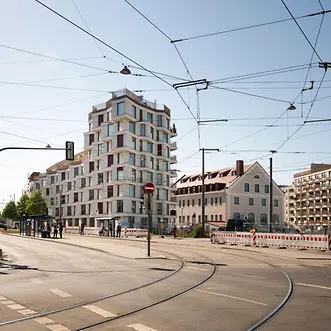
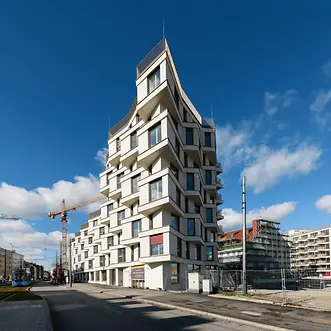
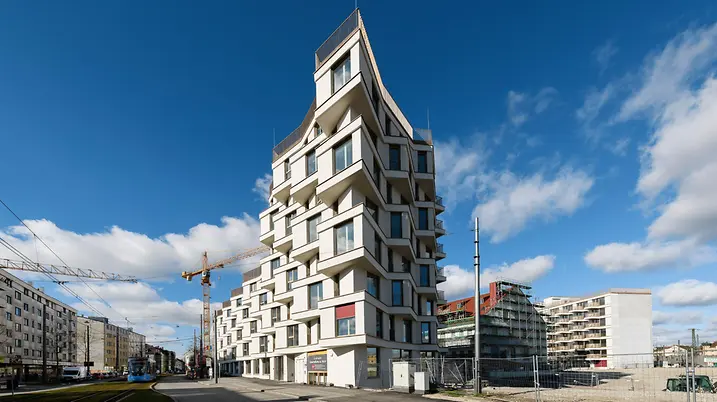
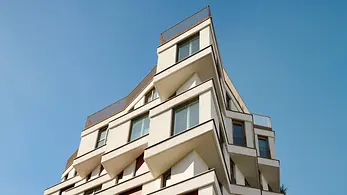
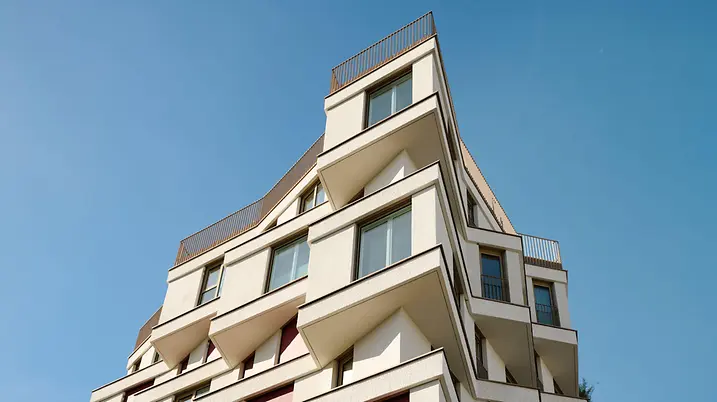
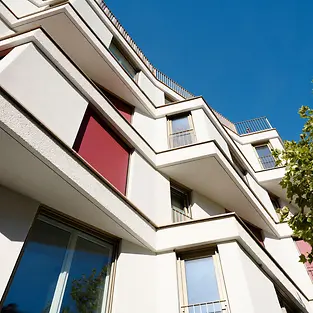
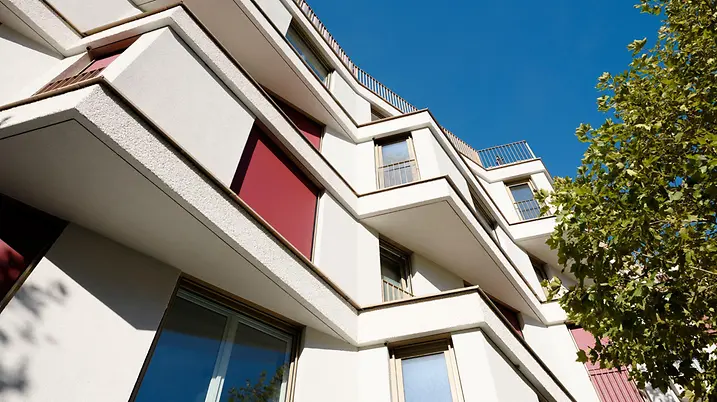
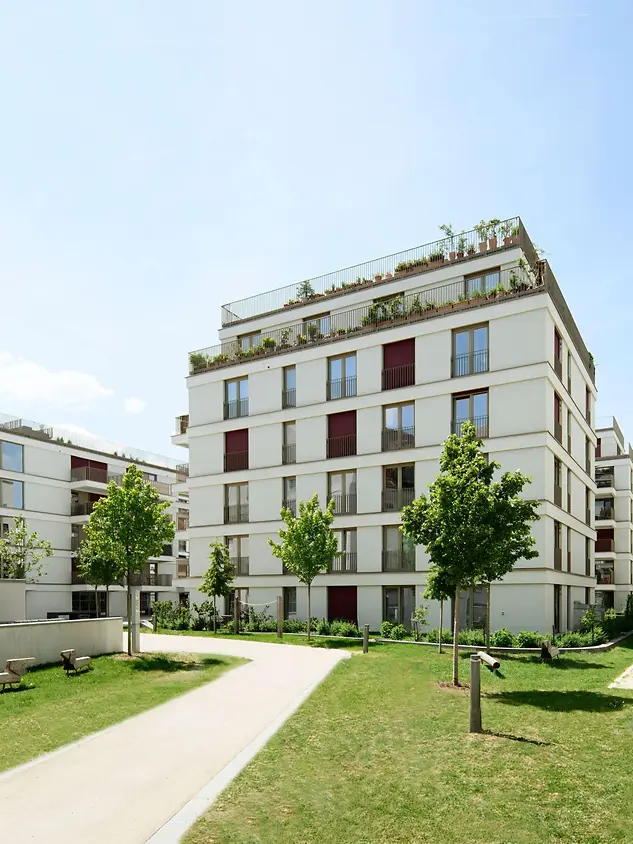
The architectural firm allmannwappner renovated the two-story factory building and transformed it into a modern office building. The five new apartment buildings with diverse geometries were also built according to plans from the Munich-based architects. Two narrow blocks close the gaps between the buildings on the two main roads to the north and south of the envelope factory. The relief-like façade with its asymmetric bay window pattern on the street side characterises the identity of the quarter. Building C in the south rises up to form an eight-storey residential tower. In the future, this tower will mark the gateway to the kupa quarter together with its counterpart – a high-rise complex planned for Landsberger Straße.

Building C rises up to form a residential tower, which marks the entrance to the kupa quarter on Landsberger Straße in Pasing, Munich. The façade on the street side dominates with an asymmetric bay window pattern.

Skilfully connected

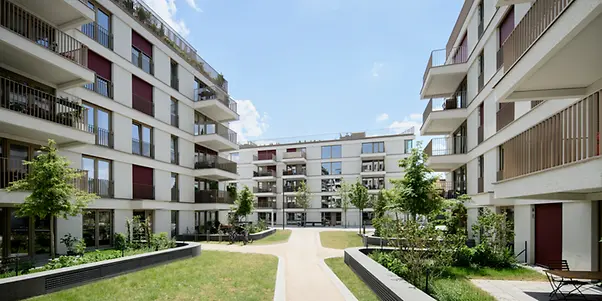
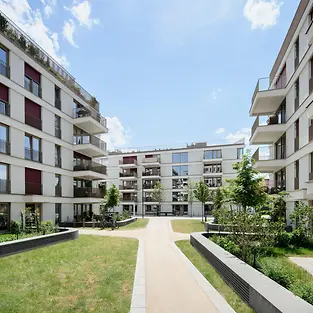
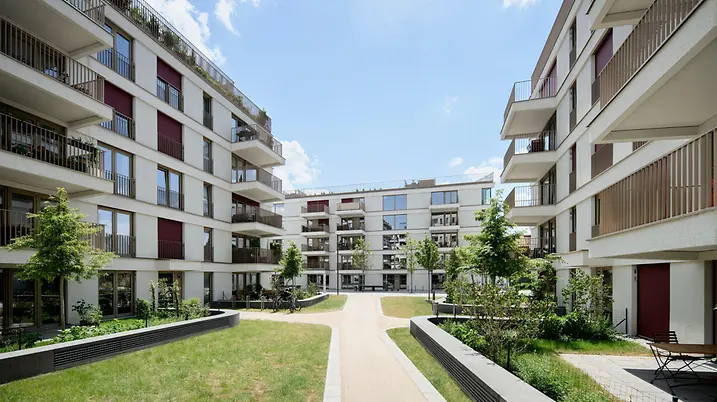
Two five-storey town houses with penthouse apartments connect the quarter to the new residential development on Pasinger Promenade. Another new building connects to an existing building via a side wing, creating a sheltered courtyard for the on-site nursery. The façades facing inside the quarter are more understated, with an emphasis on practicality and tranquillity. Almost all of the apartments have a balcony, with green roof terraces extending the private and communal open spaces.

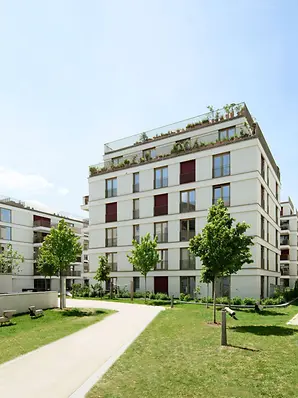
Open floor plans and a relaxed façade design characterise the inner courtyard of the quarter.

The right solution for every window

For the façade solutions in the kupa quarter, investors, planners and contractors took advantage of the Schüco cross-system expertise and applied it to both the renovation and newbuild projects. In line with the listed building status, the old steel windows on the ground floor and gable walls of the old factory building were replaced with a new, contemporary steel window system with insulating glazing from Schüco. “Despite the narrow profile face widths of the Janisol Arte 2.0 window system and a basic depth of 60 mm, we were able to implement robust constructions with a high glass proportion, while also fulfilling the requirements for sound reduction and thermal insulation,” says Simon Köppl, Head of Façade Planning at allmannwappner. The interior doors and glass walls were also designed using the steel system.

Focus on sound insulation

In addition, sound reduction was a key focus for the residential buildings, especially those located along the main roads. The solution is a specially designed box window, created from the Schüco LivIng 82 MD and Schüco LivIng 82 AS systems. This combines a thermally broken frame trim construction with two window units to form one single unit, fulfilling the highest requirements in terms of sound reduction and thermal insulation while impressing with slimline face widths. The windows offer sound reduction of up to 60 dB when closed and up to 35 dB when partially opened. When partially opened, the windows allow ventilation while also ensuring comfort and quiet.

Specially designed box windows, created from the Schüco LivIng 82 MD and Schüco LivIng 82 AS systems offer tranquillity inside the residential complex.

Aluminium systems on the ground floor

The windows and doors on the ground floor were constructed using aluminium to match the mullion/transom constructions of the commercial units. The architects and fabricators worked with Schüco products here as well, namely the AWS 75 window system, the ADS 75.SI door system and the FWS 50 mullion/transom construction – because Schüco offers the perfect solution for every window and application, across materials too.