Kreislaufwirtschaft
The road to circular architecture

Circularity: Plan and build with a focus on the closed loop

There is estimated to be around 15 billion tonnes of construction materials in existing buildings in Germany. These materials represent a huge amount of potential for the circular economy, as they can be largely recycled or reused in future. This is where the concept of circularity comes in, as it aims to promote a change to construction methods that are more sustainable and conserve more resources.

circular_economy

What does circularity mean?

Circularity means using resources and materials in a way that avoids waste and keeps material cycles closed. The aim is to extend the lifecycle of materials through recycling, repair and reuse. Concepts such as the Ellen MacArthur Foundation's "circular economy" and Cradle-to-Cradle design from Braungart & McDonough focus on the continuous use of materials in biological or technical cycles, in order to retain the value of resources for as long as possible and minimise the impact on the environment. When it comes to implementing the Cradle-to-Cradle principle in buildings, Schüco is leading the way with over 70 certified systems. Products and production processes that follow this principle require radical new thinking in terms of product design – from production and the usage phase through to dismantling, processing and reuse as a raw material. Schüco develops products with a low carbon footprint and offers sustainable alternatives based on low-emission raw materials, a higher recycled content and alternative materials.

Kodėl mums vis svarbesnis tampa žiedinis ekonomikos modelis?

Savo „Žaliajame kurse“ (Green Deal) Europos Sąjunga iškėlė tikslą iki 2050 metų tapti Europą klimatui neutralia. Viena iš pagrindinių šio plano dalių – Žiedinės ekonomikos veiksmų planas, kurio tikslas – tvarus produktų dizainas ir ekonomikos augimo atskyrimas nuo išteklių naudojimo. Be to, planuojama parengti Vokietijos nacionalinę žiedinės ekonomikos strategiją (Nationale Kreislaufwirtschaftsstrategie, NKWS), kuri taptų pagrindiniu tikslu, apjungiančiu žaliavų politikos siekius. Perkeliant šiuos principus į statybų sektorių, esami pastatai, dar vadinami „miesto žaliavų atsargomis“, ateityje atliks svarbų vaidmenį tausojant išteklius ir mažinant anglies dioksido emisijas. Todėl „Schüco“ jaučia atsakomybę aktyviai skatinti perėjimą prie uždaro ciklo statybų sektoriuje, kad perdirbamos medžiagos galėtų būti išsaugotos po pirmojo jų naudojimo etapo neprarandant kokybės, o seni fasado elementai būtų paverčiami naujais.


Current circularity requirements

The construction sector is of key importance to the circular economy, as it uses the most resources and produces the most waste, and can make a significant contribution to reducing emissions and conserving resources by reusing building materials. At an EU level, the following action plans, directives and tools are in place:

EU Waste Framework Directive

The EU Waste Framework Directive (2018/851) aims to strengthen the circular economy by setting recycling quotas, promoting waste prevention and introducing systems for expanded producer responsibility. It supports sustainable waste management through measures for recycling, repair and reuse of waste.

Construction Products Regulation

The Construction Products Regulation (CPR, or Regulation (EU) No. 305/2011) harmonises the marketing conditions for construction products in the EU and stipulates a Declaration of Performance and the CE mark for ensuring product safety and environmental friendliness. The 2022 amendment tightened these regulations by adding additional requirements for product safety and environmental and climate protection, and extending the obligations for various industry stakeholders. In addition, digital construction product information is required.

ES mokesčių reglamentas

ES mokesčių reglamentas (2020/852) nustato tvaraus verslo kriterijus, įskaitant statybų sektorių, ir skatina investicijas į žiedinės ekonomikos principų taikymą statybų projektuose bei efektyvų išteklių naudojimą.

Legal requirements at a national level

Concrete legal requirements are implemented at national level. These include:

  • DIN EN 15804 sets out the principles, requirements and guidelines for Environmental Product Declarations (EPDs). With it, the environmental impact of building products can be assessed over their entire lifecycle.
     
  • The DIN EN 15643 series of standards concerns the sustainability assessment of buildings and infrastructure. It covers various aspects such as environmental efficiency, resource efficiency and lifecycle costs.
     
  • The ISO 20887:2020 standard includes basic principles and concrete requirements and guidelines for planning dismantling properties and adaptability. These guidelines can be used to maximise the lifespan of buildings and the components and construction products used.
     
  • DIN SPEC 91484 defines a process for recording construction products prior to demolition and renovation work (pre-demolition audit).The aim is to assess the reuse potential of construction products in order to encourage recycling thereof, conserve resources and reduce carbon emissions. The standards supports the circular economy in the construction sector by setting out a system for identifying and assessing reusable materials.
     
  • The certification of buildings as a quality-assurance and value-retaining measure will also help with the implementation of circular economy principles in future. The German Sustainable Building Council (DGNB), for example, is already expanding the circularity criteria for certification.

Circular economy – harnessing potential

With regard to transforming the construction sector at a product and system level, the circular economy offers the greatest impact as a sustainable alternative to the traditional, linear economic model (take-make-waste). It focuses on product design that promotes longevity, repair, resource efficiency and minimisation of waste, as well as closing material cycles through recycling.

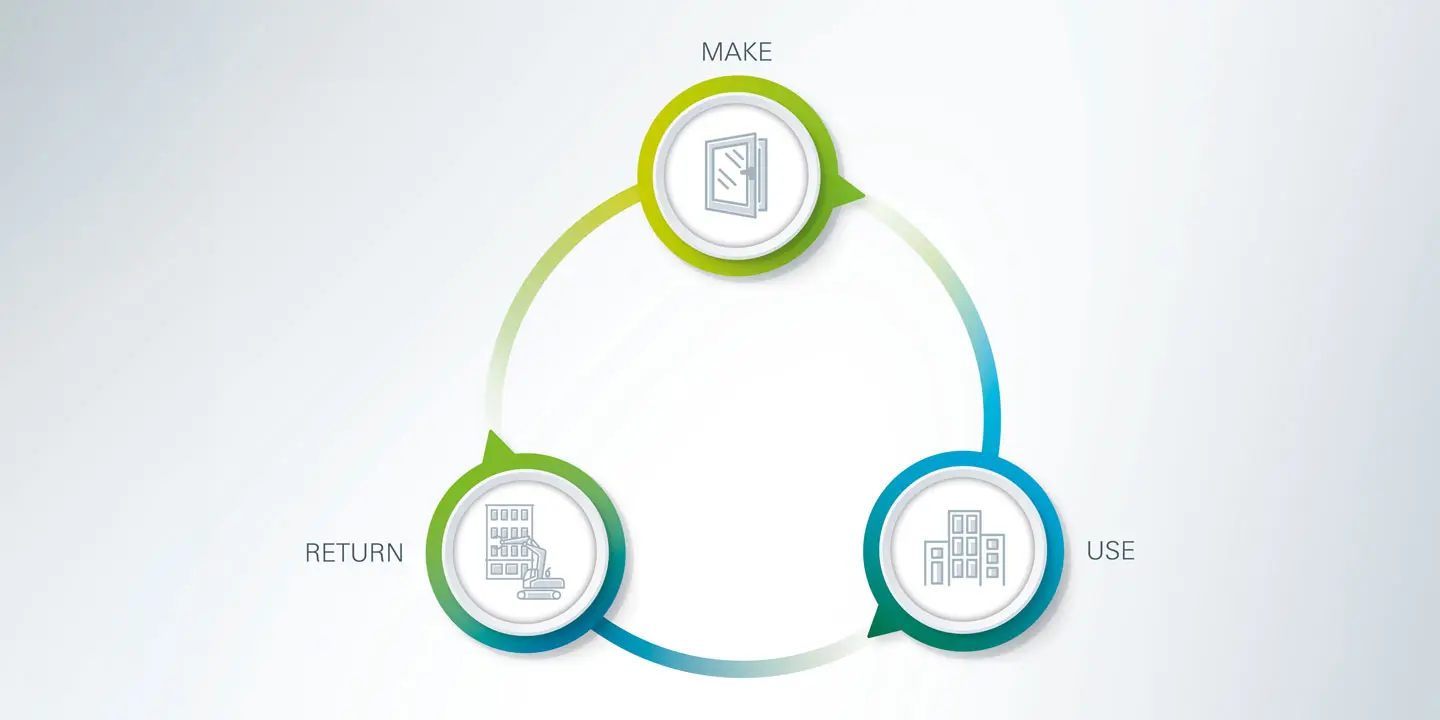
Circular construction: From planning through to recycling

The integration of circularity into all stages of construction – from planning and building through to use and recycling – represents a significant paradigm change in the construction industry. With Carbon Control, Schüco provides answers to material use and sustainability, the integration of circular principles into product development and the provision of project-specific product data for the lifecycle assessment.

vlcsnap-2024-09-09-18h46m04s906

Schüco Carbon Control

Sužinokite daugiau apie mūsų platų produktų ir paslaugų asortimentą, skirtą pastatų dekarbonizacijai.

Schüco Carbon Control
100_122586_KBC-Data_Center

Material passport as a pre-requisite for the urban mine

In order to effectively use buildings as raw material reserves for the future, information is required as to where certain components and materials can be found in a building and what impact they have on the environment. A key step towards promoting the circular economy in construction is the introduction of material passports or building resource passports. These documents record detailed information about the materials used in a building and their recycling properties, and support the concept of urban mines at the end of a building's lifecycle.