Information about the reference project
Type of building: |
Living |
Products: |
Windows, Sliding doors |
Series: |
LivIngSlide |
Location: |
Werther, Germany |
Completion: |
2023 |
Architects: |
- |
Specialist company: |
- |
Picture credits: |
© Carmen Wolf |
Staged renovation of old farmhouse
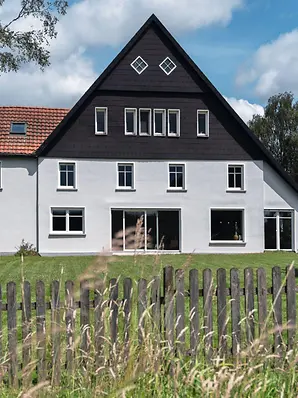
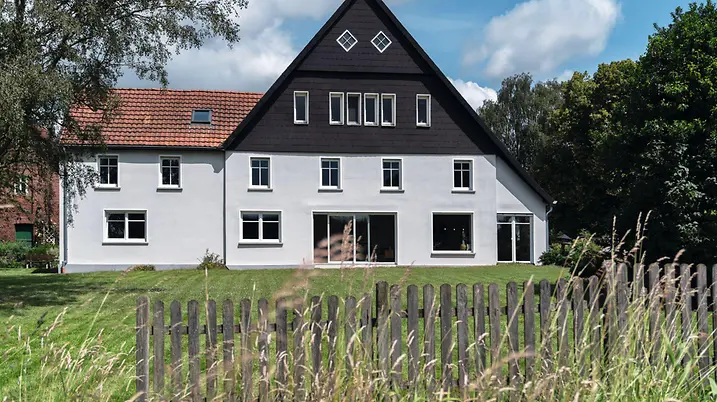
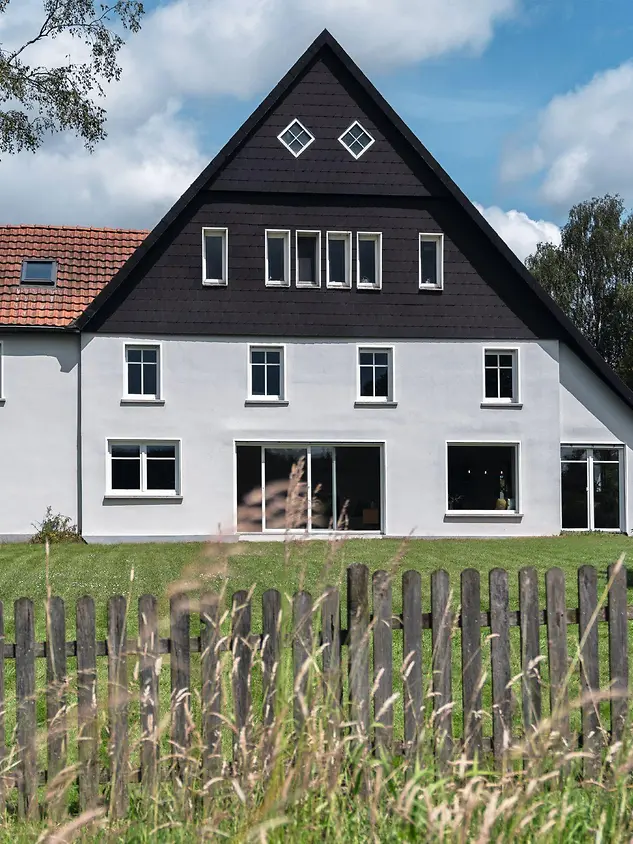
A private home in a quiet, rural location – this is an aspiration for many people. For the Johanning couple, this dream has come true with the renovation and modernisation of an existing property in the district of Gütersloh. They fell in love not only with the idyllic surroundings and generous plot, but also the existing farmhouse building itself, which was built in 1802. The floor plan, the fabric of the building, and the room layout offered a perfect foundation for a staged renovation.
Firstly, the clients established which tasks should be tackled immediately and which could be postponed until later. The energy-saving renovations stood at the very top of their list. As the roof had already been insulated in the 1990s, energy consultants instead concentrated on the façade and the windows. To begin with, insulating material was blown into the hollow layer between the double-skin masonry. However, before the windows on the ground floor and first floor could be renewed, the couple had to commit to an extensive re-construction of the ground floor. And so, step by step, the charming structure became their own personal dream house.
Inspired by the existing architecture
The clients explained: “Our initial aim was to design the 135 m2 ground floor as a contemporary living space for ourselves. While doing this, we wanted to preserve the character of the building as much as possible. Although renovation and conversion measures had already taken place in the last two centuries, many structural and interior design elements remain unchanged. We didn't want to lose this atmosphere.”
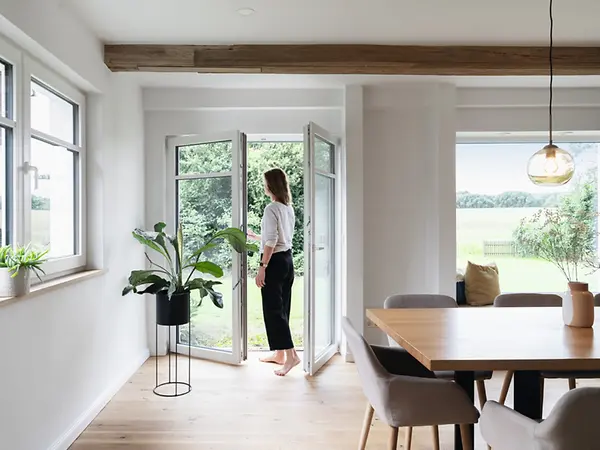
Therefore the floor plan of the ground floor was not changed, just minorly adjusted. Likewise, the windows were also designed in keeping with the original style of the building. The aim was to not only provide the living and working environments with plenty of natural light, but also to prioritise barrier-free access to and views of the garden. For this reason, a structural engineer was consulted to create three openings for larger windows and doors with a high proportion of glass for the dining and living room on the south-facing garden side.
Options for light and sight
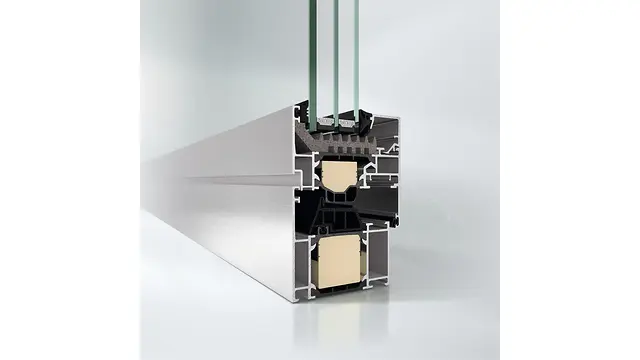
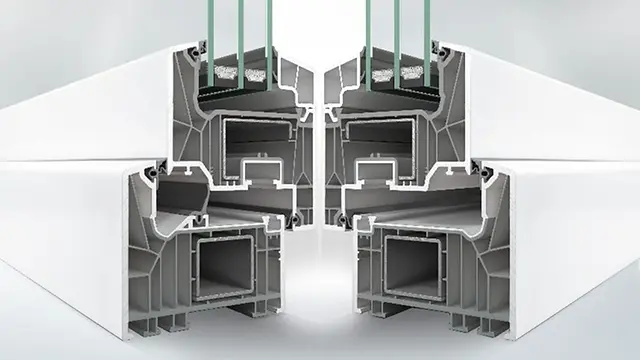
Along with light and visibility, energy efficiency was the key design requirement when choosing the windows. Throughout the property, the clients opted for white, highly thermally-insulated PVC-U windows and doors with triple glazing from Schüco. The profile construction used for the windows was the Schüco LivIng 82 AS. With a basic depth of 82 mm, the 7-chamber system with a rebate gasket achieves superb thermal insulation values.
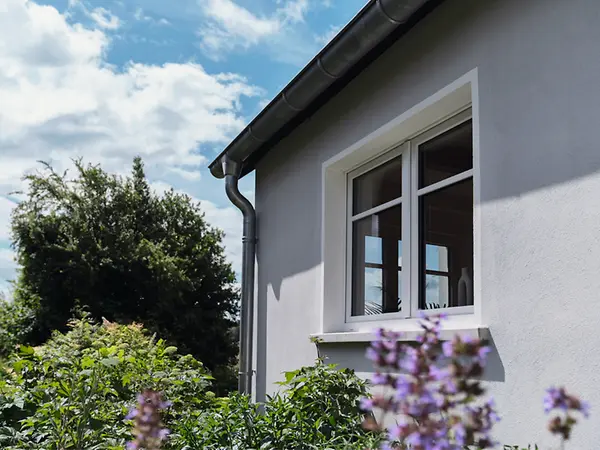
The replacement of the windows was quick and uncomplicated. To match the original appearance of the house, the majority of the façade openings retained their original size and the new windows were designed with surface-applied glazing bars in keeping with the look of the old windows.
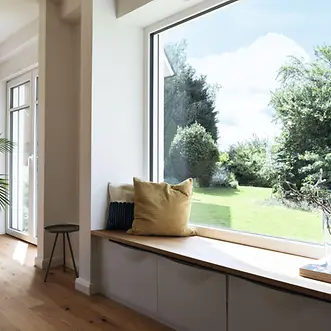
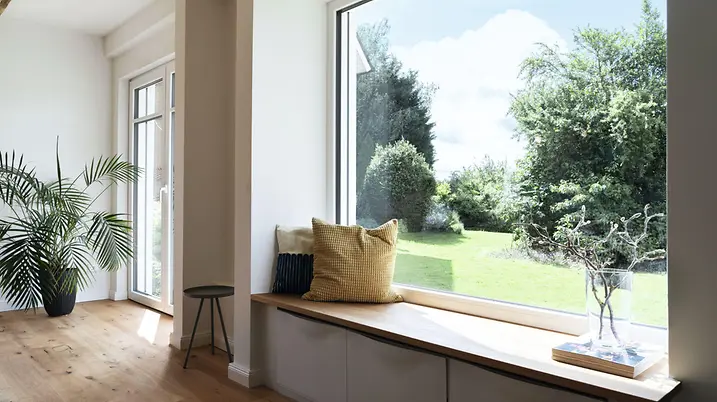
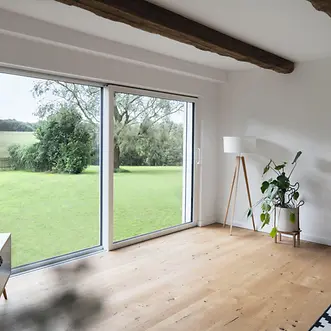
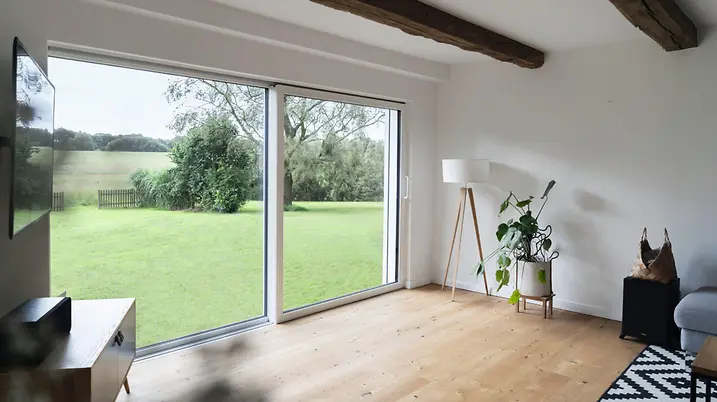
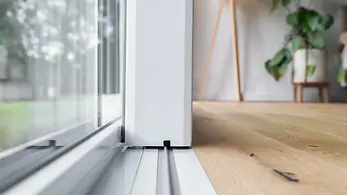
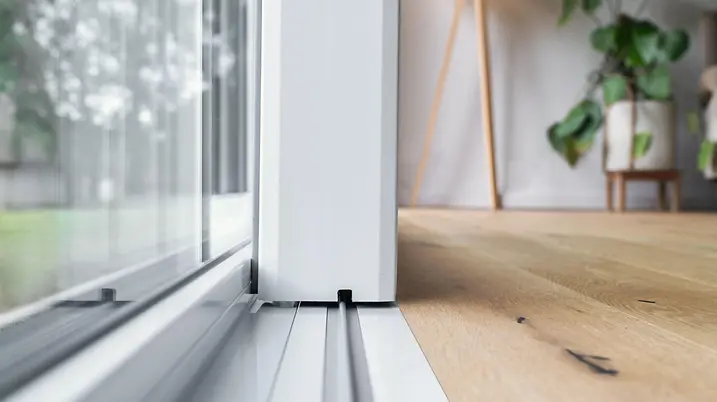
The masonry openings were expanded accordingly for the south-facing panoramic units, a lift-and-slide door and a fixed light. Here, the clients purposely decided against the glazing bar design, so that nothing interrupts the view to the outside. The new lift-and-slide door from the Schüco LivIngSlide Panorama construction also allows barrier-free access from the living room to the terrace. Fitted with a wide window sill seat, the large panoramic fixed light in the dining room was designed as a quiet space with views across the garden.
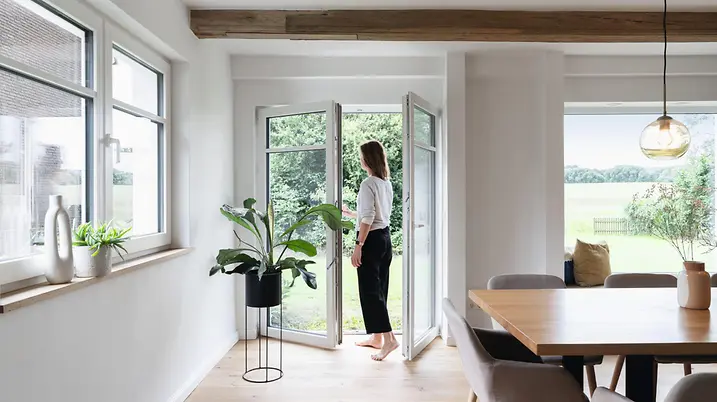
It was also possible to create an additional masonry opening for the dining room, again on the terrace side, for a barrier-free double-leaf door which, with its surface-applied glazing bars, in turn creates a visual connection to the smaller glazing bar windows. This results in the two panoramic constructions being almost framed by glazing bar units. A harmonious exterior appearance is therefore created, which mirrors the character of the building and impresses with a new light grey render.
Inside the property, the light-flooded rooms, underfloor heating laid on new screed and oak parquet flooring create comfort and cosiness. In the living and dining areas, reclaimed dark-wood ceiling beams create a deliberate contrast to the otherwise light spaces. At the same time, they serve as visual connecting elements to the new thermally-insulated double-leaf entrance door which, just like the old existing door, is also made of wood. Designed as an elegant country house door to separate the living space from the hallway, a sun stands out vividly against the background.
Energy efficiency for sustained value retention
After almost two and a half years of reconstruction and modernisation work, the clients are now able to enjoy their new home. With the newly designed bathroom, a guest WC, the bedroom with a dressing room, a small office and the kitchen area with the adjoining dining and living room, the ground floor currently offers more than enough space for the couple. The interior construction on the first floor will take place when necessary at a later date.
The attic area, i.e. the second upper floor with pointed gable area, has been rented out. The replacement of the windows in this rented residential space and a new roof covering are part of the medium-term renovation plan.
However, in the short-term, further energy-efficient renovation work is planned, which aims to further reduce the carbon footprint of the building: The former oil-fired heating will be replaced with a heat pump. This will then be powered by electricity from a PV system which has already been installed on the property.
Product information
Inspiration from the reference project