Meet increasing CO₂ requirements and secure long-term competitiveness

The European Green Deal has stipulated that Europe must be climate neutral by 2050, while in Germany the aim is to achieve this objective by 2045. As a result, fabricators are seeing rising demand from investors and architects for low-emission, future-proof buildings. Carbon footprints are increasingly becoming a deciding factor in the award of contracts, as CO₂ becomes a new currency and an optimum carbon footprint becomes the key to meeting specification requirements in full. Fabricators can control the carbon footprint of the planned building during construction and adhere to regulations at an early stage in order to ensure the building's sustainability and give it a competitive edge in calls for tender.

Benefits of implementing projects with Schüco Carbon Control​

Material

Durch die Auswahl des richtigen Materials können Bauprozess-Beteiligte verbaute Emissionen aktiv beeinflussen. Beispielsweise weist Schüco Ultra Low Carbon+ Aluminium (ULC+) einen GWP von 0,89 kg CO₂e/kg Profil auf. Dies entspricht einer Reduktion von 87 % gegenüber dem Schüco Standard-Aluminiumprofil gemäß EPD. Die Distribution von ULC+, ULC und LC erfolgt bei Schüco nach dem Kontingentverfahren.​

Transparente CO₂-Kennwerte​

Unsere 3D-Kalkulationssoftware SchüCal unterstützt mit profilspezifischen EPDs und bei der Ermittlung projektspezifischer CO₂-Kennwerte für eine transparente Bilanzierung und Dokumentation. ​

Hybridsysteme

In Hybridsystemen verbinden wir die jeweils besten Eigenschaften unterschiedlicher Materialien zu einer Gesamtlösung.​

Maschinen für eine moderne Fertigung​

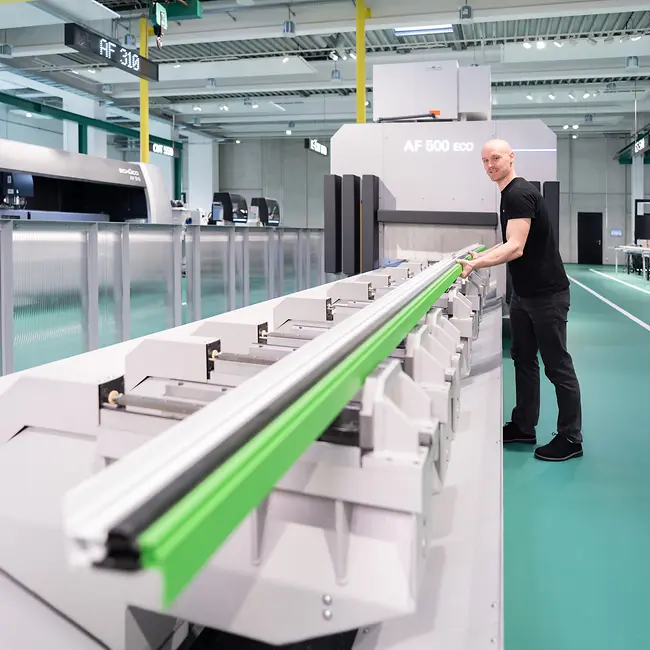
5-Achs-CNC-Maschinen​ von Schüco vereinen die Fertigungsschritte einer Säge und einer CNC-Maschine. Der optimierte Zuschnitt reduziert die Materialverschwendung.​

CO₂-relevante Faktoren über den Gebäudelebenszyklus berücksichtigen​

Verarbeiter haben die Möglichkeit, mit CO₂-reduzierten Materialgüten* und smarten Lösungen verbaute Emissionen an der Gebäudehülle zu berücksichtigen. Hierfür stehen Schüco Systeme und Services über den gesamten Gebäudelebenszyklus zur Verfügung. Ziel ist dabei die Nachhaltigkeit und Wirtschaftlichkeit der Immobilien bei steigenden CO₂-Anforderungen sicherzustellen. Das Lösungsangebot Carbon Control ist entlang der vier Lebensphasen eines Gebäudes – Planung, Bau, Betrieb und Rückbau – strukturiert und bietet für jede Phase eine Auswahl an passgenauen Lösungen mit Produkten und Services aus dem Schüco Portfolio. Die Lösungen sind in allen Bauphasen anwendbar, greifen nahtlos ineinander und ermöglichen so eine durchgehende Berücksichtigung von CO₂-relevante Faktoren.​

Design to Decarb

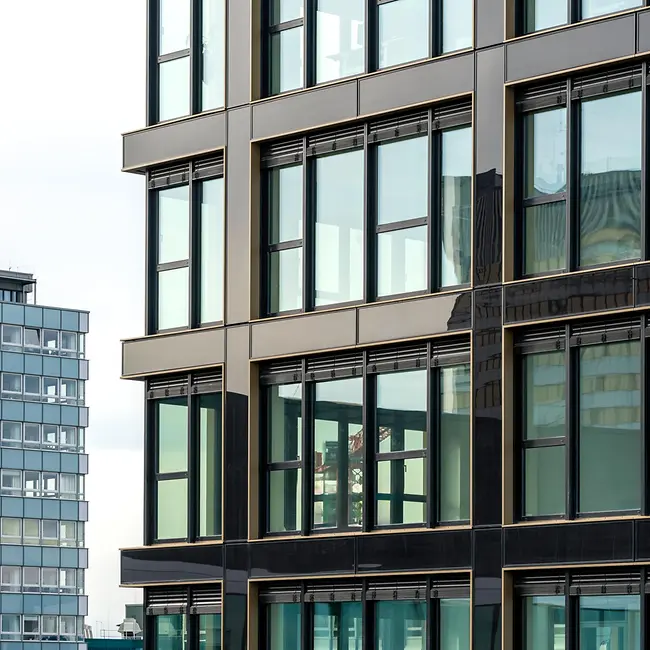
Bereits in frühen Projektphasen unterstützt Schüco Verarbeiter mit Services und Systemlösungen für Neubau und Sanierung. Dazu zählen unter anderem CO₂-reduzierte Materialgüten*, ausgewählte Cradle-to-Cradle-zertifizierte Systeme in Bronze und Silber sowie bauwerkintegrierte Photovoltaiklösungen (BIPV). Dadurch können CO₂-relevante Faktoren und Zirkularitätsaspekte bereits in der Planung und Materialauswahl berücksichtigt werden.​

Build to Decarb

Für die Realisierung stehen unter anderem Aluminium-Materialgüten* mit einem im Vergleich zu Schüco Standardaluminium reduzierten CO₂-Fußabdruck von 46-87% sowie Kunststoff- und Hybridlösungen zur Verfügung. Ergänzend unterstützen profilspezifische EPDs und die Ermittlung projektspezifischer CO₂-Kennwerte eine transparente Bilanzierung und Dokumentation. Dies kann die Erfüllung von Zertifizierungs- und Reportinganforderungen erleichtern. ​

Operate to Decarb

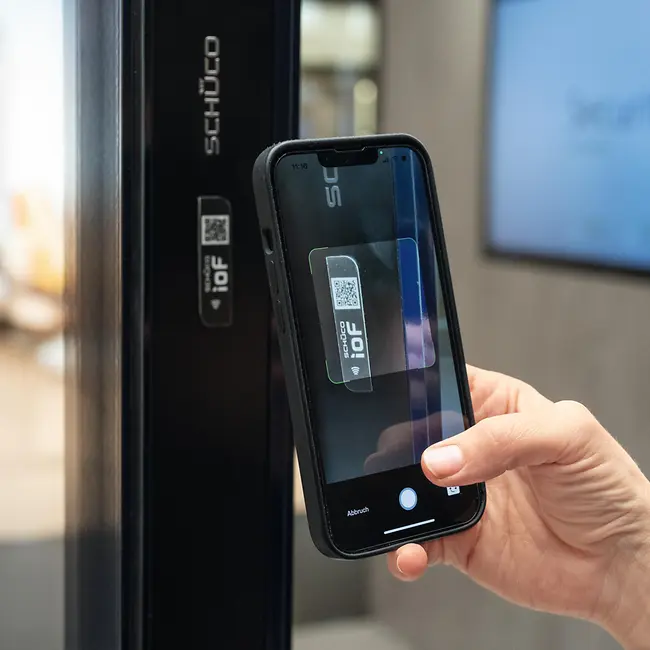
Mit digitalen Lösungen wie der Schüco IoF ID können produkt- und gebäuderelevante Informationen über den gesamten Lebenszyklus verfügbar gemacht werden. Dies kann datenbasierte Betriebsstrategien, vorausschauende Wartung sowie Modernisierungs- und Sanierungsmaßnahmen unterstützen. Ergänzend bietet Schüco Global Service Leistungen für Wartung, Instandhaltung, Reparatur und Modernisierung von Gebäudehüllen.​

Recycle to Decarb

Mit RE:CORE engagiert sich Schüco gemeinsam mit Partnern für die Rückführung von Materialien in den Wertstoffkreislauf. Die Schüco IoF ID kann zusätzlich dabei helfen, Informationen zu verbauten Komponenten bereitzustellen und so Demontage- und Recyclingprozesse zu unterstützen. Dies kann eine Grundlage für kreislaufgerechte Materialströme und Urban-Mining-Ansätze schaffen.​

Kontaktieren Sie uns​

Unser Team berät Verarbeiter bei der Umsetzung von Maßnahmen zur Reduzierung projektbezogener CO₂-Emissionen.​

Referenzen

Es gibt verschiedene Lösungen und Services von Schüco um CO₂-relevante Faktoren der Gebäudehülle für den gesamten Lebenszyklus einer Immobilie zu berücksichtigen. Erfahren Sie anhand unserer Referenzen, wie mit dem bauphasenübergreifenden Lösungsangebot Schüco Carbon Control die objektspezifische Dekarbonisierung der Gebäudehülle umgesetzt werden kann.​

* Die angegebenen Referenzwerte für das Schüco Standard-Aluminiumprofil sowie die ausgewiesenen Werte für Schüco Low Carbon (LC), Ultra Low Carbon (ULC) und Ultra Low Carbon+ (ULC+) Aluminium und die entsprechenden Profile wurden den jeweiligen Environmental Product Declarations (EPD) entnommen.​

Die Belieferung mit Low Carbon Aluminium, Ultra Low Carbon Aluminium und Ultra Low Carbon+ Aluminium erfolgt nach dem Schüco-Kontingentverfahren. Dies bedeutet, dass in der Auslieferung nicht zwischen den Materialgüten unterschieden wird. Die gelieferten Profile können aus Standard-, Low Carbon-, Ultra Low Carbon- oder Ultra Low Carbon+ Aluminium bestehen, unabhängig von der jeweiligen Bestellung. Die ausgewiesenen Umweltkennwerte beziehen sich auf die im Kontingentverfahren zugeordnete Materialmenge.​

FAQs

What does EPD stand for?

The abbreviation EPD stands for Environmental Product Declaration. For fabricators, the EPD is an important document containing data that lists the environmental properties of a construction material. It considers the entire lifecycle of the material – from raw material extraction and production through to disposal. This information is based on the Global Warming Potential (GWP) of the material and construction and enables a clear assessment of the environmental impact. 

EPDs are essential for fabricators, allowing them to choose environmentally friendly materials and thereby minimise the carbon footprint of construction projects. EPDs offer a sound basis for ensuring that the materials used meet sustainability requirements.At Schüco, EPDs are a core part of Carbon Control, which helps fabricators to actively achieve the climate objectives while producing high-quality, sustainable construction projects.

What is the Global Warming Potential (GWP)?

The Global Warming Potential (GWP) describes the extent to which a certain greenhouse gas contributes to global warming in comparison to CO₂. The GWP is important for fabricators to understand the potential impact a building will have on the environment over its entire lifecycle. Two main sources of CO₂ emissions are considered here: embodied carbon, which is the emissions embedded in the construction materials used, and operational carbon, which is produced through operation of the building, for example through energy consumption. The GWP value is given as a CO₂ equivalent (CO₂e) and helps to assess the environmental impact of a project. 

Fabricators play a key role as they can help to significantly reduce the carbon footprint of a building by selecting materials with a low GWP and running an efficient construction process. Schüco Carbon Control offers fabricators targeted support for minimising both the embodied and operational carbon over the entire lifecycle of a building and thereby actively contributing to achieving the climate objectives.

What do LC and ULC mean and how do they differ?

LC stands for Low Carbon aluminium and ULC for Ultra Low Carbon aluminium. Both terms describe aluminium grades offered by Schüco in addition to standard aluminium. The difference between the aluminium grades lies in the extent of CO₂ reduction during production. This is largely determined by the proportion of recycled aluminium used.

During the production of Low Carbon aluminium, only green energy is used in order to ensure fewer emissions are produced. Schüco Low Carbon aluminium therefore achieves a GWP value of  3.84 kg CO₂e/kg aluminium profile. Schüco Ultra Low Carbon (ULC) goes one step further and contains at least 75% post-consumer recycled material, with a GWP value of 1.99 kg CO₂e/kg aluminium profile. 

These aluminium grades play a central role at Schüco Carbon Control and help fabricators to minimise the carbon footprint of their construction projects. Schüco Ultra Low Carbon and Low Carbon aluminium is supplied in accordance with the allotment process. This means that no differentiation is made between the different material grades for delivery. The profiles supplied may therefore consist of standard, ULC or LC aluminium, irrespective of what has been ordered.

What is the allotment process?

The distribution of Schüco Low Carbon (LC) and Ultra Low Carbon (ULC) profiles is organised in accordance with the allotment process. The priority here is for the ordered profiles to reach their destination in the most efficient way possible with the shortest transport routes. In order to ensure this, we do not differentiate between the different material grades of standard aluminium, Low Carbon aluminium and Ultra Low Carbon aluminium for storage and delivery. This also isn't necessary, as the material grades are identical in chemical, mechanical and geometric terms. The relevant carbon saving is made beforehand, during the production stage. Low Carbon and Ultra Low Carbon aluminium have a considerably smaller carbon footprint and therefore a lower Global Warming Potential (GWP) than standard aluminium.The profiles supplied may therefore consist of standard, LC or ULC aluminium, irrespective of what has been ordered. 

In order to ensure and prove that carbon is saved with your building project, or recycled material is used during the production of new profiles, Schüco is commissioning DEKRA to certify the balance between inbound and outbound recycled aluminium. This enables us to ensure that we are purchasing at least as much LC or ULC aluminium as is actually being ordered from us and delivered by us. When you order LC or ULC aluminium, you can therefore be sure that CO₂ has been saved accordingly during production by Schüco.

What do BALANCED PVC, RECYCLED PVC and BIO-ATTRIBUTED PVC mean?

BALANCED PVC, RECYCLED PVC and BIO-ATTRIBUTED PVC are the material classes for Schüco profile systems. Profiles with the BALANCED PVC material standard are produced in a more sustainable* way. In addition to this, choosing the RECYCLED PVC material class supports the circular economy even more proactively and, BIO-ATTRIBUTED PVC promotes a non-fossil raw material basis. All material classes support the decarbonisation of the building envelope over the long term. 


*This is achieved through the use of either recycled material or a formulation that makes optimum use of resources in the inner core.