76 Southbank

Brutalist icon skilfully revitalised

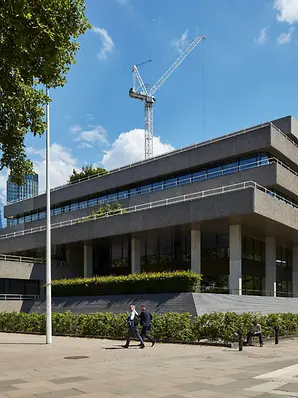
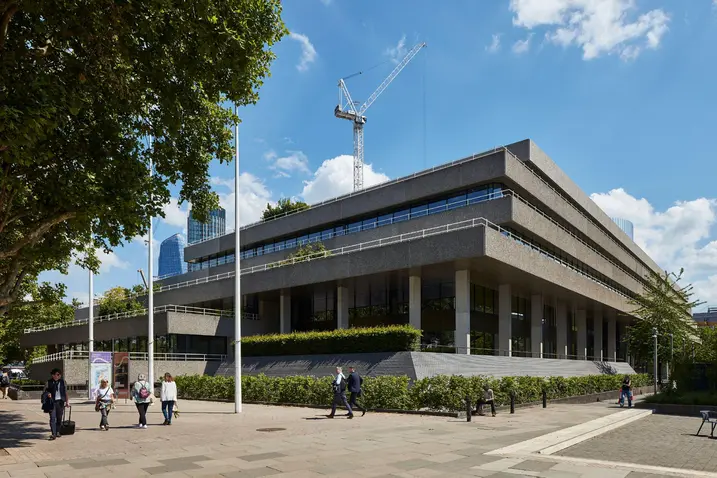
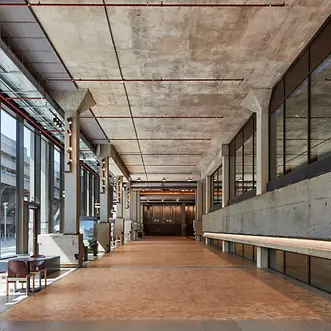
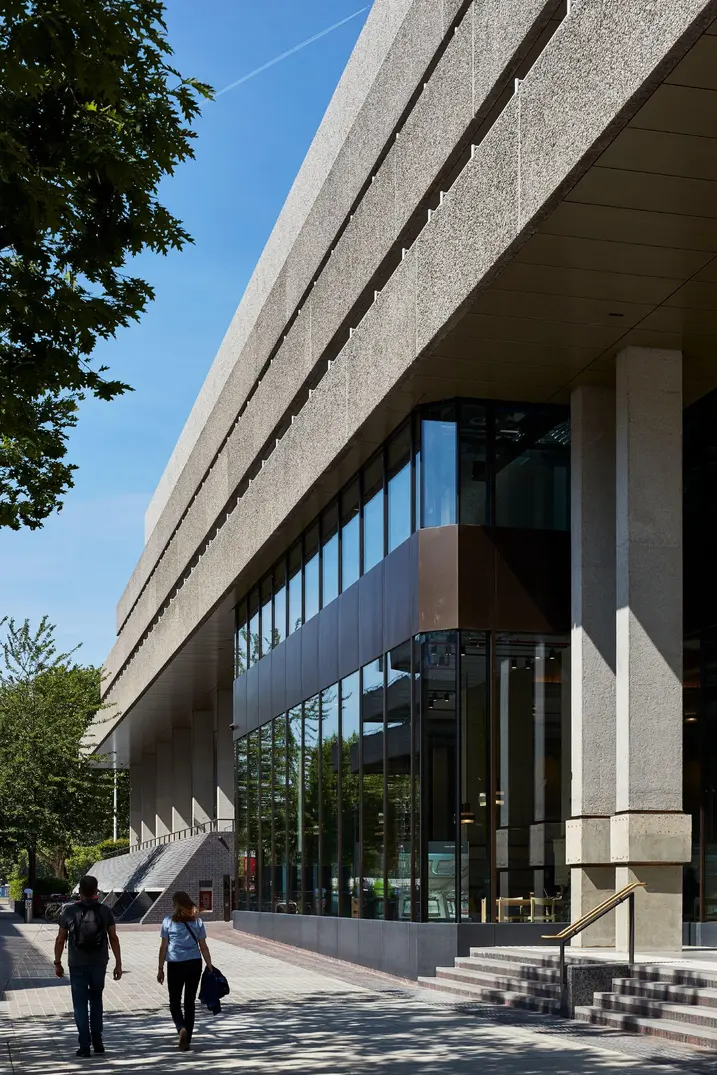
The former IBM headquarters building on London's South Bank is a prominent example of Brutalist architecture. In recent years, the listed complex has been sensitively extended, updated for energy efficiency and adapted to meet the requirements of a modern office environment – all while taking sustainability into account and with respect for its architectural significance.
项目案例详情

建筑类型 办公与行政
产品 幕墙 遮阳 楼宇自控
旭格系统 ADS 90.SI FWS 50.SI AWS 70.HI FWS 60 FWS 50 ADS 80 FR 30 AD UP 75
特征 翻新改造 脱碳 防火
地点 London, United Kingdom
竣工时间 2023
建筑师 AHMM - Allford Hall Monaghan Morris (AHMM)
专业公司 Dane Architectural Systems Holdings
图片版权 © Rob Parrish

Iconic ensemble under scrutiny

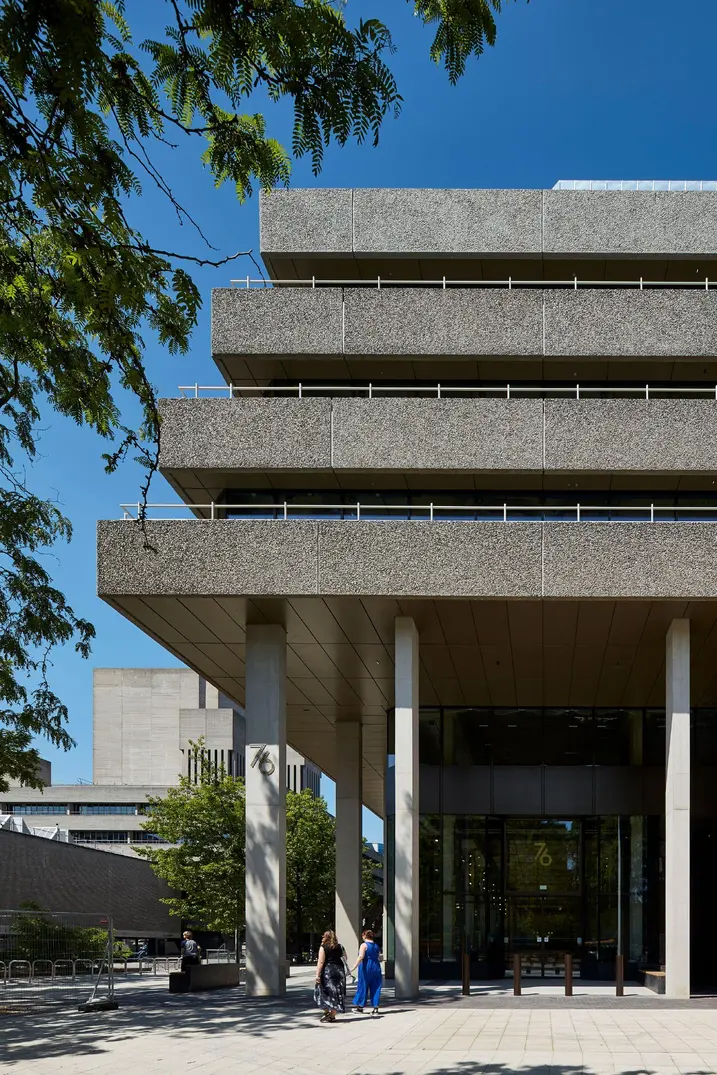
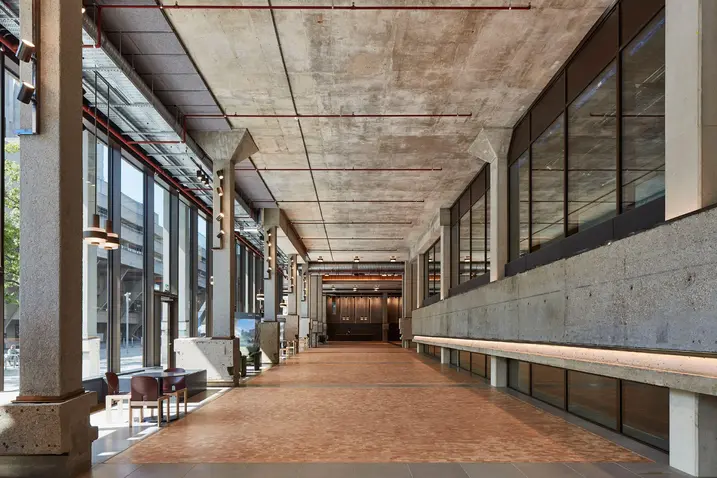
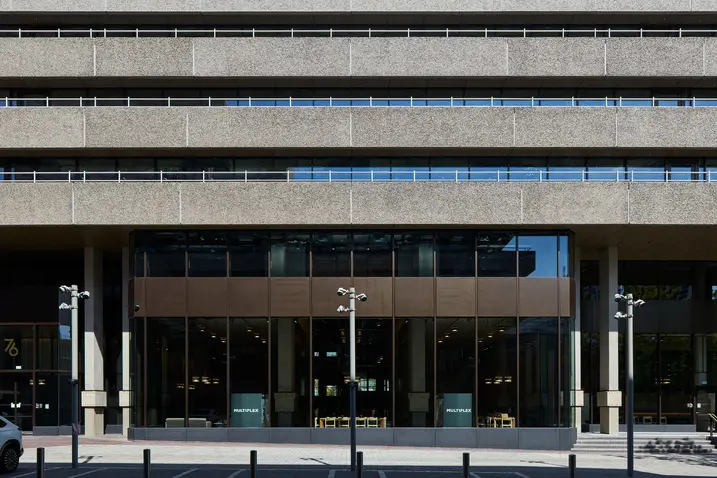
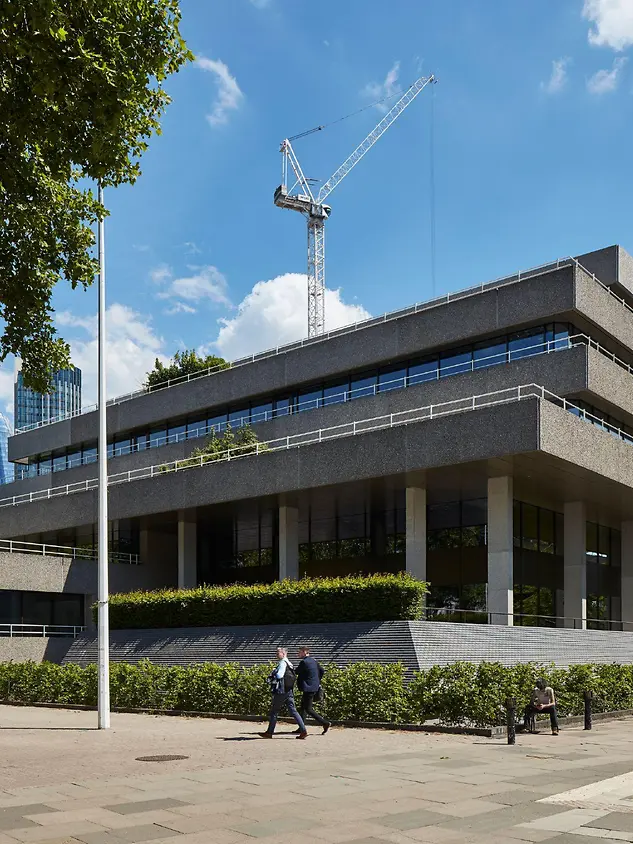
Among the most significant cultural establishments on the South Bank area on the southern banks of the River Thames is the National Theatre, constructed in 1976 in line with architect Denys Lasdun's design. In 1983, Lasdun completed his vision on the neighbouring with the construction of the IBM Marketing Centre. The two buildings impress as a late Brutalist ensemble with balanced symmetry, horizontal lines, rough exposed concrete surfaces and imposing concrete structures. To prevent its partial demolition after IBM moved out, the City of London granted the former IBM building listed status in 2020, as it had the National Theatre in 1994. The architectural practice AHMM revised its conversion concept and promised the retention of 80% of the original fabric of the building.

Further development as a strategic aim

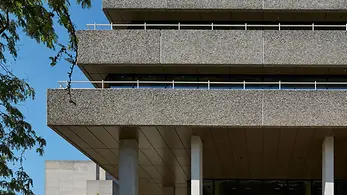
The asymmetric building structure of the old complex featured offset storeys to the north and south, which created wide terraces. Brown bricks were applied beneath podium level, while in the upper storeys the continuous ribbon windows and exposed aggregate concrete spandrels matched the horizontal lines of the adjacent theatre. Plant towers with a pure concrete appearance formed sculptural elements on the roof. For the strategic development of the project by Stanhope PLC, the project now known as “76 Southbank” provided all the key aspects for a site remodelling geared towards sustainability: retention of the existing structure and value enhancement through renovation, as well as revitalisation and reinvention of a building steeped in history in accordance with listed building requirements, with major benefits for urban renewal.

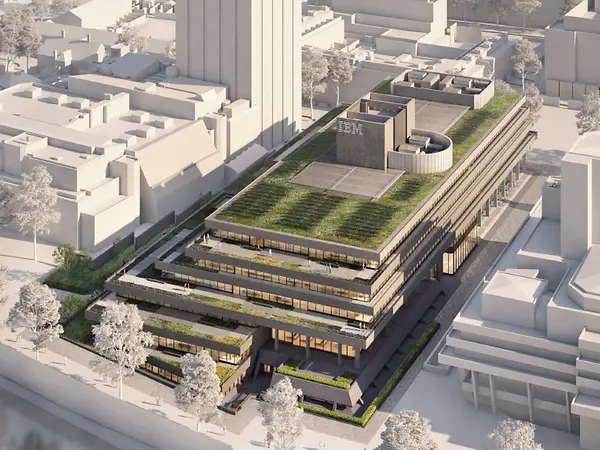
The revised renovation plan envisages an additional storey. ©Secchi Smith

Analysis of the existing building and new plans

The new concept from AHMM envisaged a sensitive modernisation. Following a low-carbon core renovation and energy efficiency upgrade, the floor space was to be increased by 11,000 m2 by adding a new storey on top and by extending out to the south and east, creating new highly efficient, flexibly designed office spaces. To meet the exacting sustainability targets, the embedded carbon emissions in the existing building and the amount of waste generated during gutting needed to be reduced as much as possible. To do this, all of the construction materials from the existing structure and for the newbuild were subject to a comprehensive assessment with regard to their ecological footprint, with some extensive environmental compatibility tests being carried out if there were no EPDs available.

产品信息

FWS 50.SI

旭格FWS 50.SI幕墙系统

获得被动房认证的构件式幕墙,提供多样化的系统解决方案

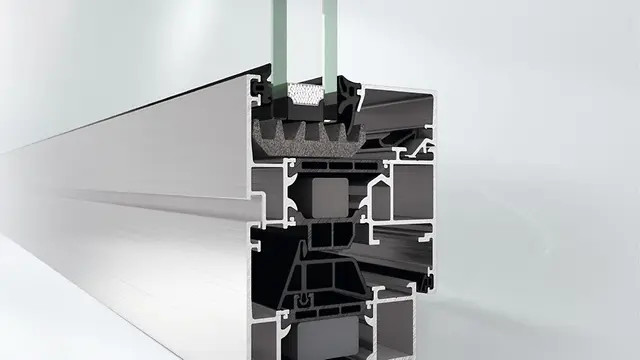
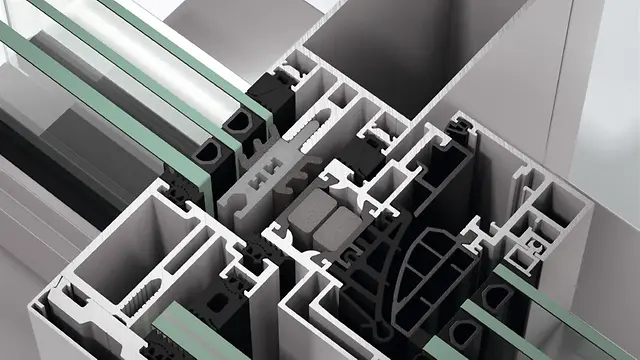
凭借开创性的隔断技术,旭格FWS 50.SI超隔热幕墙系统为幕墙和采光顶提供多样化的解决方案,满足被动房水准 – 且优化了加工和安装进程。

极高的灵活度和广泛的系统类型打造构件式结构解决方案,为高端住宅和商建项目满足多样化的功能和设计要求。

整合进型材的通透护栏系统天衣无缝地融入幕墙外立面。无需打断型材即可满足落地窗式开启单元的防护要求和极低的护栏高度,型材可视面宽度保持不变。

提供多种压板和幕墙罩盖选项,并能和旭格门、窗、推拉系统组合使用,为建筑外立面提供额外的美观设计选项。

经过优化的系统组件保证轻松安全地整合电动组件,如用于自动化旭格门系统或遮阳装置,保证安防水准和用户舒适度。

旭格通过这个构件式幕墙系统开发生态产品,践行可持续发展。系统凭借其可回收特性和极少的毒素含量受到独立的C2CPII研究所与汉堡环境保护促进协会认可,荣获“摇篮到摇篮”(C2C)银奖证书。

了解更多​

AWS 70.HI

旭格AWS 70.HI窗系统

高隔热的窗系统,提供多种出众的解决方案

旭格AWS 70.HI高隔热窗系统作为旭格AWS窗系统平台的一部分提供多样化的解决方案,发挥良好的隔热性能,结构深度为70 mm。

基于将功能特征与能效及美观设计完美结合的铝合金系统组件,发挥良好隔热性能,如纤细可视面宽度与隐藏式经典手动或电动五金件组合应用于内开和外开窗。

系统具有极高的灵活性,为建筑外立面实现各种应用,可作为洞口窗、带状窗或幕墙塞窗,抑或与旭格门系统组合使用。

对开发商和建筑师还有另一项优势,该窗系统能实现多种开启类型,如曲柄操作的内开内倒扇、下悬上亮或无障碍窗式门。

作为系统平台的组成部分,该窗系统提供众多的型材产品,例如组角竖框、结构竖框、对称和不对称竖框,此外还有各种设计类型以及更多与其他旭格产品的组合方案,例如与旭格遮阳系统或旭格通风系统组合。

因此旭格AWS 70.HI为规划灵活度设定新标准,打造美观的窗系统解决方案,满足节能建筑外立面的需求。

了解更多​

FWS 60

旭格FWS 60幕墙系统

性能卓越的构件式幕墙,可视面宽度60 mm — 为实现不同系统解决方案打下基础

作为幕墙和采光顶的基础系统,旭格FWS 60幕墙系统提供极大的灵活度和引人注目的设计选项 – 且优化了加工和安装进程。广泛的系统类型打造多种解决方案,满足多样化的要求,实现各种应用。

整合进型材的通透护栏系统天衣无缝地融入幕墙外立面。无需打断型材即可满足落地窗式开启单元的防护要求和极低的护栏高度,型材可视面宽度保持不变。

这个可视面宽度为60 mm的构件式幕墙系统实现极高程度的设计自由,提供多种压板和幕墙罩盖选项,并能和旭格门、窗、推拉系统组合使用。

经过优化的系统组件保证轻松安全地整合电动组件,如用于自动化旭格门系统或遮阳装置。

了解更多​

FWS 50

旭格FWS 50幕墙系统

性能卓越的构件式幕墙,可视面宽度50 mm — 为实现不同系统解决方案打下基础

作为幕墙和采光顶的基础系统,旭格FWS 50幕墙系统提供极大的灵活度和引人注目的设计选项 – 且优化了加工和安装进程。广泛的系统类型打造多种解决方案,满足多样化的要求,实现各种应用。

整合进型材的通透护栏系统天衣无缝地融入幕墙外立面。无需打断型材即可满足落地窗式开启单元的防护要求和极低的护栏高度,型材可视面宽度保持不变。

这个可视面宽度为50 mm的构件式幕墙系统实现极高程度的设计自由,提供多种压板和幕墙罩盖选项,并能和旭格门、窗、推拉系统组合使用。

经过优化的系统组件保证轻松安全地整合电动组件,如用于自动化旭格门系统或遮阳装置。

旭格通过这个构件式幕墙系统开发生态产品,践行可持续发展。超隔热的旭格FWS 50.SI幕墙系统凭借其可回收特性和极少的毒素含量受到独立的C2CPII研究所与汉堡环境保护促进协会认可,荣获“摇篮到摇篮”(C2C)银奖证书。

了解更多​

AD UP 75

旭格AD UP 75门系统

普遍适用于使用频率极高的商建楼宇大门和注重设计的入户门

旭格AD UP 75门系统将良好的隔热性能与极高的稳定性相结合,结构深度为75 mm,为高端住宅和商建项目提供极高的功能保障,满足所有要求。

凭借突破性的结构原理和模块化密封胶条系统,旭格AD UP 75为铝合金门系统设定隔热、水密性、承重能力和耐久性新标准。广泛的五金和设计选项帮助打造时尚的门系统解决方案,满足生活工作所有领域的各种要求。该门系统能与门通讯系统及门禁出入控制系统完美组合。

了解更多​

Carbon reduction during the renovation

Despite gutting and dismantling the basement and ground floor, it was possible to retain 80% of the concrete structure and therefore prevent carbon emissions that would have been caused by demolition. Over 200 façade units made from concrete or granite were dismantled and either reused in the project or elsewhere; as were 27,360 floor tiles, 95 tonnes of paving stones and 71 tonnes of bricks. New foundations were laid and concrete supports were installed, with ground granulated blast furnace slag sand replacing 50% of the cement. Recycled steel beams and supports weighing were installed and recycled steel was used for the cavity flooring in the offices. The Ultra Low Carbon aluminium from Schüco has saved over 100 tonnes of carbon emissions when compared to standard aluminium. The annual carbon savings are equivalent to 425,000 m² of native forest.

Façade reduces carbon emissions

The new façade played a major role in meeting sustainability targets, as it accounts for a considerable proportion of the embodied carbon in the project. Schüco supported Dane Architectural during the early analysis of the existing building by providing project-specific EPDs via SchüCal and, in doing so, enabled the precise analysis of the carbon footprint. Another focus of the collaboration was the use of recycled materials on the project. “We met the sustainability requirements with our Schüco ULC aluminium profiles,” explains Stephen Newell, National Specification Manager. “The profiles have a GWP value of less than 1.99 kg CO₂ e per kg of aluminium and are manufactured from at least 75% recycled post-consumer material.” The façade of 76 Southbank was constructed using the Schüco FWS 60.SI mullion/transom system in the version with surface-mounted cover strips. The ULC aluminium delivered by Schüco in accordance with the allotment process contributed to a saving of 100 tonnes of CO₂ in the carbon footprint.