Matchbox

Carbon-efficient building operation thanks to BIPV

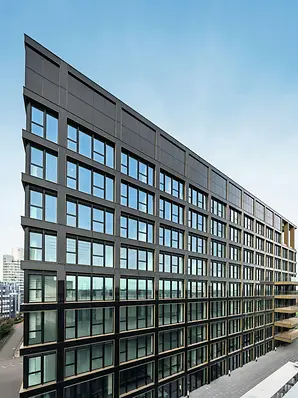
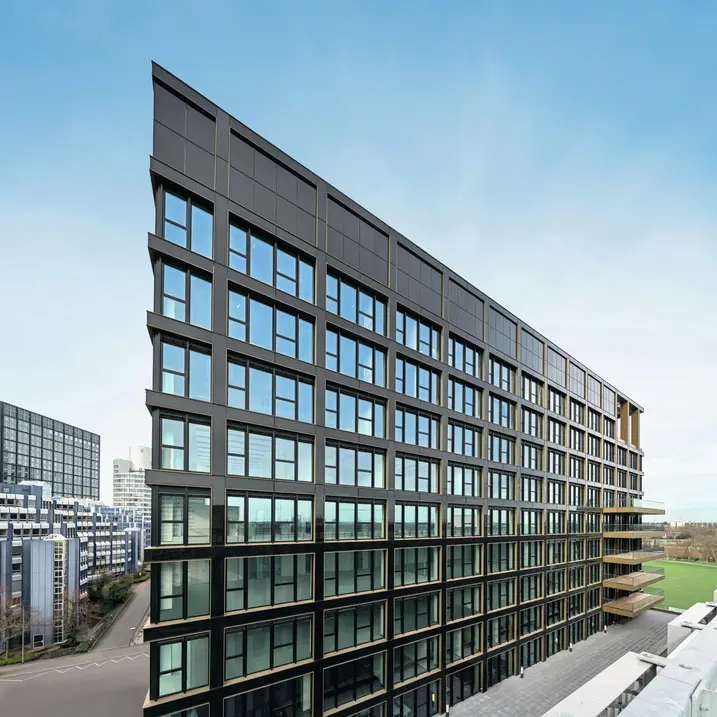
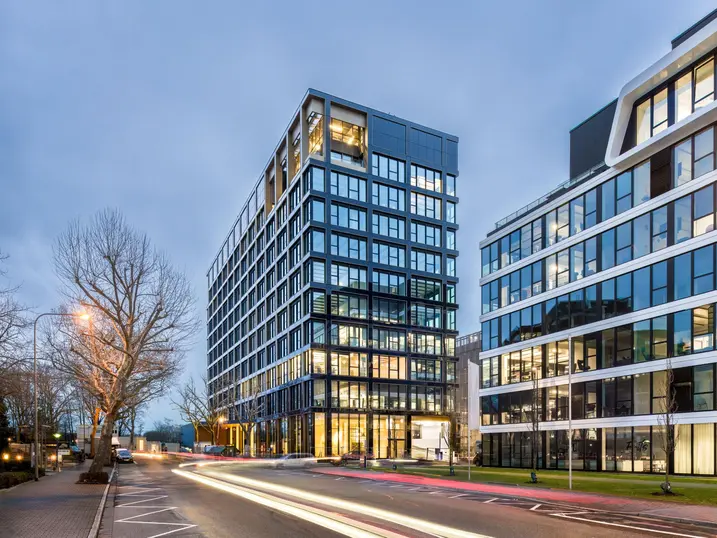
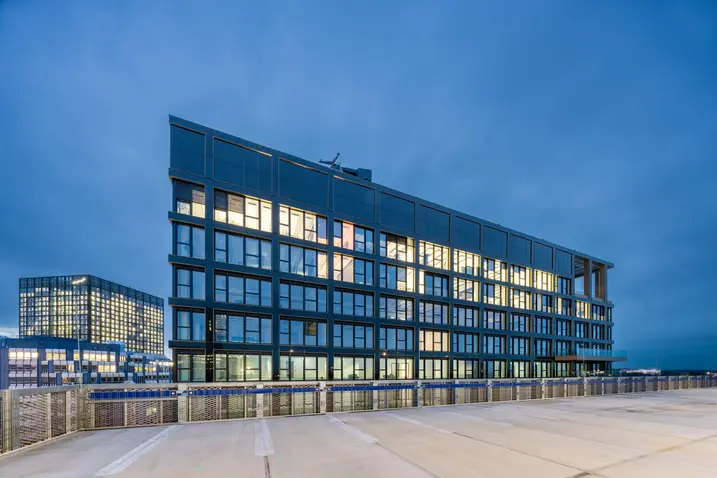
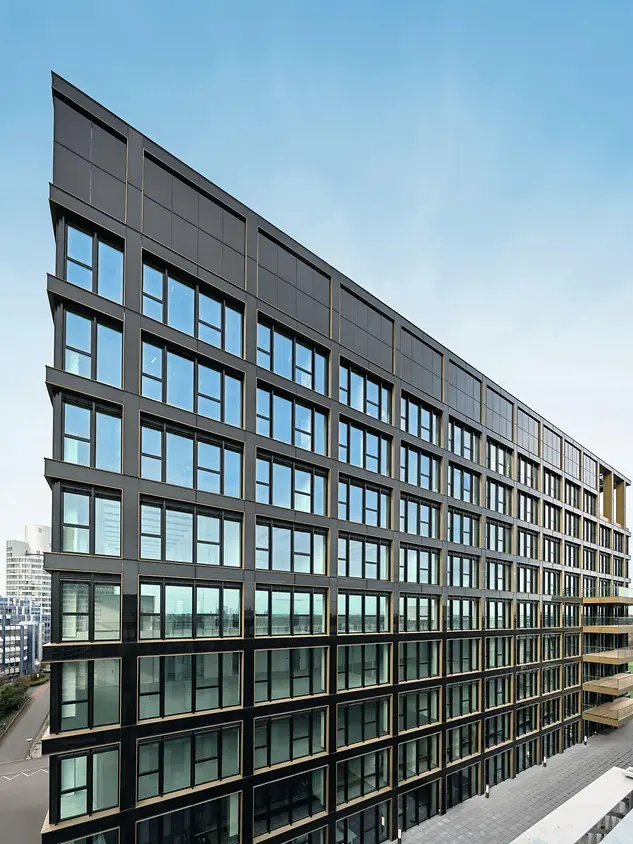
A design-orientated façade and the use of BIPV are by no means mutually exclusive, as shown by the “Matchbox” high-rise office building. The generously glazed new building, which was completed within a construction period of just 15 months, integrates flexible office spaces across ten pillar-free floors that can be split into open-plan offices or individual areas as required.
Details over het referentieproject

Gebouwtype Kantoor en administratie
Productgebieden Ramen Gevels Brand- en rookbeveiliging Veiligheid BIPV (Gebouwgeïntegreerde PV)
Schüco-systemen FWS 50 BIPV
Kenmerken Nieuwbouw Decarbonisatie Energie-efficiëntie Cradle-to-Cradle Circulariteit Rookbeveiliging
Locatie Eschborn, Hessen
Voltooiing 2024
Architecten Lang & Cie. Real Estate
Gespecialiseerd bedrijf Forster Fassadentechnik GmbH,Metallbau Altwicker GmbH
Informatie over de afbeeldingen © Stefan Schilling

Energy-efficient façade design with BIPV

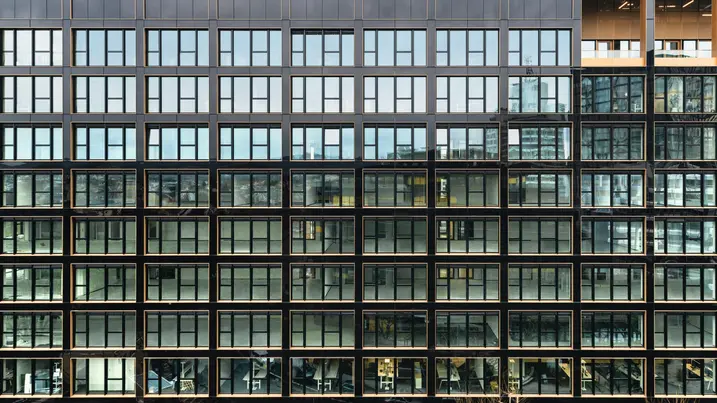
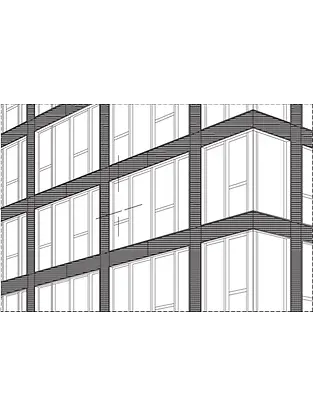
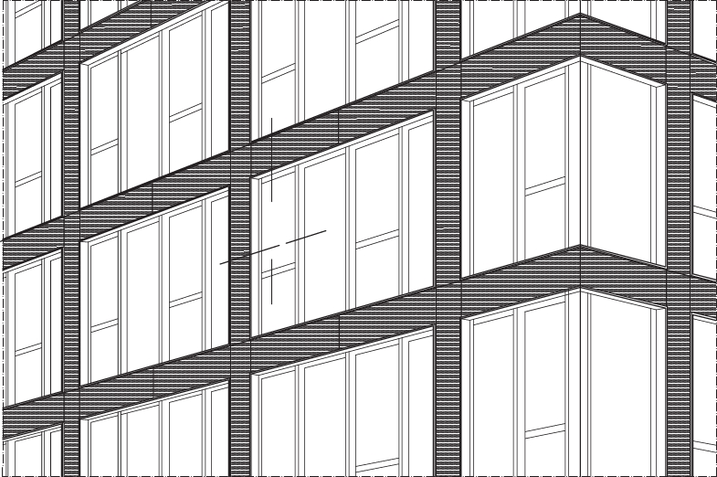
The newbuild is characterised architecturally by the harmoniously subdivided glass façade, which makes an important contribution in optimising the building's sustainability through the integrated photovoltaic modules. The starting point for implementing Schüco BIPV was the client's desire to achieve a sustainable and future-orientated building with high energy efficiency, that is operated entirely without natural gas or other fossil fuels. Various options such as biogas, pellet heating or geothermal energy were considered. Ultimately, the decision was made to install an air-to-water heat pump in conjunction with a roof-integrated photovoltaic system. For a further reduction in electricity demand, it was decided that the façade would also be used to generate power as well as the roof surface.

Bürohaus mit Photovoltaikfassade in Eschborn

Reducing operating costs

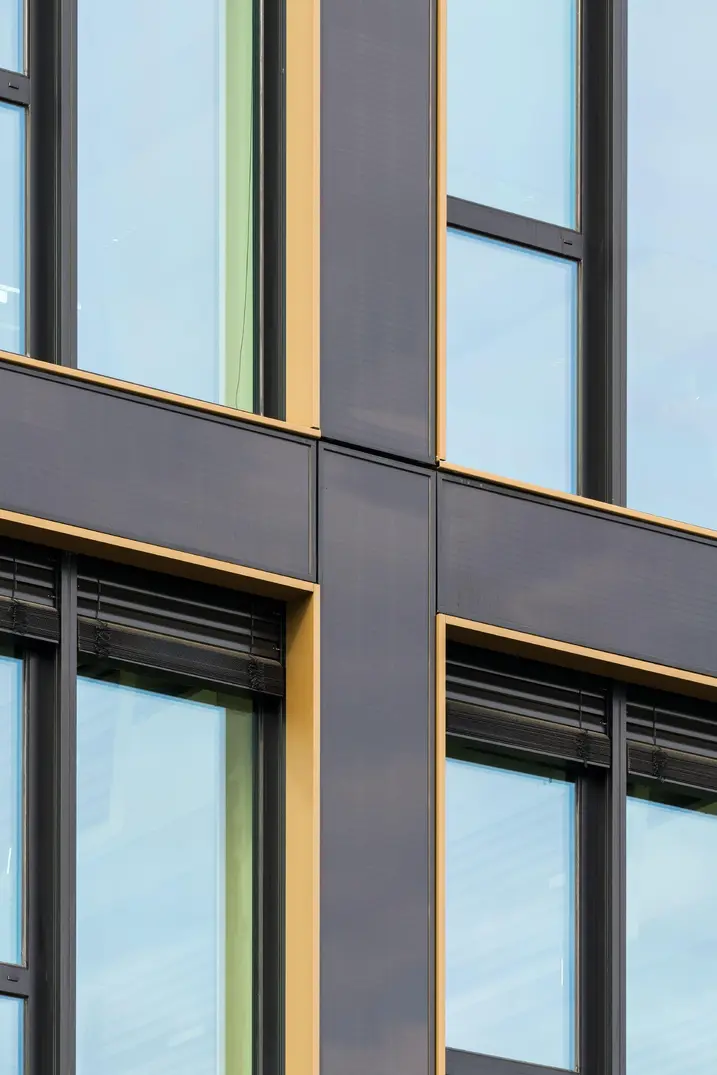
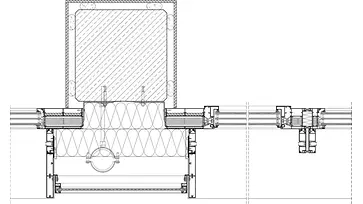
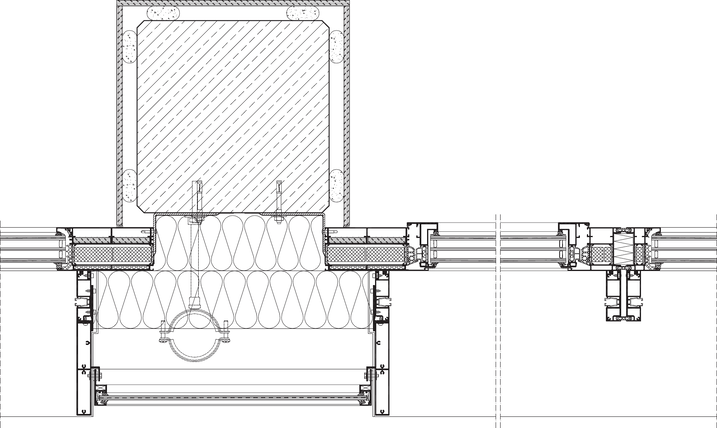
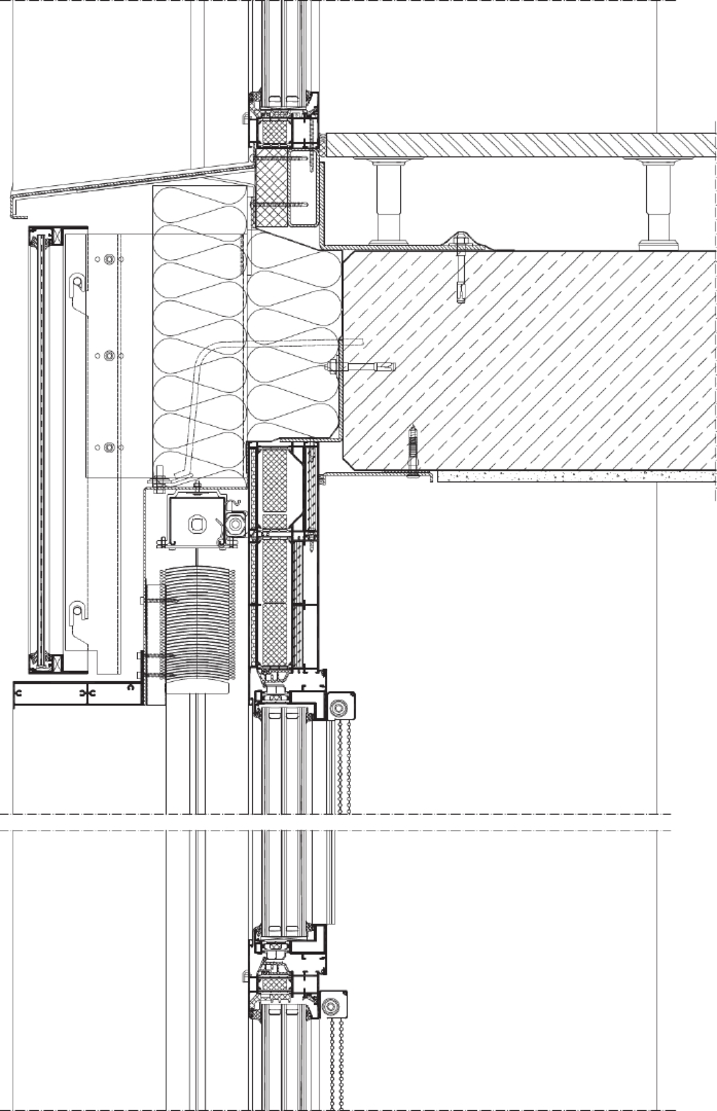
The façade was completed as an individually adapted special design of the Schüco AWS 75 BS.HI+ highly thermally insulated aluminium window system combined with building integrated photovoltaics from Schüco. The Cradle-to-Cradle-certified system was put into practice to achieve a unified overall impression and to obtain a maximum total return in spite of reduced efficiency on the less light-exposed northern side. The integrated PV modules supply an output of around 180,000 kWh per year and, in combination with the PV system on the roof, cover more than half of the total energy requirement for electricity each year. Surplus power is dispensed to the public network. This façade solution ensures a significant reduction in carbon emissions and operating costs.

Form and function in harmony

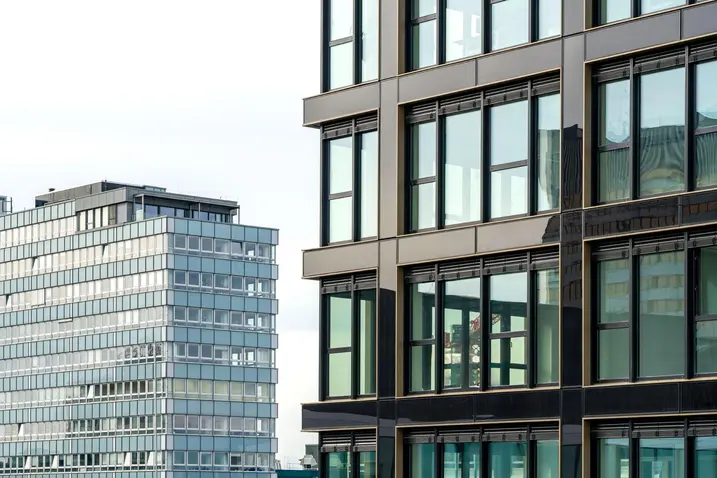
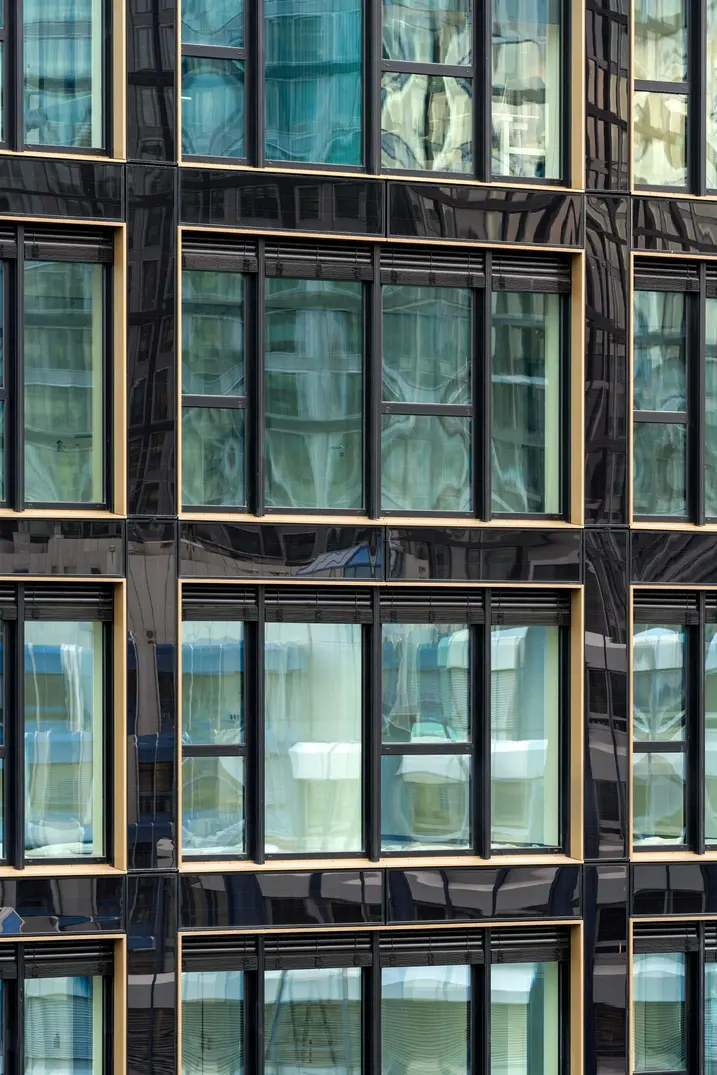
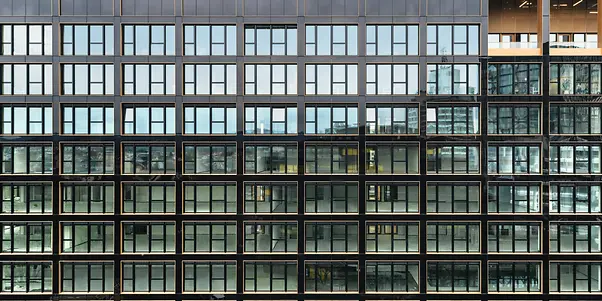
Despite its high energy efficiency, the façade is not recognisable as a solar façade but instead follows the design requirements of the architects. "Based on our concept, the implemented solution is ultimately just a representation of a load-bearing structure in a well-proportioned way," architect Nicolas Schrabeck explains. "BIPV does not give the façade anything formalistic or decorative but simply reflects the usage and statics of the building within the sense of ‘form follows function’." The colour of the PV units was individually customised to give the façade a monochrome, dark tone. The bronze-coloured edging of the windows creates a subtle contrast to this. As a result, the glass shell, which is otherwise characterised by windows and PV elements, has gained a pleasant and high-quality rhythm.

Productinformatie

FWS 50

Schüco Gevelsysteem FWS 50

De veelzijdige vliesgevel met 50 mm aanzichtbreedte, de basis voor een breed scala aan oplossingen

Het Schüco vliesgevelsysteem FWS 50 maakt indruk als basissysteem voor vliesgevels en lichtdaken met een hoge flexibiliteit en aantrekkelijke ontwerpopties, inclusief geoptimaliseerde productie- en montageprocessen. Dankzij een breed programma systeemprofielen kunnen oplossingen voor een breed scala aan eisen en toepassingen worden gerealiseerd.

Meer informatie

BIPV

Schüco Building Integrated Photovoltaics

Efficiënte oplossingen voor duurzame energieopwekking in gebouwen

Vanaf 2021 moet volgens de geldende EU-bouwrichtlijn "2010/31 / EU" elk nieuw gebouw in de EU-lidstaten worden gerealiseerd als een "nearly zero energy building" met een grotendeels uitgebalanceerde algehele energie-efficiëntie. In dit verband streeft de regering het doel voor Duitsland na om tegen 2050 een klimaatneutraal gebouwenbestand te realiseren.

Meer informatie

Integrated recycling

The BIPV modules promise long-lasting operation and thereby swift amortisation. And should a PV module need to be exchanged, this can be done at a low cost. This is because the building was not only designed with sustainable operation in mind, but also in view of deconstruction and recycling: the Schüco AWS aluminium window systems selected for Matchbox are Cradle-to-Cradle-certified. Equally, the integrated BIPV modules can also be recycled via glass recycling. Consequently, complete recycling within the material cycle is possible.

Decarbonisation throughout the entire life cycle

The building envelope developed for Matchbox is designed to be holistically systematic and saves CO2 throughout the entire life cycle. This project shows how the carbon footprint of a building can be reduced holistically over its entire life cycle with the help of Schüco Carbon Control. An energy efficient façade design with BIPV reduces CO2 emissions during operation and minimises operational costs without compromising on design. At the same time, the use of Cradle to Cradle certified systems ensures installed materials are fed back into the material cycle.