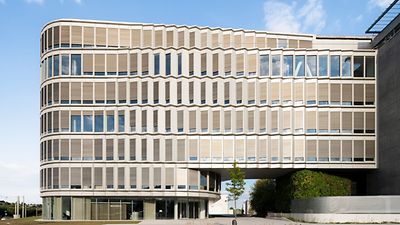
Climate-resilient buildings for habitable cities
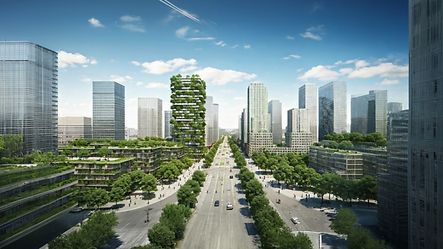
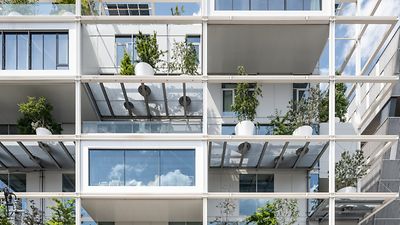
Climate change is most noticeable in urban areas. Rising temperatures, prolonged periods of heat and extreme weather events are having an increasing impact on life in cities. In recent decades, the construction industry has primarily concentrated on saving heating energy, while now the focus is moving towards adapting public spaces to the climate and making buildings more resilient. Clever designs – with targeted ventilation, adapted materials, intelligent shading and diverse foliage – are the only way for cities to remain habitable in future.
Cities under pressure
Urban systems are particularly affected by the impact of climate change. Densely built-up and extensively paved areas store heat and prevent natural cooling mechanisms from functioning. This leads to significantly higher temperatures in cities compared to the surrounding countryside – a phenomenon also known as the urban heat island effect. If the average global temperature increases by approx. 2°C, overheating in cities may be five or six times worse than it is now. As a result, temperatures in cities will reach a level that is harmful to health.

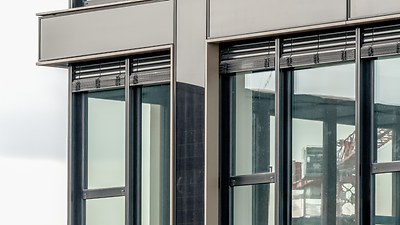
“The configuration of the building envelope plays a central role when it comes to designing cities to adapt to the climate. Robust shading systems, straightforward planting strategies and the targeted use of materials and colours must be coordinated in order to counteract the overheating of our cities and reflect the high level of responsibility we have as an interface between outdoor and indoor climates.” Elisabeth Endres, Professor of Building Technology at the Technical University of Braunschweig and member of the curatorial team for the German Pavilion at the Venice Architecture Biennale 2025 |
Requirements of climate-resilient building envelopes
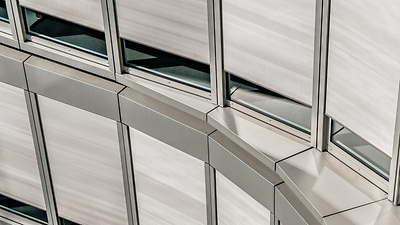
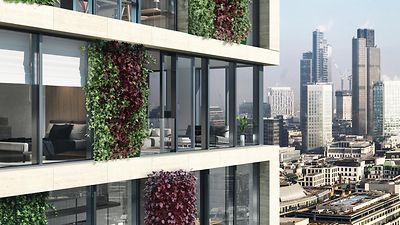
In past decades, design work has mainly focused on optimising the building envelope so that a high level of user comfort inside the building can be achieved using as little energy as possible for heating, cooling and ventilation. In future, buildings will also be assessed with regard to the impact their envelope has on the surrounding area. Key factors will be, for example, how much heat they retain and release into the environment, how much particulate matter and how many pollutants the building envelope can absorb, how much oxygen and evaporative cooling they generate through integrated plants, or how much rainwater they can store.