Schüco Corporate Services

Choosing modernisation over newbuild

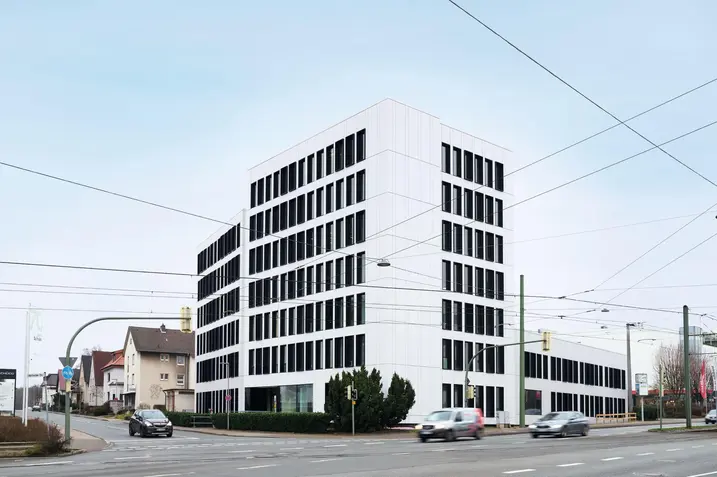
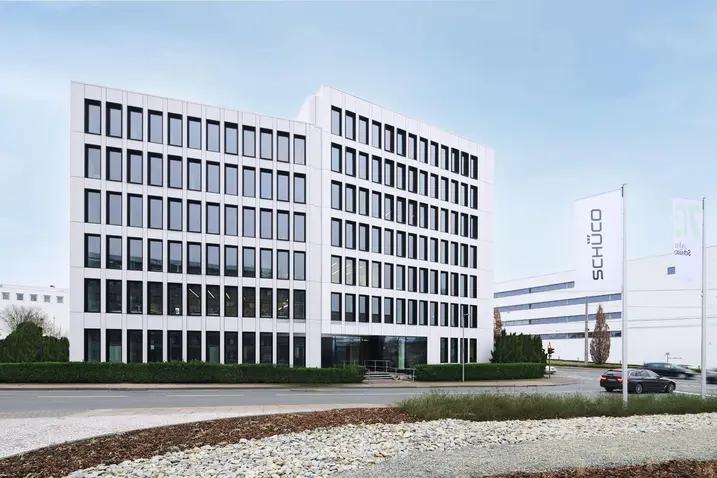
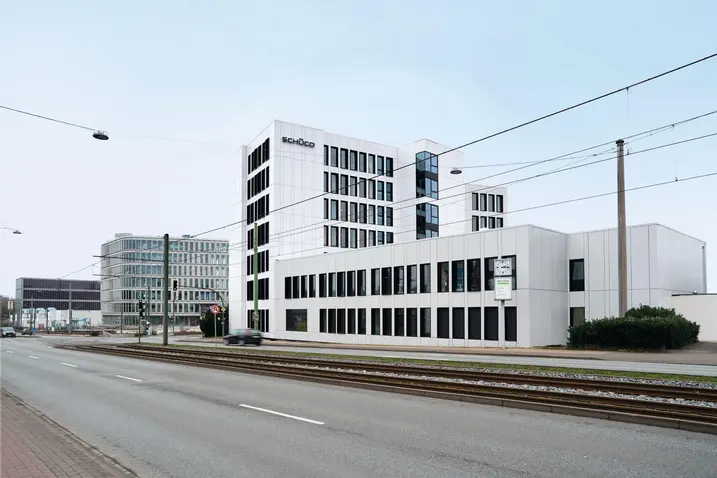
The Schüco Corporate Services building has been completely modernised from top to bottom. All of the aluminium components from the existing building were fed back into the raw material cycle to be recycled. In their place is now a Cradle-to-Cradle certified AF UDC 80 unitised façade, which gives the building a new lease of life. With regard to the office design, Schüco followed the concept of New Work, a forward-thinking approach to the workplace.

Dettagli di riferimento

Tipo di edificio Ufficio e amministrazione
Aree di prodotto Finestre Porte Facciate FACID Ventilazione Protezione solare Sicurezza Automazione degli edifici
Sistemi Schüco FWS 50.SI AWS 75 PD.SI AF UDC 80 ADS 80 FR 30 FWS 60.HI FWS 60 AD UP 75 AWS 75 BS.HI+ AWS 75.SI+ FACID 65 FWS 50 FireStop ADS 76.NI SP
Caratteristiche Ristrutturazione Efficienza energetica Cradle-to-Cradle circolarità
Ubicazione Bielefeld, Germany
Completamento 2021
Architetti tr.architekten Rössing-Tilicke
Azienda specializzata Hilzinger Metallbau
Crediti fotografici Frank Peterschröder

A milestone on the company campus

The Schüco company headquarters has been expanded and restructured continually since 2016. One renovated building is the Digital Hub One office complex, a former production hall which has been modernised according to the principles of New Work, while newbuilds include the Schüco One building designed by architectural practice 3XN and the Schüco carpark with its striking textile façade. After three years of renovation work, the Schüco Corporate Services building was made available to its users, the Finance and IT departments, at the end of 2021.

Three building structures, one unit

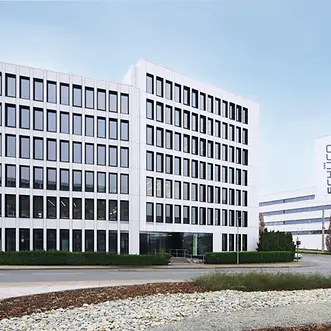
The complex is comprised of three building structures made of reinforced concrete: a seven-storey construction facing the future company headquarters Schüco One, a six-storey building along Karolinenstraße and a long, two-storey low-rise parallel to Herforder Straße. These three buildings were constructed one-by-one from the 1960s to the 1980s. In 2001, the façade of the complex, which was constructed as a Schüco ribbon window system, received a second suspended skin made of glass and aluminium. The interior of UZB, however, had remained largely unchanged, with its components more or less in their original condition. 

Fundamental restructuring

The main reason for the most recent conversion was the fact that the existing building fabric no longer complied with current fire protection requirements. While examining the building further, other technical and functional shortcomings were found, for example with regard to the service and sanitation systems and barrier-free access. Aesthetically speaking, the complex was also in need of an update. The colours of the interior had not been changed since the 1980s, and the suspended ceilings in the corridors and offices were outdated. To add to that, there was a lack of open workspaces and smart, inviting rooms for informal communication. It was clear to Schüco and the Cologne-based architectural practice tr.architekten, who were commissioned to create the design, that the complex was not only in need of technical renovations but would also require a complete refurbishment of the interior.

Geöffnete Schiebetür von Schüco mit Blick in den Wohnbereich

The New Work workplace concept

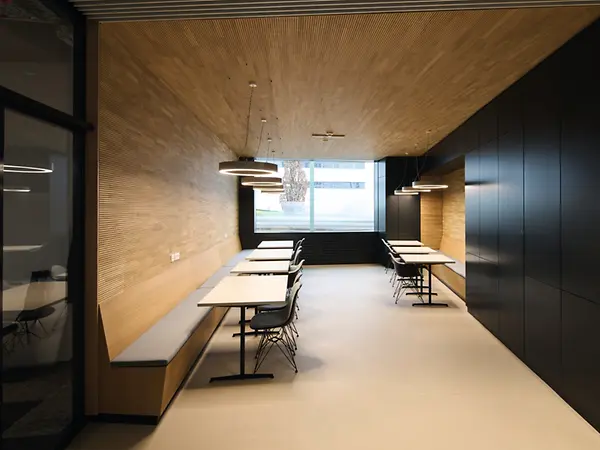
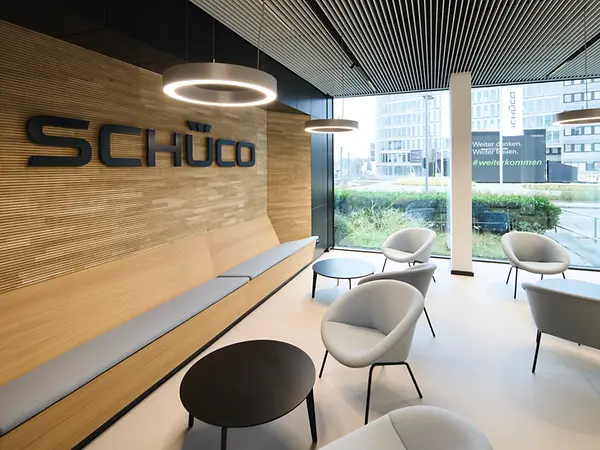
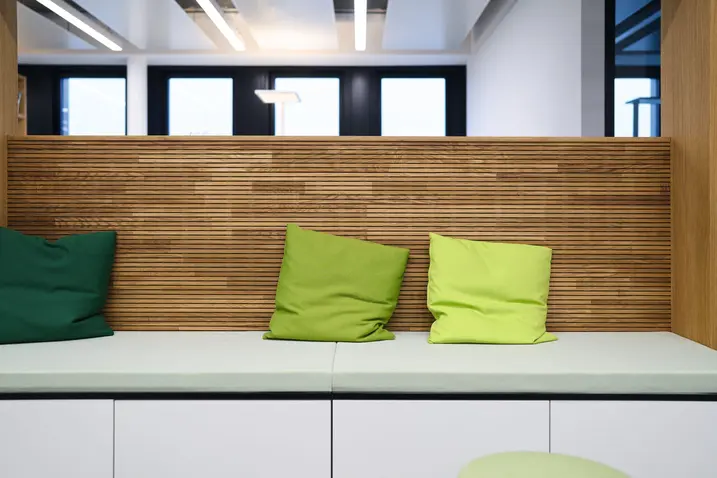
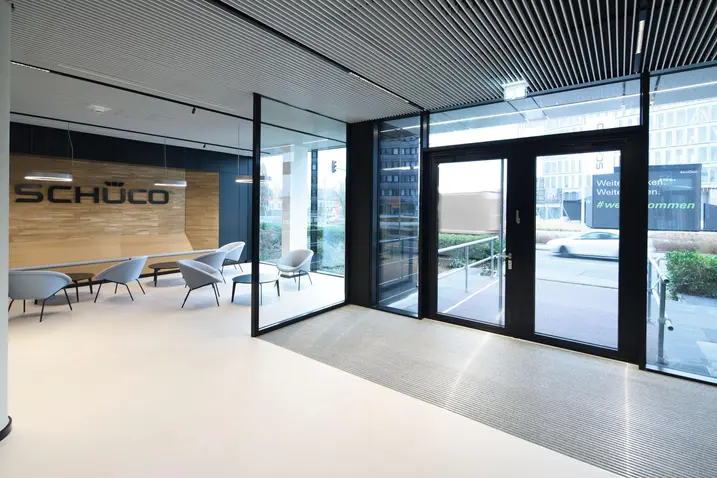
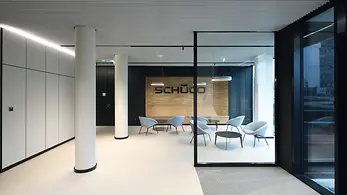
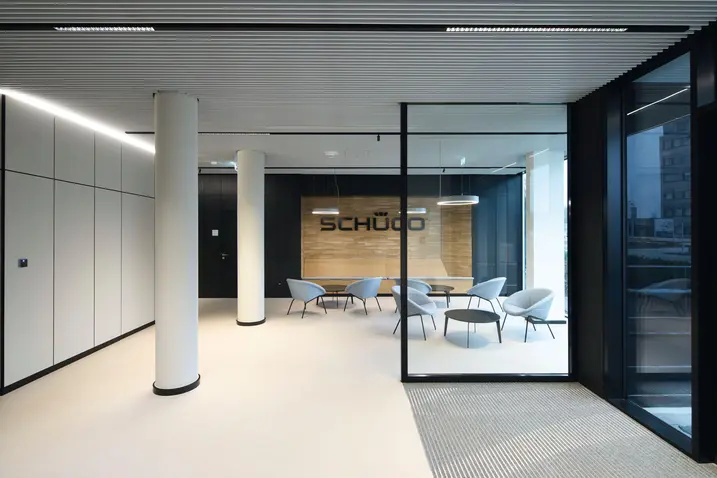
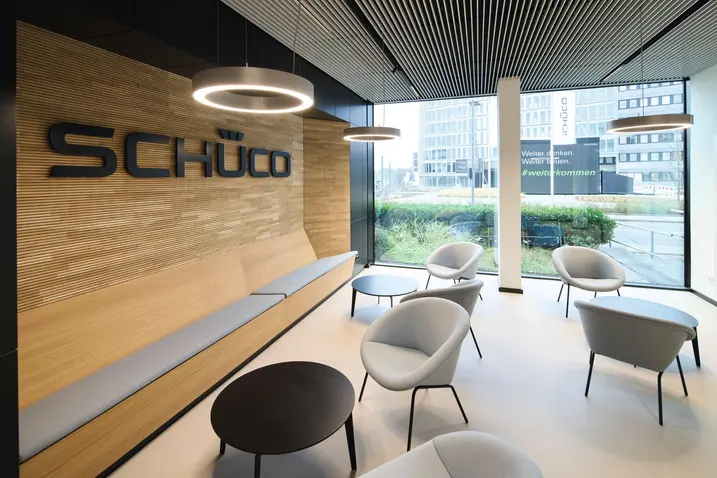
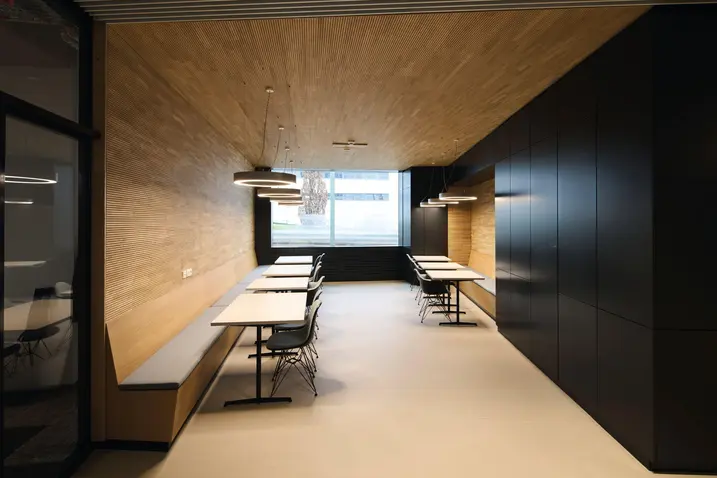
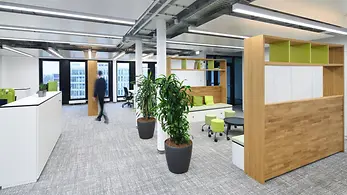
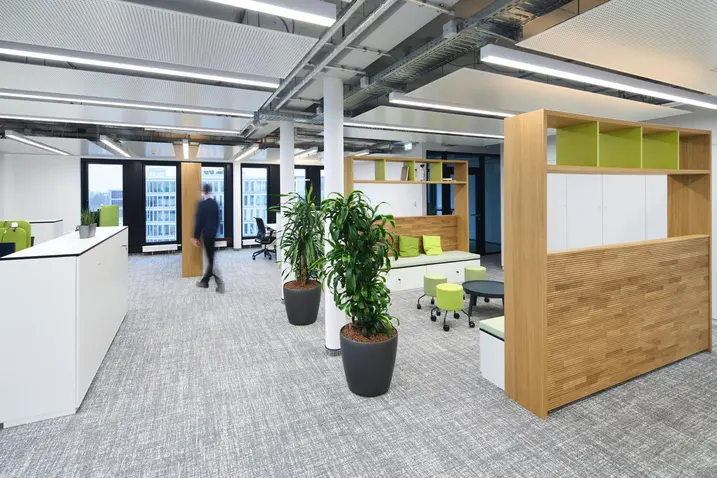
The design team approached the renovation in various stages. The office levels were completely redesigned in line with the principles of New Work. The areas are designed to accommodate 160 Schüco employees. Rooms for meetings with external auditors and tax advisors were also constructed. Open areas with the option of desk sharing, individual offices providing a quiet working environment, as well as meeting rooms and zones for informal communication alternate with one another in the floor plans. The end users of the complex were also involved throughout the design process, in order to increase acceptance of the new ways of working.

Acquired usable space

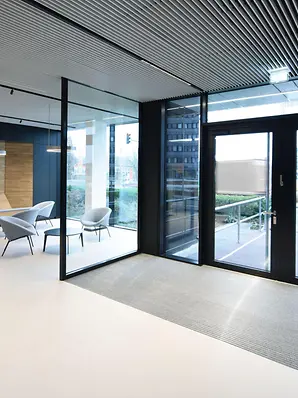
The reception and foyer and the staircases and lifts were also given a new lease of life. To do this, the existing lift shaft in the centre of the building was removed. A new lift was constructed at the intersection of the three building structures, at the rear-facing courtyard façade. The design team repurposed the extra usable space into open-plan communication zones.

A timeless building envelope

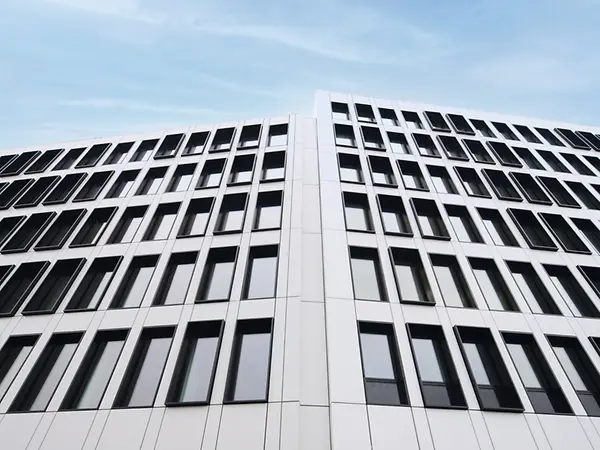
Another key element of the new design was to reinvigorate the façade, which required the existing aluminium components to be dismantled. "With the Schüco Corporate Services building, we've followed a holistic design approach," explains André Schreiber, the architect at Schüco responsible for the project. "This means that the façades should also be long-lasting and timeless. In keeping with the idea of showcasing as many of our products in use as possible on the campus, we have put the Cradle to Cradle-certified AF UDC 80 unitised façade to use for the very first time. "Even with the new building envelope, the three parts of the existing building are still recognisable as distinct structures. At the same time, the unitised façade lends them a muted, homogenous external appearance. In this way, the Schüco Corporate Services building offers a refreshing contrast to the bold and expressive design of the Schüco One newbuild opposite.

Geöffnete Schiebetür von Schüco mit Blick in den Wohnbereich

Project-specific details

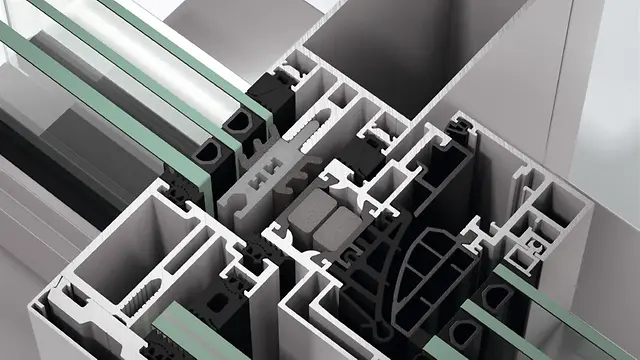
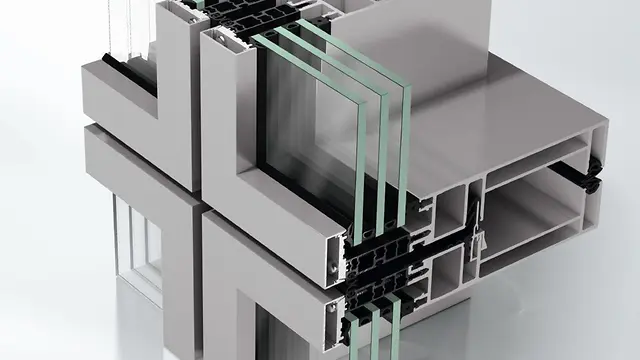
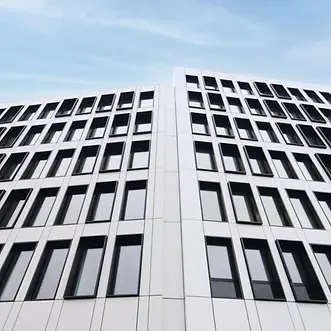
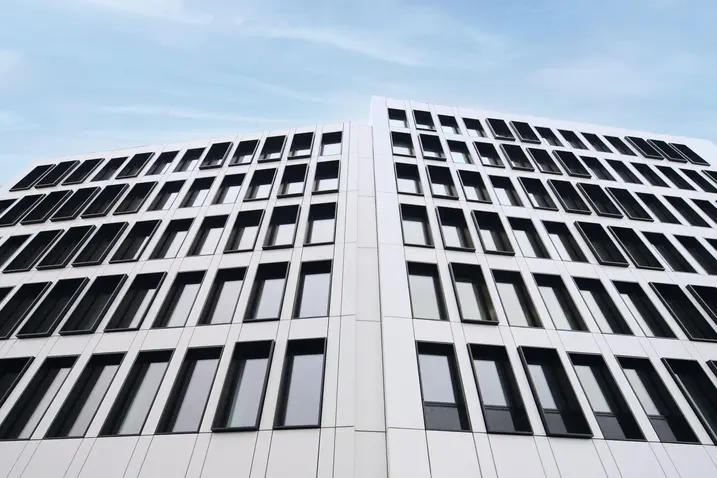
The unitised construction of the UDC 80 façade enables it to be easily adapted to any type of structural scenario and distribution of functions in the building. The façade of the Schüco Corporate Services building was assembled out of around 332 prefabricated units. Vent and panoramic windows, closed panel fields, and ventilation vents are alternated throughout the façade. For the first time, the Schüco AB ZDS (Aluminium Blind Zip Design Screen) sun shading system, which is an external, textile roller blind system, was integrated in the unitised façade.  The cover caps on the windows are another special detail of this project. These extend from the façade in three different lengths, creating a subtle play of shadows on the building envelope.

Back into the raw material cycle

As soon as the decision was made to renovate the façade, Schüco was determined to make recycling a priority. The existing façade of the complex from the 1980s and 2000s contained a large amount of aluminium. Schüco is also a founding member of the A|U|F, an association which organises a closed-loop recycling process for aluminium from the window, door and façade industry. It was natural, then, to dismantle all of the aluminium components from the façade and canopy, and feed them back into the A|U|F raw material cycle. In order to ensure that only aluminium was fed into the cycle, the company in charge of demolition collected the individual constituent materials in separate containers as much as possible. The aluminium was then recycled in several container loads by companies belonging to the A|U|F. In total, 28 tonnes of the material were extracted from the building, which was confirmed by European Aluminium (EA) following an external audit, which confirmed a recycling rate of 98.3%.

Geöffnete Schiebetür von Schüco mit Blick in den Wohnbereich

Recycling rates recorded for the first time

In 2014, the EA began to survey the recycling rate of different buildings in Europe following demolition or renovation in order to independently confirm high recycling rates of aluminium. This figure is also used in the basic assumptions when calculating an Environmental Product Declaration (EPD). Before long, the EA began a new way of measuring recycling rates. They called on their members to name projects that would verify their recycling rates. Schüco answered this call. The audit results from the Schüco Corporate Services building were the first to be included in this new survey. 

A holistic approach

In addition to the UDC 80, other C2C Silver-certified products were used such as the FWS 50 / 60 SG mullion/transom construction for the entrance façade, the AWS 75 BS insert units and the AD UP 75 doors. Following the renovation, the building now meets the ambitious KfW 70 standard and consumes 265,000 kWh less primary energy per year than before as a result. The renovated building is supplied with certified green energy and receives heating energy and hot water via district heating.

Building materials from renewable resources

The roofs, for instance, are insulated with cellulose fibres. A green roof is also in the works. This 500 m² green space will encourage insect diversity, improve the microclimate both in and around the building, and reduce noise and pollution. The construction companies similarly took precautions to minimise pollution and noise while they worked on the building. Schüco chose to work predominantly with local businesses to reduce time spent on construction and on transporting materials. The project is being subsidised by the Ministry for the Environment, Conservation, Agriculture, and Consumer Protection in the state of North Rhine-Westphalia. 

Informazioni sul prodotto

FWS 50.SI

Schüco Sistema per facciate FWS 50.SI

Facciata a montanti e traversi con certificazione di casa passiva per una varietà di soluzioni.

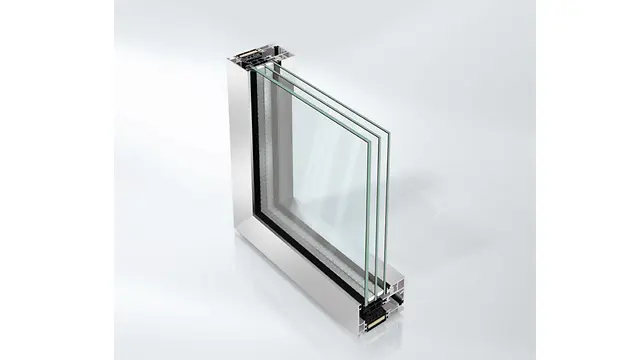
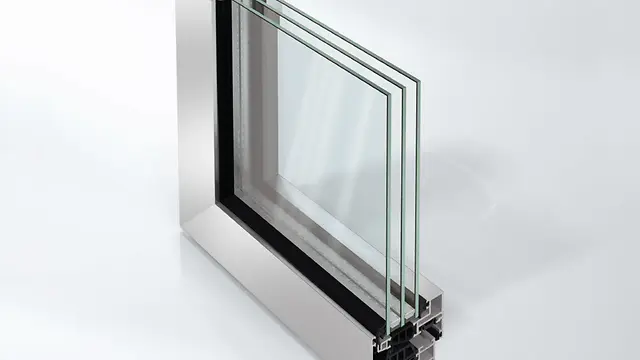
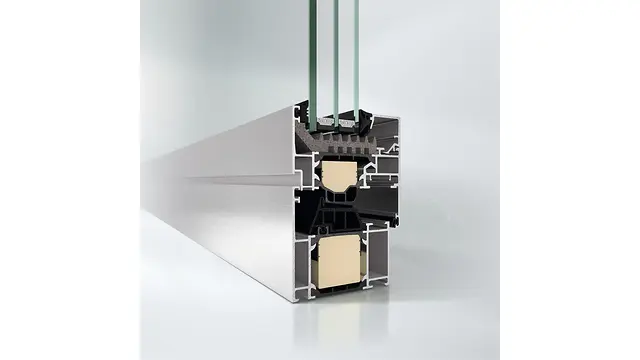
Basato su tecnologia isolante innovativa, il sistema di facciata Schüco FWS 50.SI (Super Insulated) offre soluzioni ad elevato isolamento termico per la progettazione di facciate e coperture a livello di casa passiva, con processi di fabbricazione e installazione ottimizzati.

Scopri di più

AWS 75 PD.SI

Schüco Sistema per finestre AWS 75 PD.SI

Massima trasparenza grazie alla minima sezione in vista del profilo

Oltre all'efficienza energetica, la perfetta integrazione di forma e funzione è oggi un requisito fondamentale nella creazione di involucri edilizi moderni. Con la nuova finestra AWS 75 PD.SI Panorama Design, Schüco offre ora un'unità di apertura con sezioni in vista interne ed esterne minime ed eccellente isolamento termico, che soddisfano perfettamente tutti i requisiti architettonici.

Scopri di più

AF UDC 80

Schüco Sistema per facciate AF UDC 80

Facciata dinamica con grande libertà progettuale

La facciata Schüco AF UDC 80 (Aluminium Façade Unitized Dynamic Construction) fa parte della piattaforma di sistema Schüco AF UDC 80 per facciate a telai in alluminio. Caratterizzato da moduli scalabili e accuratamente testati, questo sistema dinamico consente ad architetti, progettisti e installatori di realizzare facilmente progetti edilizi a scansione modulare - con una vasta gamma di applicazioni e soluzioni creative basate su una struttura e su modalità di installazione assolutamente razionali.

Scopri di più

ADS 80 FR 30

Schüco Sistema per porte ADS 80 FR 30

Costruzione di porte e pareti per applicazioni multifunzione antincendio e protezione al fumo

Il collaudato sistema di porte Schüco ADS 80 FR 30 (Fire Resistant) con una profondità costruttiva di 80 mm, basato su profili cavi a 5 camere altamente stabili, presenta una notevole versatilità di applicazione, funzione e design.

Scopri di più

FWS 60

Schüco Sistema per facciate FWS 60

Facciata a montanti e traversi a elevate prestazioni con larghezza in vista di 60 mm: la base per una varietà di soluzioni

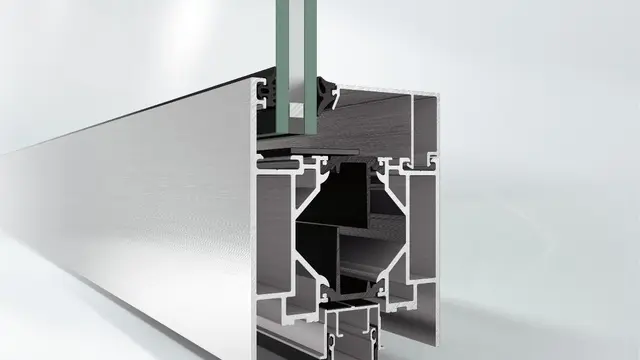
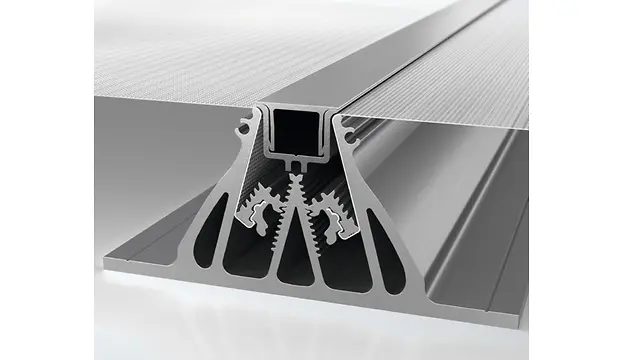
Il sistema per facciate Schüco FWS 60 è un eccellente sistema di base per facciate e coperture orizzontali con un elevato livello di flessibilità, interessanti soluzioni progettuali e processi di fabbricazione e installazione ottimizzati. L'ampia gamma di sistemi consente soluzioni per le più svariate esigenze e applicazioni.

Scopri di più

AD UP 75

Schüco Sistema per porte AD UP 75

Impiego versatile, come porta commerciale per flussi elevati di persone e come elegante porta d'ingresso

Eccellenti proprietà di isolamento combinate con un'elevata stabilità - il sistema per porte Schüco AD UP 75 con una profondità costruttiva di 75 mm offre un'elevata affidabilità funzionale per tutte le esigenze in edifici residenziali e commerciali.

Scopri di più

AWS 75 BS.HI+

Schüco Sistema per finestre AWS 75 BS.HI+

Finestra ad elevato isolamento termico con anta a scomparsa per sofisticate esigenze di design

Con eccezionali valori di isolamento termico e un design sottile senza contorni dell’anta visibili, Schüco AWS 75 BS.HI+ (Block System High Insulation) soddisfa i più elevati requisiti architettonici e di efficienza energetica con la massima trasparenza possibile.

Scopri di più

AWS 75.SI+

Schüco Sistema per finestre AWS 75.SI+

Isolamento termico, sicurezza e lavorazione migliorati

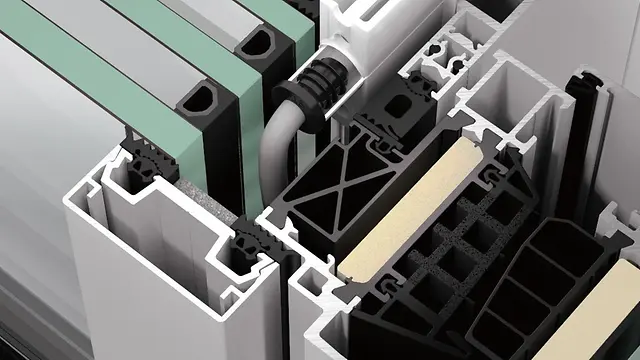
Il sistema di finestre standard ottimizzato Schüco AWS 75.SI+ (Super Insulation) per profondità costruttiva di 75 mm fa parte della piattaforma di sistema Schüco AWS e costituisce la base per una gamma di applicazioni in involucri edilizi a basso consumo energetico. A seconda dei requisiti architettonici, il sistema in alluminio ad elevato isolamento termico può essere utilizzato come finestra singola, finestra a nastro o elemento ad inserimento per facciate, nonché in combinazione con i sistemi di porte Schüco.

Scopri di più

FACID 65

Schüco Sistema per facciate FACID 65

Facciata tessile multifunzionale che permette un'ampia gamma di utilizzi e di soluzioni di design

L’edilizia sostenibile abbraccia sempre più l'intero ciclo di vita degli edifici: di conseguenza, anche la domanda di funzionalità e flessibilità delle facciate è in continuo aumento. Con la facciata tessile Schüco FACID 65, l'estetica di un edificio può essere adattata in modo rapido ed efficiente alle mutate esigenze senza limitarne la funzionalità: una pietra miliare nel percorso verso la facciata trasformativa.

Scopri di più

FWS 50

Schüco Sistema per facciate FWS 50

Facciata a montanti e traversi a elevate prestazioni con larghezza in vista di 50 mm: la base per una varietà di soluzioni

Il sistema per facciate Schüco FWS 50 è un eccellente sistema di base per facciate e coperture orizzontali con un elevato livello di flessibilità, interessanti soluzioni progettuali e processi di fabbricazione e installazione ottimizzati. L'ampia gamma di sistemi consente soluzioni per le più svariate esigenze e applicazioni.

Scopri di più