Landratsamt Waiblingen

BIPV consistently delivered

The extension of the Rems-Murr District Office in Waiblingen has resulted in a technically sophisticated administrative building. It brings together timber hybrid construction, building-integrated photovoltaics (BIPV) and system integration within a coherent overall concept. The project demonstrates how design quality and efficient buildability can work hand in hand.

detalhes da referência

Tipo de construção Escritórios e administração
Áreas de produto BIPV
Sistemas Schüco BIPV
Características Ampliação de edifícios Eficiência energética DGNB
Localização Waiblingen, Baden-Württemberg
Conclusão 2024
Arquitetos Landratsamt Rems/Murr a+r Architekten GmbH Stuttgart
Empresa especializada Neumayr Holding GmbH
Crédito de imagem © Brigida González

Precision planning and efficient delivery

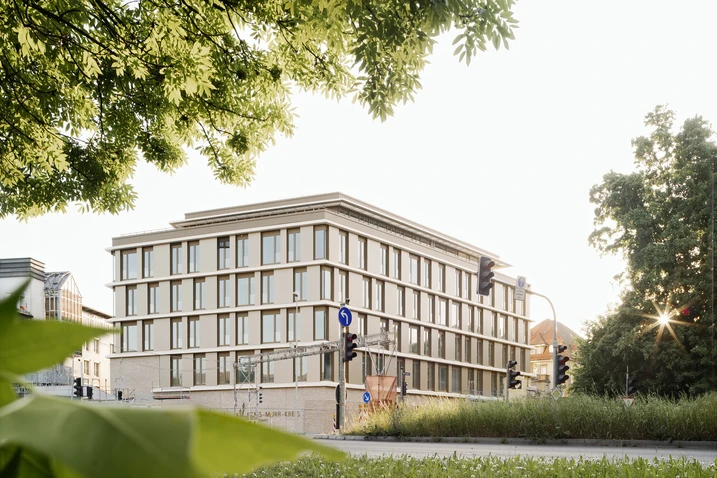
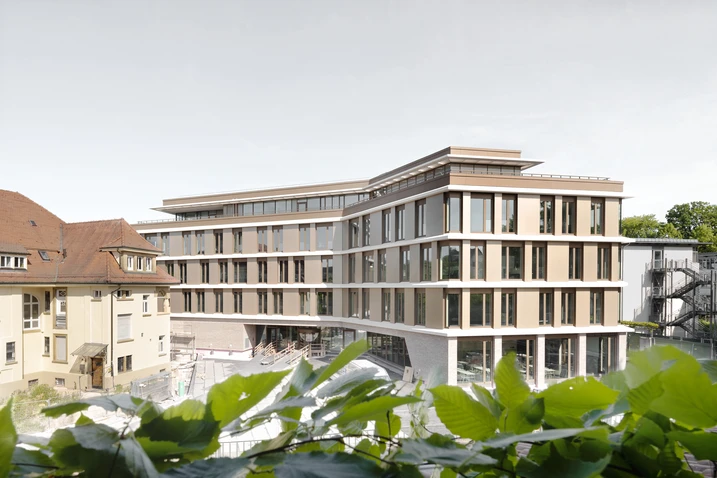
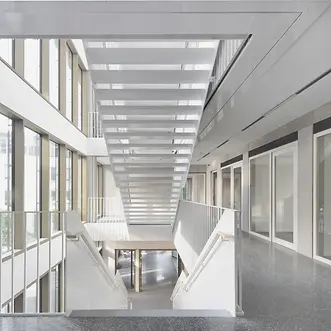
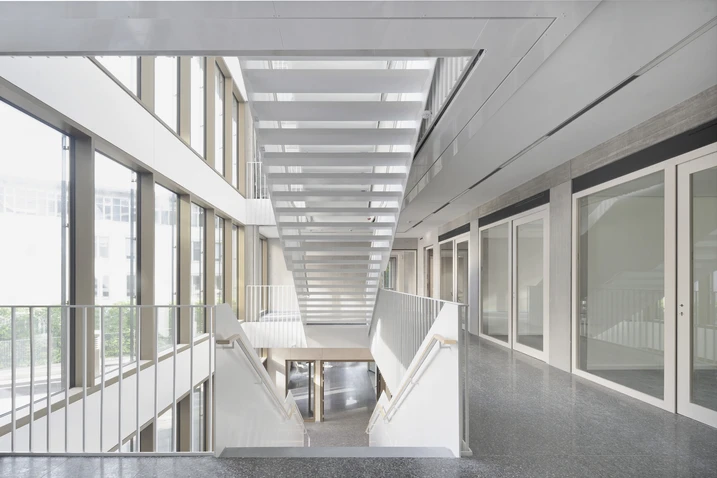
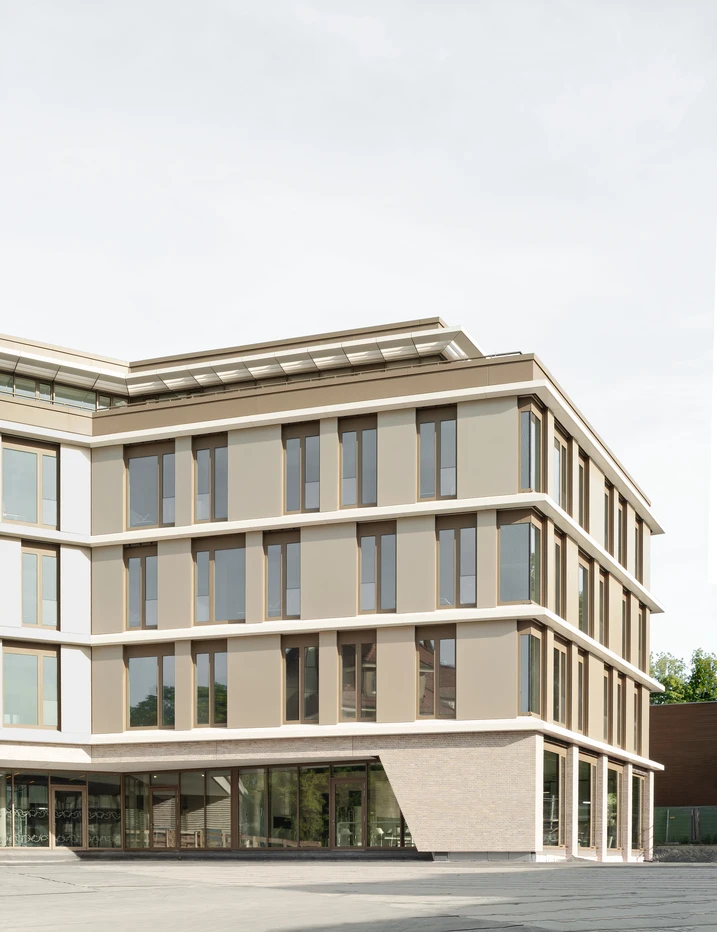
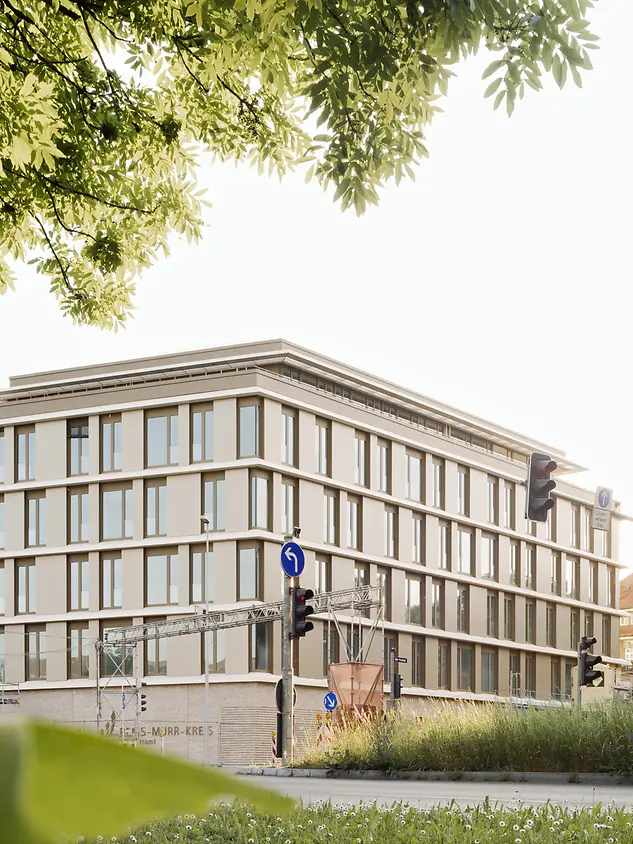
A compact, five-storey new building has been constructed on the site of a former parking deck in the centre of Waiblingen. The polygonal building integrates precisely into the existing district office ensemble and marks the entrance to the new Alte Post campus. The complex geometry of the building placed high demands on the structure, façade and interface coordination. While a reinforced concrete core provides the necessary stability, the surrounding storeys are executed in timber hybrid construction using recycled concrete. This combination enables high load-bearing capacity while reducing material use, thereby contributing to decarbonisation. At ground level, a ventilated brick façade ensures robustness and durability. On the upper floors, a rhythmically structured timber-aluminium mullion-transom system by Schüco has been implemented.

BIPV as a façade design element

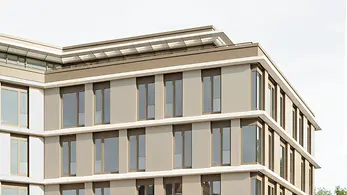
The integration of the building-integrated photovoltaic system was realised in close collaboration between a+r Architekten, the system supplier and the fabricator. The modules were conceived as a continuous design feature and precisely integrated into the timber-aluminium façade. Across the differently oriented façade surfaces, varying module formats ensure a consistent appearance that aligns seamlessly with the rhythmic structure of the mullion-transom system. Colour tone and surface finish were carefully coordinated to balance architectural effect with technical performance. With their satin-finished, bronze appearance, the BIPV elements blend harmoniously into the overall design, adding a refined, dynamic depth to the building envelope.

Informações do produto

BIPV

Schüco Building Integrated Photovoltaics

Energeticamente eficiente, uma alternativa para a conservação de recursos nas unidades de recheio. São perfeitos para obra nova e projetos de renovação energeticamente eficientes

Sistemas fotovoltaicos integrados (BIPV) nos sistemas Schüco de janelas e fachadas, assim como as claraboias usam a envolvente do edifício para a geração de electricidade solar. Isto transforma aos edifícios equipados com módulos BIPV de consumidores de energia em produtores de energia. Os módulos constroem-se à medida segundo as especificações dos arquitetos com um design individual em termos de forma, cor e estrutura visual.

Saiba mais

Technology and system integration

The photovoltaic façade generates around 88,600 kWh of energy per year, making a key contribution to achieving the KfW Efficiency House 40 standard as well as DGNB Gold certification. The electrical configuration was optimised specifically for the project: instead of the originally planned 24 inverters, only eight units are required thanks to an adapted string layout. Cabling is implemented via standardised connections, while maintenance access points are integrated into the façade brackets. The approximately 30 per cent increase in panel efficiency during the planning phase highlights the rapid pace of technological development and the growing maturity of BIPV systems. The energy concept is aligned with the daily load profile of the administration: solar energy generated during the day is used directly in operation. In combination with digitally controlled building management, this results in efficient, low-maintenance energy use.