
STRESSTEST in the German pavilion at the Biennale
The Architecture Biennale is taking place in Venice between 10 May and 23 November 2025. Schüco is the main sponsor of the German pavilion, where the STRESSTEST exhibition vividly demonstrates how green infrastructure, new technologies and interdisciplinary collaboration can make cities more resilient and liveable.
Climate change in urban spaces
Heavy rainfall, heatwaves and droughts are no longer distant threats – they are already affecting cities today. Sealed surfaces and overheated buildings create what are known as urban heat islands, which hardly ever cool down, even at night. Rising urban temperatures endanger people, animals and infrastructure, while also increasing health risks such as dehydration and cardiovascular diseases. The number of heat-related deaths is rising. This is a situation that urgently calls for resilient, responsible and holistic urban planning. Without effective countermeasures, some cities could become uninhabitable within a few decades.
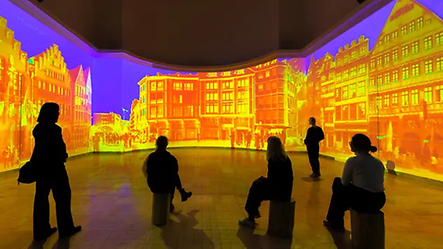
The STRESSTEST exhibition
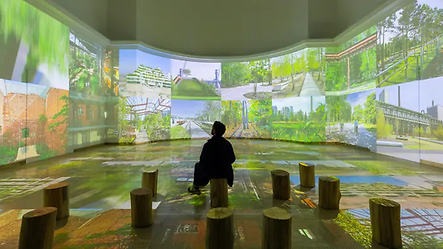
The STRESSTEST exhibition in the German pavilion at the Venice Architecture Biennale brings the impact of urban overheating to life. An immersive 360-degree projection illustrates the causes and consequences of the urban climate crisis using heat maps, photographs and data. At the same time, it showcases successful urban transformation strategies, illustrating how cities can adapt.
Extreme experiences in the pavilion
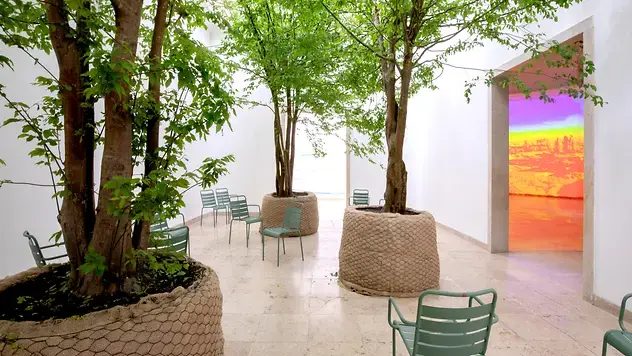
In the STRESS rooms, a spatial installation that traps air and heat allows visitors to experience the burden of heat with the assistance of thermal imaging cameras and models. In contrast, the DESTRESS rooms provide a cooling oasis with green spaces that demonstrate how trees and nature act as natural air conditioning. This direct comparison illustrates the urgency and the opportunities of climate-conscious urban planning. This includes, for example, future-proof building envelopes that offer far more than traditional protection against the elements.
Adapting the building envelope
A future-proof building envelope efficiently regulates the building's energy consumption, protects against overheating and moisture ingress, and makes an active contribution towards the building's resilience. When designing buildings, this means that they not only need to meet the demands of the climate challenges, but also the increased requirements in terms of sustainability and user comfort. The adaptation of the building envelope is therefore an integral component of responsible architecture in the 21st century.
Experts from science and industry
The German contribution was curated by Elisabeth Endres, Nicola Borgmann, Gabriele G. Kiefer and Daniele Santucci (from left to right), who explain that architecture, landscape architecture and urban planning can no longer be seen purely as functional or design-related disciplines, but as part of a holistic, climate-resilient system.
Schüco is in attendance not just as an expert in solutions for the necessary adaptation of building envelopes in urban spaces, but also as the main sponsor of the German pavilion.

Climate adaptation in architecture
Climate-resilient building envelopes are essential to compensate for the effects of climate change. Their functions and colours are designed to counteract the overheating of cities and ensure a high level of comfort inside the building.
