Reducing construction emissions – it all depends on the choice of material

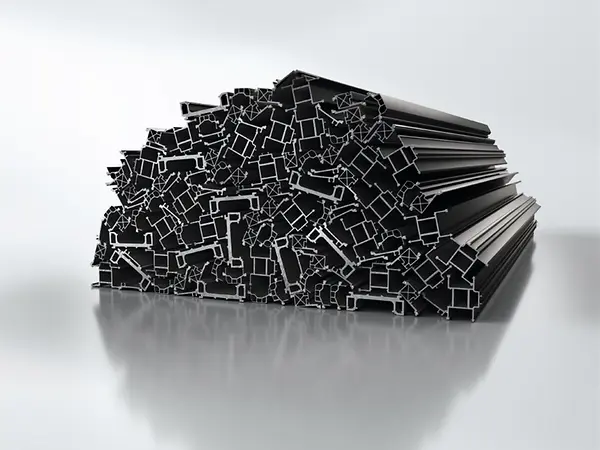
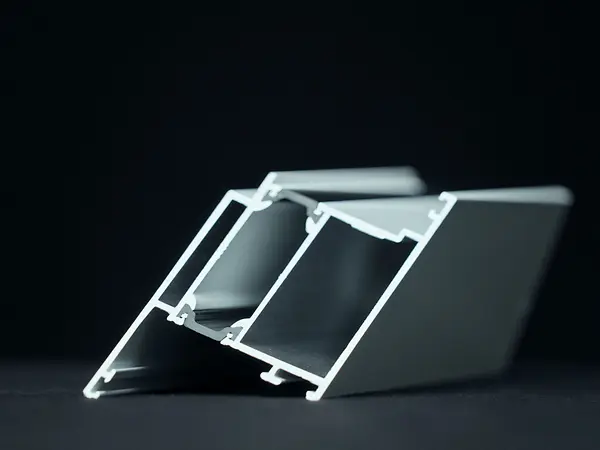
The use of low-carbon materials has a significant impact on the carbon footprint of a building. Construction emissions are heavily reduced through the use of our Schüco Ultra Low Carbon and Schüco Low Carbon material grades for aluminium, and our RECYCLED PVC, BIO-ATTRIBUTED PVC and BALANCED PVC material grades for PVC-U. Hybrid constructions such as the combination of timber with aluminium as an add-on construction also contribute to a low carbon footprint.
2016_Schueco_Training_VA_07

The material makes all the difference

Embodied carbon is the CO₂ emissions contained within the material that are generated when the units are produced. These embodied emissions can be reduced through the use of materials that have been produced in a particularly efficient way with regard to CO₂. However, when selecting a suitable material with as little carbon input as possible, you should always check that the material is suitable for the specific building requirements and can fulfil its function.

The use of low-carbon materials has a significant impact on the carbon footprint of a building.

Begrünte Außenfassade von Hochhaus in Großstadt

Hybrid solutions reduce carbon footprint

A complete solution comprising a combination of various functional elements or materials for a building can help to reduce CO₂ and improve energy efficiency. In this way, for example, a permanently weather-resistant aluminium add-on construction can be combined with a load-bearing structure made from timber as a renewable raw material or a unitised façade with a green façade in order to decarbonise the building envelope. A solution with a green façade reduces energy consumption inside thanks to the façade's natural cooling effect, while the plants on the outside absorb CO₂. Our systems offer you extra flexibility when using different materials. One sustainable solution is the use of timber in combination with aluminium.

When selecting materials, it is always important to consider the intended functionality and use the material that enables the maximum benefits with as little carbon input as possible. Of course, all installed materials also need to meet the specific building requirements.

Carbon Control - Gebäude mit den Carbon Bubbles auf schwarzem Hintergrund

Schüco Carbon Control

Find out more about our comprehensive range of products and services for the decarbonisation of buildings.

Schüco Carbon Control

Recycling as standard: The same insulating bars, less CO₂

The changeover in production of polyamide insulating bars made from PA 66 GF 25 to recycled material in all product groups represents the next step in the Schüco sustainability strategy. Compared to polyamide insulating bars made from new materials, the use of recycled polyamide saves over 65% CO₂e (CO₂ equivalent). The GWP (Global Warming Potential) value of a building can be further reduced with this measure and the saving is cumulative, especially when it comes to large-scale usage.

Furthermore, the Schüco modular principle enables this change to take place seamlessly. Product properties and certifications remain unaltered, as do the manual and article numbers. There will also be no changes to the ordering process, as the changeover will take place automatically and nothing will need to be ordered in addition.

Cradle to Cradle Products Program

Cradle-to-Cradle-certified systems for sustainable construction

Feeding materials back into the closed cycle can be planned from the outset. Systems with Cradle-to-Cradle (C2C) certification make a key contribution to circularity, sustainability, material health, environmental protection and social aspects. With 75 systems that are currently certified, Schüco is one of the pioneers of the C2C concept in the construction industry. All products designed in accordance with the C2C principle are perfectly prepared for reuse after the usage phase.

vinyl-verified

Sustainable PVC systems with VinylPlus label

The VinylPlus® certificate is awarded to suppliers of very sustainable PVC solutions. PVC products from Schüco meet the strict criteria. Schüco PVC-U systems are 100% recyclable; they can therefore be easily incorporated into the recycling system. Moreover, Schüco PVC profiles are environmentally friendly, as they are calcium/zinc-stabilised.

Download certifications

Schüco has a number of certifications for buildings, individual products and management systems. You can download the certificates here.

IoF ID as basis for raw material cycle

Closed raw material cycles are based on reliable data about the material composition of the installed units. The Schüco IoF ID makes it easier to trace installed materials.